


No Sweet Spot Either? Kazakhstan’s Take on Three-Dimensional Gummy Bear Trademarks
June 10, 2026
The recent Danish case discussed in the Kluwer Trademark Blog post once again highlighted the long-standing difficulty of protecting product shapes as trademarks. While the Danish Patent and Trademark Office initially rejected the three-dimensional gum sweet mark for lack of distinctiveness, the mark was ultimately registered following a renewed examination ordered by the Danish Maritime and Commercial Court. A recent Kazakhstani case involving a three-dimensional gummy bear trademark considered almost similar issues but from a slightly different perspective.
Background of the Dispute
Image
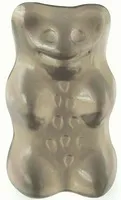
The dispute concerned international registration No. 1408424 designating Kazakhstan for a three-dimensional trademark consisting of the shape of a gummy bear for confectionery products in Class 30. The mark was registered in 2019 in the name of Rigo Trading S.A. (who is behind the HARIBO brand).
Perfetti Van Melle Benelux B.V. challenged the registration before the Appeal Board of the Ministry of Justice, arguing that the gummy bear shape had become a common form used by numerous confectionery manufacturers and therefore lacked distinctiveness. In 2024, the Appeal Board rejected the challenge, prompting Perfetti Van Melle to seek judicial review before the Astana Administrative Court.
Positions of the Parties
Perfetti Van Melle argued that the disputed shape had entered common use as a product form for jelly confectionery. To support its position, it submitted evidence showing gummy bear products marketed by various manufacturers, including, besides HARIBO, Trolli, Nestlé, Rahat, Roshen, and others. According to the claimant, consumers would perceive the shape merely as the appearance of the product rather than as an indication of commercial origin.
The Appeal Board of the Ministry of Justice and the trademark owner disagreed. They argued that the mark retained distinctiveness because gummy bear products of different manufacturers contained visual differences and therefore could still function as source identifiers.
The Courts’ Position
The courts ruled in favor of Perfetti Van Melle and declared the registration partially invalid with respect to certain Class 30 goods, namely “fruit jelly confectionery products”.
The key issue was whether the gummy bear shape could perform the essential function of a trademark. Referring to Article 6(1)(1) of the Law on Trademarks of the Republic of Kazakhstan, which prohibits the registration of signs lacking distinctive character or consisting of elements that have become customary for particular goods, the courts examined whether the shape had become a common product form in the confectionery market.
The court found that the disputed sign reproduced the shape of the product itself and that similar gummy bear-shaped confectionery had long been offered by numerous manufacturers. Particular weight was given to a specialist opinion stating that three-dimensional trademarks require a sufficiently original visual appearance to distinguish one trader’s goods from those of another. The specialist concluded that the disputed shape lacked distinctive features and had become customary for this category of confectionery products.
The court also rejected the argument that differences in colour, size, or minor design details were sufficient to establish distinctiveness. In their view, consumers would perceive the overall shape as a common product form rather than as a trademark. It also stated that decisions issued by foreign trademark offices were not determinative, emphasizing the territorial nature of trademark rights and referring to Article 6(3) of the Paris Convention, under which trademark registrations remain independent from those granted in other jurisdictions. The Court of Appeal and, subsequently, the Cassation Court (now the final judicial instance in Kazakhstan) in late 2025 upheld these findings.
Conclusion
The decision demonstrates the challenges of obtaining and maintaining protection for product shapes in Kazakhstan. While three-dimensional marks are registrable, protection will not extend to shapes that have become customary in the market.
The case is particularly noteworthy because disputes involving three-dimensional trademarks remain relatively rare in Kazakhstan. As a result, the judgment provides one of the few judicial discussions of the distinctiveness requirements applicable to product shapes under the Trademark Law of Kazakhstan. By concluding that widespread use of a gummy bear shape by multiple manufacturers deprived the sign of its trademark significance, the courts confirmed that even registered three-dimensional marks may be vulnerable where consumers perceive the shape as a common product form rather than an indication of commercial origin.
Tags:
case law
Comments (0)
Your email address will not be published.
Become a contributor!
Interested in contributing? Submit your proposal for a blog post now and become a part of our legal community!
Contact Editorial Guidelines



You may also like





September 1, 2026
