Upcycling vs Trade Mark Exhaustion: Why the Paris Court Is Right
July 16, 2026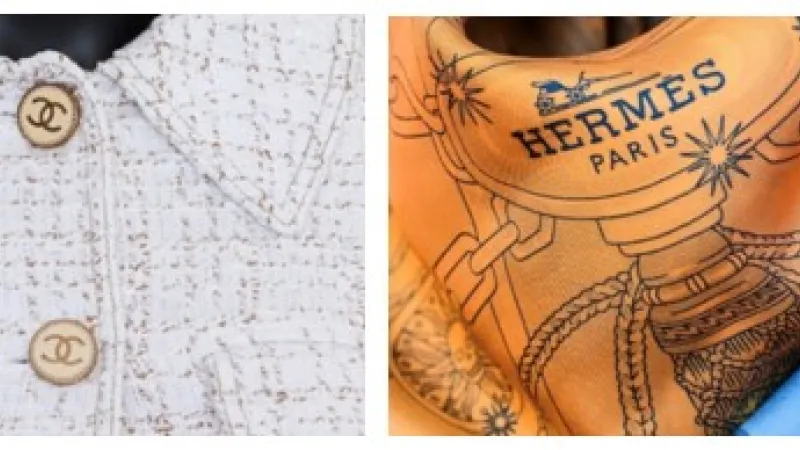
On 21 May 2026, the Paris Judicial Court delivered a judgment in a case opposing Chanel and a company marketing jewellery and accessories using buttons and belt buckles bearing Chanel trade marks, including the double-C logo. This decision recalls a ruling delivered by the same court on 10 April 2025, in a case opposing Hermès and a company marketing jackets incorporating scarves bearing Hermès trade marks.
With respect to the trade mark infringement claims, in both cases, the defendants argued that their upcycling practices were lawful since the trade mark rights had been exhausted. In both cases, the court ruled that the defendants used the trade marks in order to market their own products, which could not be regarded as having been put on the market by the claimants or with their consent. Accordingly, the exhaustion doctrine could not apply.1
The reasoning relating to whether exhaustion applies where goods, or components thereof, are incorporated into new products, while brief, appears entirely consistent with the relevant provisions and the principles governing exhaustion established by the CJEU.
It should be recalled that exhaustion is justified by the need to safeguard ‘the specific subject-matter’ of the trade mark right, namely the protection of the essential function of indicating the commercial origin. For a trade mark to fulfil that function, it must constitute a guarantee that all products bearing it have been manufactured under the control of a single undertaking to which responsibility for their quality may be attributed (Bristol-Myers et al. v Paranova, C-427/93, § 43).
In light of this principle, it seems that where an original good, or an element of it bearing a trade mark, is incorporated into a new product, the essential function of that mark is jeopardised. Indeed, the mark no longer guarantees that the good bearing it comes from the trade mark proprietor.
The need to safeguard the essential function of the trade mark should guide the interpretation of the exhaustion provisions. From this perspective, the solutions adopted by the Paris Court appear entirely justified for several reasons.
First, as held by the Paris Court, the jewellery bearing Chanel marks and the jackets bearing Hermès marks, marketed by the defendants, had never been put on the market by the respective proprietors. The primary requirement for exhaustion was therefore not satisfied. Consequently, the marketing of such goods could not constitute ‘further commercialisation’ within the meaning of the exhaustion provisions.
Second, even if one were to apply a broader interpretation of the concept of further commercialisation, allowing the further commercialisation of goods or components bearing a mark after their incorporation into other products, the limitations of the exhaustion doctrine should apply. The law excludes exhaustion where there are legitimate reasons for the proprietor to oppose further commercialisation. By way of example, the law expressly identifies as a legitimate reason situation where the condition of the goods is changed or impaired after they have been put on the market. Where a good is incorporated into a new product or divided so that only a component of it is reused in a new product, its condition is necessarily altered.
Third, even if, in situations involving the incorporation of entire goods into new products, one might argue that their condition did not materially change as they are reused such as marketed, it should be recalled that a legitimate reason may exist, and exhaustion may therefore be excluded, where the further commercialisation of the goods bearing the mark damages its reputation, irrespective of any alteration in the condition of the goods, particularly in relation to luxury goods (Copad v Dior, C-59/08, § 55). Marketing goods whose quality the proprietor cannot control, and which are unlikely to meet the proprietor’s quality standards, or which are marketed in conditions inconsistent with the aura of luxury associated with the trade mark, is likely to cause such damage.
- 1For the sake of completeness, in both cases the court ruled out exhaustion already because the defendants failed to prove that the goods incorporated into their own products had been marketed by the trade mark proprietor or with his consent.
Comments (0)
Your email address will not be published.
Become a contributor!
Interested in contributing? Submit your proposal for a blog post now and become a part of our legal community!
Contact Editorial Guidelines
Image

Books
Reputed Trade Marks and Their Protection
€205.00

You may also like

October 9, 2026

October 1, 2026


September 22, 2026