


How close is too close? Kosovo's Commercial Court on look-alike packaging
June 9, 2026
A novel approach to trademark infringement was introduced by the Commercial Court of Kosovo in the recent Judgment KE. Nr. 868/25 of March 6, 2026 (“the Judgment”). In this case, the first-instance chamber found infringement of a registered trademark protecting product packaging based on the defendant's use of a similar overall packaging presentation. The decision addresses a growing category of intellectual property disputes that extend beyond the copying of names or logos by focusing on the look-alike packaging. In doing so, the Court delivered one of the most detailed analyses to date of look-alike packaging under Kosovo trademark law.
Under the Kosovo Law No. 08/L-075 on Trademarks protection may extend to the shape of goods or their packaging where it serves to distinguish the goods of one undertaking from those of another (Article 5), subject to certain exclusions relating to functionality, natural shape, and substantial value (Article 6(1.5)).
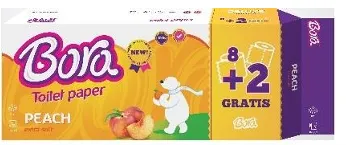
The dispute arose between two manufacturers of toilet paper products. The claimant owned the registered BORA trademark, which protected the overall packaging of its toilet paper products:
Image
While the respondent had registered the figurative trademark
Image

and used that sign on the following packaging:
Image
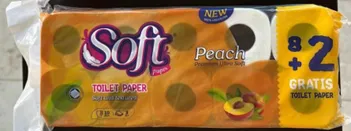
However, the respondent did not have a registration for the packaging of the product.
The claimant argued that the respondent’s packaging reproduced the visual, graphic, and aesthetic characteristics of the BORA packaging to create confusion among average consumers. The respondent, on the other hand, relied primarily on several distinguishing features, arguing that the claimant’s packaging contained a polar bear mascot absent from the respondent’s product, that certain design elements were placed differently and that the use of orange and yellow colors merely reflected the peach scent of the product rather than any attempt to imitate the claimant’s packaging.
The Court acknowledged these differences but found them insufficient to eliminate the likelihood of confusion. In assessing the overall appearance of the products, the Court identified several similarities, such as the use of the same orange and yellow color scheme with similar intensity and distribution, a similar illustration of a peach, placement of the peach in the lower-right corner of the packaging, and placement of the product description “toilet paper” below the sign or logo.
The Court concluded that the overall appearance of the packaging could create confusion among average consumers regarding the commercial origin of the products. Significantly, this conclusion was reached even though the competing products used entirely different verbal elements. The infringement therefore arose from the similarity of the packaging itself and its descriptive elements, rather than from any similarity between the signs BORA and SOFT as the most distinctive and dominant elements in both signs.
In assessing the risk of confusion, the Court explained how consumers exercise a lower degree of attention when purchasing everyday consumer goods in comparison to sophisticated products. Furthermore, it noted that consumer attention generally increases with the value of the product and with the risks associated with its use. Applying these principles to toilet paper products, the Court concluded that consumers are unlikely to examine such products with a high degree of attention. Given the low value of the goods, their routine nature, and the absence of significant health or safety considerations, the average consumer is more vulnerable to confusion arising from similarities in packaging.
The Judgment represents one of the first cases in which the Commercial Court has undertaken a detailed analysis of both the average consumer standard and the extent to which a product’s overall appearance may contribute to a likelihood of confusion. While the Court's recognition of the relevance of packaging is a welcome development, the author considers that, although the use of look-alike packaging could justifiably have been found to constitute trademark infringement, such a finding should not have been based on a likelihood of confusion. Rather, the more appropriate legal basis would have been the taking of unfair advantage of the reputation of the registered mark, provided that the BORA trademark had been shown to enjoy a reputation in the market.
If confirmed by the second instance, the Judgment may become an important precedent for the protection of packaging in Kosovo, particularly in consumer goods markets where purchasing decisions are made quickly and with limited attention.
Comments (0)
Your email address will not be published.
Become a contributor!
Interested in contributing? Submit your proposal for a blog post now and become a part of our legal community!
Contact Editorial Guidelines


You may also like




September 1, 2026
