Splitting hairs? T 657/24 and Narrowing Definitions After G 1/24 and G 1/25
October 8, 2026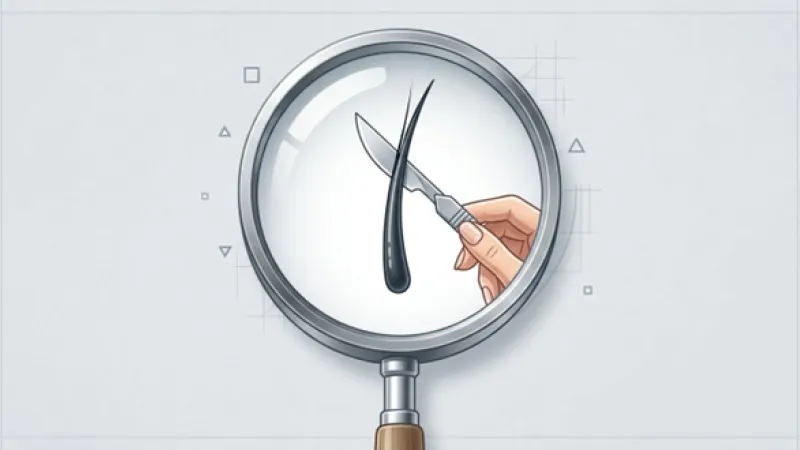
G 1/25 contains two principles that can pull against each other. A definition in the description may determine the meaning attributed to a claim term, but the description and drawings cannot be used to impose on the claim a limitation or expansion for which the claim wording provides no basis. The two may come into conflict when a passage in the description gives a claimed feature a narrower meaning than its wording would normally carry. T 657/24 presented exactly that situation. Patentee argued that paragraph [0014] of its wind turbine blade patent defined the claimed term "sheet material" as having a width-to-thickness ratio of at least 5:1, which would have excluded prior-art profiles of about 4:1. The Board held that paragraph [0014] was not a definition such that the granted claim lacked novelty.
Paragraph [0014] states that "the cured fibre-reinforced sheet material is a relatively flat member having a length, which is at least ten times the width, and a width, which is at least 5 times the thickness of the sheet material”. The Board classified the passage by its wording: The term “is” merely describes the sheet material but does not define that the material has those dimensional relationships. By contrast, the description in T 439/22 (this decision is significant as it was approved by the Enlarged Board in G 1/25 reason 10) stated "As used herein, the term 'sheet' denotes …", expressly assigning a meaning to the claim term.
We’re not convinced that the two formulations actually differ in meaning. "The sheet material is a relatively flat member having…" tells the reader what the claimed material is. It follows the usual structure of a definition: the term, "is", a general class, then the more specific embodiments. "As used herein, the term 'sheet material' denotes a relatively flat member having…" basically says the same thing more formally.
The Board's second justification, in reason 2.3.4, is also open to question:
"If every feature described without being identified as optional were necessarily read into the claims, the distinction between the function of the claims, which define the matter for which protection is sought (Article 84 EPC), and that of the description would largely disappear."
This is also somewhat difficult to follow: the description would still have a function in teaching the skilled person how to carry out the invention, through its overall technical teaching in the embodiments and examples, even if a statement of what a claimed term "is" was used to interpret that term.
Because [0014] was classified as a description only and not as a definition of the claimed term, the Board did not need to address the harder question: whether a genuine definition giving "sheet material" a narrower meaning would have narrowed claim 1.
It will be interesting to see whether other Boards follow this distinction, or conclude that 3.2.04 were splitting hairs here. In the meantime, if you want a passage to work as a definition, write it as: "As used herein, the term X denotes…".
Comments (0)
Your email address will not be published.
Become a contributor!
Interested in contributing? Submit your proposal for a blog post now and become a part of our legal community!
Contact Editorial Guidelines


You may also like

October 8, 2026


October 1, 2026