


G 1/26 – patent claim loses weight, leading to second referral on claim interpretation
June 5, 2026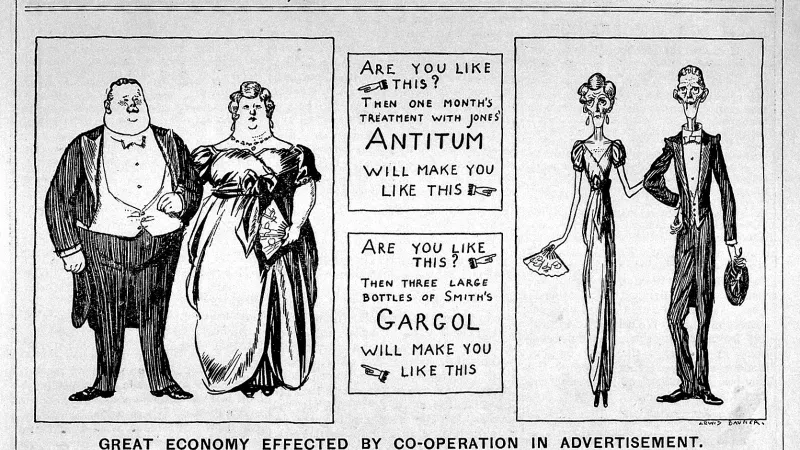
It is less than a year since the Enlarged Board of Appeal issued the landmark decision G 1/24 on the issue of claim interpretation. Already in this time, a divergence has arisen between the Boards on how exactly to implement this decision. Contentious points include its applicability in assessing added matter (see here), and on the more fundamental point of when features in the description can be read into the claims. 3.3.05 have now referred the following questions to the enlarged Board on this issue in T 873/24:
1. May a decision be considered to be "required" for the purposes of Article 112(1) EPC, if the referring Board demonstrates that the point of law in question arises out of the context of the case pending before it and, in the circumstances of the proceedings, it is reasonable for the Board to examine it and decide on it next?
2. (a) Does the fact that the claims are the starting point and the basis for assessing the patentability of an invention generally preclude a feature which is only disclosed in the description or the drawings of a patent from being read into the meaning of a granted claim, in particular if this leads to a restrictive reading of terms used in the claim?
2. (b) If the answer to question 2.(a) is no: is claim interpretation the result of both reading the claims and consulting the description and drawings as a unitary process and does the claim being the starting point and the basis for assessing the patentability rule out only those interpretations which can be derived from the patent as a whole but would clearly contradict the general technical understanding of the terms used in the claim?
3. (a) When assessing compliance with Article 123(2) EPC, must a term used in a claim be assessed against all interpretations that make technical sense to the skilled reader on the basis of the claim alone?
3. (b) If the answer to question 3.(a) is no: is it sufficient that only the interpretations of the subject-matter of the claim established against the background of the patent specification as a whole are directly and unambiguously derivable from the application as filed?
This case turns on the lost “weight” in the patent claim feature “wherein the ratio of titanium to nitrogen is in excess of 3.42”. It is not specified in the claim whether this ratio is based on the weight or e.g. the molar ratio. Critically, the application as filed used only the weight ratio.
It was therefore objected that this amendment adds matter: patentee defend themselves by arguing that the patent claim feature would be interpreted as relating to the weight in view of the disclosure in the description: “In the composition by weight of the sheet, the weight ratio of titanium content with respect to the nitrogen content is in excess of 3.42…”.
Therefore, the case turns on whether the patent claim should be interpreted based on the description such that the weight ratio is defined. If it is, there is no added matter. If however the description cannot be relied upon, it seems that the claim may well add matter as it generalises the ratio of in excess of 3.42 from a weight ratio to any ratio.
Legal approaches to assessing added matter
At reason 2, the board explains that EPO decisions on added matter normally follow a “two-step approach”: claim interpretation taking into account the description followed by assessment of whether the interpretation of the amended claim contained added subject-matter. While the Board note that some decisions expressly question the applicability of G 1/24 to added matter (see e.g. T 405/24 discussed here), the main divergence is in the extent to which the description is relied upon when interpreting the claims. Three different lines of case law are identified:
First approach: the description is “consulted” as required by G 1/24, only to define the technical field, common general knowledge and skilled person. “All claim interpretations, in particular broader ones, are then taken into account, except for interpretations that are illogical or make no technical sense”. See e.g. T 837/24.
Second approach: no broadening or limitation of claims based on the patent specification. While these decisions still “consult” the description as required by G 1/24, they then proceeded to ignore it when actually interpreting the claims, e.g. on the basis of the primacy of the claims. See e.g T 2001/23.
Third approach: holistic approach permitting broadening and/or narrowing of the interpretation in view of the patent specification. In my view, this comes closest to what many practitioners expected to be the application of G 1/24, where “Claim interpretation is accordingly seen as the result of both reading the claims and consulting the description and drawings as a unitary process”. See e.g. T 2048/22 discussed here.
The Board then explains that following the first or second approaches, added matter will be found in the present case, while there will be no added matter under the third approach.
On question 1
The decision also addresses a formal issue regarding the point at which a referral should be made. Some decisions such as T 116/18 leading to G 2/21 only issue a referral once all issues in the case have been decided upon, meaning that the case turns entirely on the referral questions. Others, such as the present case and T 439/22 leading to G 1/24 take a more relaxed approach, referring the key issue before exhaustively deciding on all other points.
While this is a relatively dry legal issue, it seems worthwhile to adopt a more liberal approach. This would allow Boards more flexibility to refer an issue whenever they consider it relevant to ensure uniform application of the law, rather than having to wait for the perfect case which really turned on this issue. It may also remove any temptation from the Boards to reach a series of conclusions on other issues simply in order to make the referral they consider to be necessary. In any case, this would seem more in line with the wording of Article 112(1) EPC, which permits a referral if this is considered required to ensure uniform application of the law, or if a point of law of fundamental importance arises.
Conclusion
My first assumption about this case was that it would centre on the issue of whether G 1/24 applies to added matter at the EPO. This was wrong – the scope of the referral is much broader and seeks general clarification on how claims are to be interpreted at the EPO. This is something that G 1/24 already sought to address. Further clarification is desirable at least in view of the divergence between the Boards on whether G 1/24’s Order that the “description and drawings shall always be consulted to interpret the claims” really only means that they need to look at the description before ignoring even definitions.
As a final thought, it is also interesting that in a very similar case before the UPC (UPM-Kymmene Oyj v International N&H Denmark ApS, UPC_CFI_829/2024, Central Division Munich, 24 February 2026), it was concluded that the description could not be used to interpret the basis (i.e. weight based on the whole composition or weight relative only to sugars) for the amount of a component in a chemical composition, leading to a finding of added matter. CD Munich held: “The patentee is responsible for drafting claims that adequately define the subject matter for which protection is sought. This is particularly the case for composition claims containing numerical ranges of ingredients. For such claims, the skilled person may reasonably expect that the patentee is precise and diligent in specifying the components of a claimed composition”.
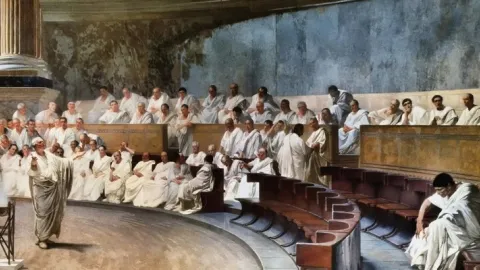
Image from Wellcome Library, London CC BY 4.0 <https://creativecommons.org/licenses/by/4.0>, via Wikimedia Commons
Comments (3)
Your email address will not be published.
Become a contributor!
Interested in contributing? Submit your proposal for a blog post now and become a part of our legal community!
Contact Editorial Guidelines



You may also like




September 3, 2026

September 2, 2026
DXThomas
The present referral is to be seen as a further attempt to reopen the discussion on what is to be understood by “consulting” the description as defined in G 1/24. For this reason alone, the admissibility of the referral is to be questioned, in spite of the board’s effort to demonstrate admissibility. This is the more so, since the board was actually able to determine that the technically reasonable interpretation was weight %. If the EBA did not want to give a precise definition of what is to be understood under “consulting the description” and what should be the result of this consultation, it certainly had good reasons for doing so. I see this especially in the refusal of the EBA to answer Question 3 in G 1/24. The EBA did certainly not say, like in T 439/22, that a broadening or a limiting definition found in the description ought to be read into the claim, although this was probably wished by a lot of people. The EBA did not suggest the holistic approach used in T 439/22. The position of all the boards applying G 1/24, but in T 439/22, was to say that: 1. if there is a limitation in the description of the matter for which protection is sought, it will not be taken into account when reading the claim, unless the claim is amended accordingly. 2. if the description contains a broadening definition of the matter for which protection is sought, the applicant/proprietor cannot hide behind a more limiting definition contained in the claim to fence off broader prior art. Both positions take into account the content of the description as required by G 1/24. What is there left to discuss? There are already decisions applying G 1/24 when it comes to added matter. In T 2488/22, the board held that limiting the claims based on the description and drawings when such limitations are not derivable from the claims’ wording would deprive Articles 123(2) and 100(c) from their meaning and purpose. This approach is clearly opposing a holistic interpretation of the claims. What applies to a limitation should apply mutatis mutandis to a broadening: it cannot be read into the claim. This is the position adopted by all the boards applying G 1/24, but T 439/22.
Jeslin Smith
Superb write-up. It really highlights how critical precise drafting is. If the description can drastically alter or 'reduce the weight' of a clear claim term, it changes the game for both applicants and competitors. Looking forward to seeing how the Enlarged Board tackles this second round!
Jeslin Smith
Superb write-up. It really highlights how critical precise drafting is. If the description can drastically alter or 'reduce the weight' of a clear claim term, it changes the game for both applicants and competitors. Looking forward to seeing how the Enlarged Board tackles this second round!