


Summertime, and the new Visser is here!
July 6, 2026
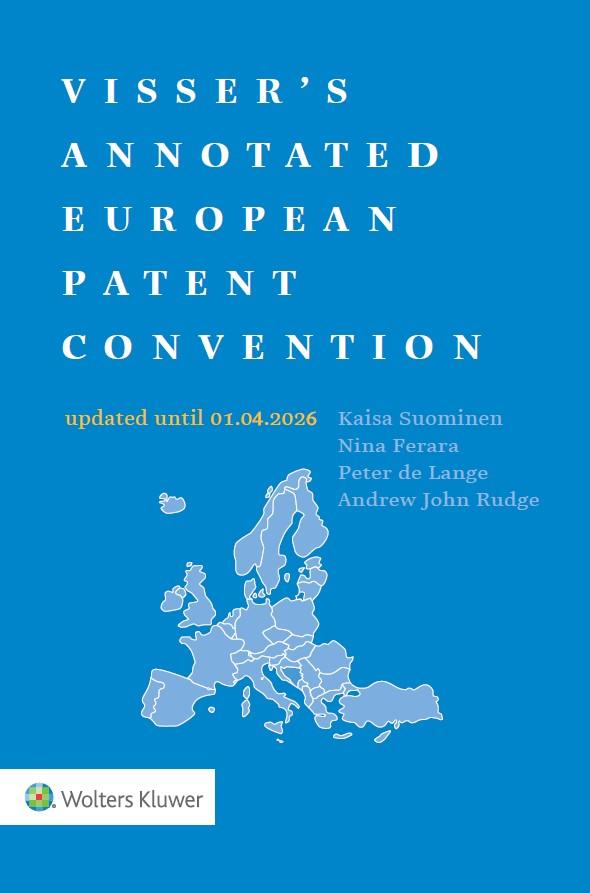
As many of us are sweltering in the face of relentless heatwaves, Visser’s Annotated EPC 2026 has just hit the shelves hot off the press. As usual, it comes with many updates. Below are a few highlights that we thought might be of particular interest to our readers.
The Enlarged Board of Appeal has been very busy over the last year, with many important G decisions coming out recently. Since the last edition of the book, three new G decisions were published: G1/23, G1/24, and G2/24. Additionally, oral proceedings were held in May for G1/25, with the decision expected imminently. Below is a short summary of the more relevant decisions and where the relevant commentary may be found in Visser’s EPC 2026.
G1/23 – EPC’s response to the “on-sale bar”
The decision clarified that a product that has been placed on the market forms part of the state of the art under Art.54(2) EPC even if its composition or internal structure cannot be analysed (i.e., it cannot be reverse-engineered). The decision clarifies earlier decision G1/92, which had led to different lines of case law. While not quite reproducing the US-style “on-sale bar” for products being offered for sale, it is still an important reminder to companies to protect first and sell later. More information about G1/23 can be found in the notes to Art.54(2), particularly Art.54(2):3.6.2.
G1/24 – Claim interpretation
No doubt most readers are familiar with the ongoing debates around claim interpretation. G1/24 provided some clarity on that topic, but also led to further debates and disagreements. The decision unequivocally states that the description and drawings shall always be consulted to interpret the claims. In true patent attorney fashion, we then collectively decided to start arguing about the meaning of “consulted” as a means of feeding the fire. For some insights into the discussion, take a look at the notes to Articles 52 and 84, more specifically, Art.52(1):2. With the topic still of great ongoing interest to EPC aficionados, the new Enlarged Board of Appeal referral G1/26 seeks to clarify the meaning of “consulting” the description and the claims, as well as its relationship with added subject-matter. It remains to be seen whether the case will be admitted.
New members join the party!
On 1 June 2026, the Republic of Moldova became the 40th contracting state of the EPC. Eagle-eyed readers may now point out that the book is updated until 1 April 2026. Thankfully, the news was already out by then, and your favourite authors pre-emptively updated Art.169:1.1. While marvelling at the vaguely timey-wimey list on that page, readers may also note that Montenegro has newly acceded to the London Agreement.
New Guidelines illuminate obscure corners of the EPC
With the new edition of the Guidelines for Examination at the EPO, a few changes were also needed in Visser’s EPC. You will spot them by the characteristic sidebar pointing out the updates (although not all sidebars denote a change in the GL). A couple of highlights include:
- The replacement of the “narrow + sufficiently far removed + not seriously contemplated by the skilled person” test by the familiar “gold standard” test for the novelty of sub-ranges (Art.54(1):6.2).
- More clarity on the novelty and sufficiency of second medical uses in light of medical trials, specific patient groups, and treatment effectiveness (Art.54(5):2).
Makeover for parts of Visser’s EPC
Several articles and rules have undergone a total makeover with regard to their associated notes. See if you can spot 10+ differences in the first part of the common provisions (Articles 113-117), as well as Rules 122, 137, and 139. The updated articles include all-time favourites like the right to be heard, third party observations and oral proceedings. The rules include blockbusters like amendment of the EP application and correction of errors.
We hope that you enjoy all of the highlighted updates as well as countless others. As usual, we are happy to hear from you if you spot any typos or would like to clarify any points from the book.
Comments (0)
Your email address will not be published.
Become a contributor!
Interested in contributing? Submit your proposal for a blog post now and become a part of our legal community!
Contact Editorial Guidelines




You may also like


October 1, 2026




September 22, 2026