The copyright and human rights literature has traditionally focused on a relatively small number of well-known judgments – Ashby Donald, The Pirate Bay, Deckmyn, Pelham (with Pelham II already…
The next frontier of the press publishers' rightIn the recent judgment Meta Platforms Ireland (Compensation équitable), the CJEU has clarified that Member States (MS) may enhance the practical…
Welcome to the EU roundup for the third trimester of 2026 covering the period from June to September. This summer was quiet. Nonetheless, there still have been some interesting EU copyright law…
Artificial intelligence (AI) is reshaping the copyright landscape, but the debate is no longer limited to legislation and emerging case law. Generative AI (GenAI) is exposing an infrastructure gap in…
For several years, creators asking AI developers to obtain authorization before using protected works for training have faced a familiar objection: permission raises the cost of training and can slow…
The debate over AI and copyright policy, and how to ensure remuneration for right holders, is gaining momentum around the world. There have been calls to review EU copyright law, India has proposed…
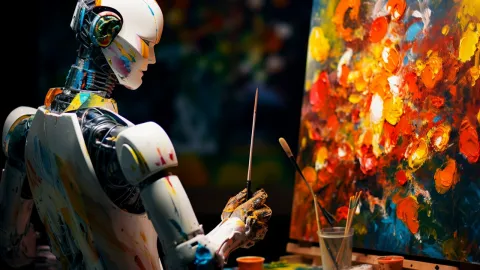
Generative tools like DALL·E, Midjourney and Stable Diffusion can now produce an image "in the style of" almost any artist in seconds. That capability sits uneasily with EU copyright law, which has…
The recent judgment of the Court of Justice in Gandul Media (C‑598/24) tackles two crucial EU copyright law issues: (i) the notion of a copyright work; and (ii) the Member State implementation…
The Deepfake ProblematicThe phenomenon of deepfakes challenges existing image and voice protection. Unlike before, AI systems can now generate audio and video content that mimics a real person to the…
Copyright exhaustion has an environmental problem. In the EU, transforming a lawfully purchased physical copy can move the act beyond the exhausted distribution right and trigger the copyright holder…