


Reconstructing the Author, Not Re-Privatising the Text: The EU concept of work after Institutul G. Călinescu
June 15, 2026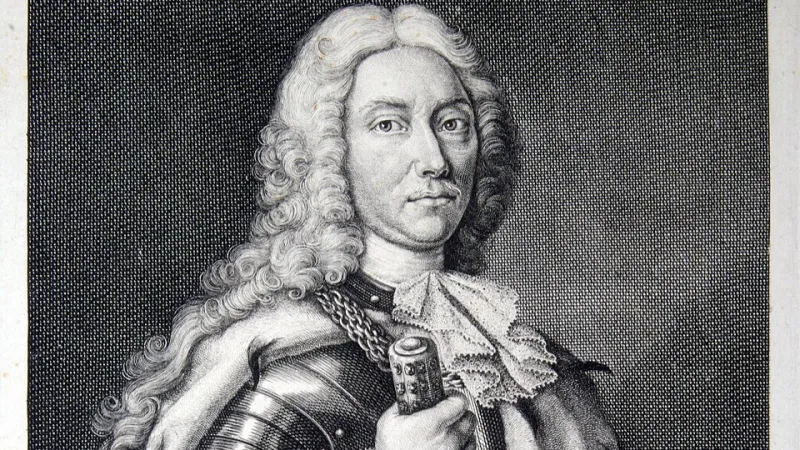
From Infopaq to the Cantemir manuscript: originality at its lower edge?
The concept of the “work” is the cornerstone of copyright protection. Only works are capable of being protected (“protectable subject matter” in EU copyright law terminology) and only works are finally protected by copyright law. The concept of “work” has not been defined by the EU legislator. The lack of a legislative definition of the work in European copyright law, however, is not surprising, since traditionally the concept of “work” has intentionally not been defined by national copyright legislation and international conventions. The emergence of the EU concept of “work” has, therefore, necessarily been jurisprudential. Since Infopaq, the CJEU has built on the EU definition of originality to gradually construct a dominantly personality based conception of the work ( Levola C-310/17, paras 35–37; Cofemel C-683/17, paras 29–32; Brompton Bicycle C-833/18, paras 22–24; Mio/Konektra C-580/23 and C-795/23, paras 48–50).
The EU definition is based on two fundamental components: originality (as free and creative choices of the author) and expression. The criterion of “free and creative choices” combined with the concept of the author’s personal touch incarnates a rather subjective perception of authorship, without, however, implying that the threshold of protection is necessarily a high one.
In Institutul G. Călinescu (C-649/23) the CJEU was called to apply the EU autonomous concept of work to derivative works and, more precisely, to a critical edition of a public domain work. Derivative works deserve particular attention and test the limits of originality. Indeed, their undeniable organic link with the pre-existing work can significantly undermine their own existence as autonomous creative expressions and, therefore, their potential for protection by copyright law. Critical editions sit at the most illuminating edge of this paradox, where fidelity to another’s voice becomes the very medium through which originality may, or may not, emerge. The scientific and deontological commitment to fully respect and preserve the pre-existing work’s style, structure, content, and message and to avoid distorting it, while at the same time keeping the freedom to critically build on it, can significantly restrict the ways the original expression of creativity of the author of the critical edition may be revealed.
The facts of the dispute bring this difficulty to the surface. Professor Dan Slușanschi prepared a critical edition of a public domain Latin work by Cantemir, involving collation, corrections, additions, comments and a critical apparatus. His heirs argued that a later Romanian publication reproduced his edition without authorisation. The question was whether the editor’s reconstruction could cross the EU originality threshold.
In line with the Opinion of Advocate General Spielmann of 26 June 2025 (Case C-649/23) the CJEU held that a critical edition of a public-domain work may itself be a "work", and, by doing so, it embraced an open, comprehensive and flexible approach towards the concept of a work, which favors the protection of creativity and of personal choices wherever and in whatever form they are expressed.
Where fidelity meets freedom: free choices under scholarly constraint
The Court draws a careful line: scholarly reconstruction may attract protection, but only when it involves creative choices rather than merely technical or predetermined decisions. Philological discipline does not preclude originality, but expertise and labor alone are insufficient. In a critical edition, choices of grammar, wording, style and interpretation may be precisely where scholarly judgment becomes authorship.
This is in general convincing. Where a manuscript is incomplete or ambiguous, the editor may choose among plausible readings and determine how notes and apparatus interact with the restored text. In that respect, C-649/23 sits close to Painer. Echoing Painer’s enumeration of expressive choices of pose, lighting, framing and angle, the Court at paragraph 66 transposes the Cofemel/Painer logic from photography to scholarly editing: the editor’s choices among manuscript variants, the structure of the critical apparatus and the reconstruction of corrupt or missing text are the philologist’s equivalents of the photographer’s compositional decisions.
The Court’s findings echo also comparative case law findings. Sawkins v Hyperion (UK) protected performing editions of Lalande’s public domain music, prepared through thousands of editorial interventions. Qimron v Shanks (Israel)protected a reconstruction of the Dead Sea Scrolls text, while leaving the ancient fragments unprotected. However, it should be reminded that both Sawkins and Qimron were decided under standards that diverge from the EU originality criterion, without requiring proof of a personal creative imprint in the EU sense. That said, the UK courts have by now long moved on to author’s own intellectual creation and aligned themselves firmly with the EU jurisprudence on this even post-Brexit (see here). In this context, caution is equally important. The Court should not be read as reviving skill-and-labor protection through the language of personality. Football Dataco remains the counterweight: effort, expertise and investment are not taken into consideration for the assessment of originality.
The whole edition, not its molecules
Perhaps the most practically significant aspect of the judgment concerns the identifiability of the critical edition as a whole. For the Court, it is not necessary, for identifiability, to distinguish between parts corresponding to the original work, possibly amended, and the comments, notes or explanations accompanying them. To do so risks breaking up a work meaningful only as a whole, especially where notes and explanations supplement, comment on or restore specific parts of the text (para. 64).
This is sensible and slightly daring. It is sensible because the restored text and apparatus are mutually constitutive: a variant reading may make sense only through the note that justifies it. Requiring atomisation would turn subsistence into forensic archaeology.
It is daring because identifiability was introduced in Levola and Cofemel as a legal certainty requirement. Paragraph 64 relaxes that requirement procedurally: the work may be identifiable as a whole even though parts derive from a public domain text. That is probably right, but national courts must not confuse holistic identifiability with holistic reappropriation of the public domain work. National courts should be careful and avoid confusing the overall assessment of identifiability with the de facto reappropriation of elements belonging to the public domain. Such confusion might be driven by the work’s stronginterconnection with identifiable input of the author of the derivative work. The distinguishing line might be thin, and a careful assessment of the derivative work’s authorial creative input should be made. Scope still depends on expression of the editor’s intellectual creation.
A public domain with editorial shadows
The Court, following Cofemel (para. 50) and Painer (para. 94) confirms that once subject matter qualifies as a work, the extent of protection does not depend on the degree of creative freedom exercised and is not inferior to protection for other works. But the proposition must be handled carefully. A critical edition may be a work while Cantemir’s text, historical facts, manuscript evidence and technical corrections remain free. There is a danger that national courts may mistake the principle of “not inferior protection” for expansive protection of works fallen into the public domain.
In this context, the CJEU adds an important safeguard: recognizing copyright in a critical edition of a public domain literary work does not bring that work into the private domain and cannot confer an exclusive right over the pre-existing work (para. 68). This clarification should be welcomed. It aligns the judgment with the public domain logic of Article 14 DSM Directive. Indeed, Article 14 of the CDSM Directive aims to protect the public domain status of works of visual art whose copyright term has expired. In practical terms, it prevents new copyright or related rights claims from arising merely because someone makes a faithful reproduction, such as a photograph, scan, or digital copy, of an out-of-copyright painting, sculpture, drawing, or similar visual artwork. Once the original work is in the public domain, reproductions of it should also be freely usable, unless the reproduction is itself original, meaning it reflects the author’s own intellectual creation. Overall, both the CJEU’s findings in Institutul G. Călinescu and Article 14, reject recapture: public domain material remains public domain unless a new layer is original.
Still, the analogy exposes tension. Article 14 was designed to prevent faithful reproductions of public domain visual art from acquiring fresh protection unless they are original. Case C-649/23 deals with literary critical editions, where “fidelity” may require judgement. Compared with a facsimile, the critical edition is more likely to contain original choices; compared with a novel, those choices remain constrained by the lost original. The public domain concern therefore moves from formal ownership to practical control: an authoritative edition may affect access even while the underlying work remains free.
A sound and principled judgment, with questions remaining
The CJEU’s decision is, on balance, consistent with previous CJEU case law and well-reasoned. It consolidates the autonomous EU concept of work, applies the personality-based originality standard to derivative scholarly production, and sensibly permits the critical edition to be assessed as an integrated whole. The Court is also right to say that a public domain literary work is not re-privatised merely because an original editorial layer is protected.
The weakness is not in the result but in the under-specification of the test. The more emphatically the Court affirms that fidelity to a source does not foreclose creativity, the more emphatically it must affirm the converse — that expertise, labor and method cannot stand in for free and creative choices. The sounder reading is therefore a narrow one: copyright protects the editor's own contribution — the restoration, arrangement, commentary and critical apparatus — in so far as these express personality and are objectively identifiable.
Overall, it should be borne in mind that Article 14 CDSM gives EU law a limited but important public domain safeguard: faithful reproductions of out-of-copyright visual art cannot attract new rights unless they are original. Its deeper principle is broader: expiry of protection should mean genuinely free public access, not renewed exclusivity through restoration or reproduction. Yet, the rule is confined to visual art, leaving manuscripts, scores, critical editions and other public domain materials without equivalent legislative protection. EU copyright therefore needs a horizontal public domain rule: no new exclusivity without a genuinely original added layer.
Romanian Academy Library, Public domain, via Wikimedia Commons
Tags:
protectability
Comments (0)
Your email address will not be published.




You may also like





August 27, 2026