Europe’s next copyright reform moves a step closer to reality: what can we tell from the twin Commission consultations?
June 4, 2026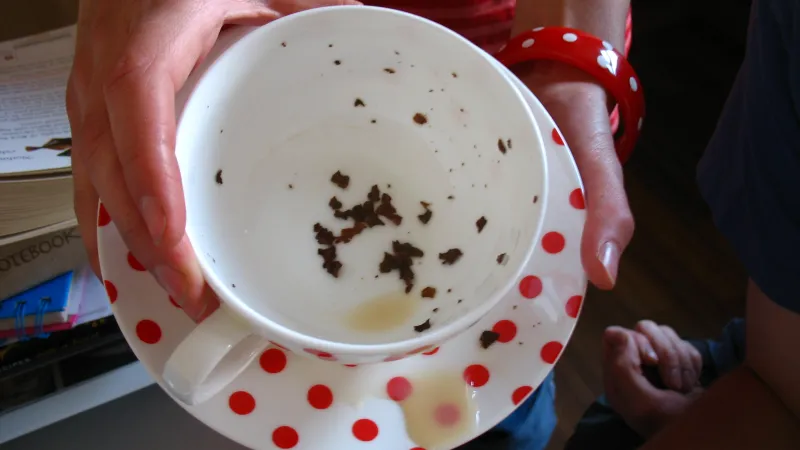
With the launch of twin official consultations, we have entered into a new phase in the development of the EU’s future approach to copyright. Despite the Copyright in the Digital Single Market (CDSM) Directive allowing the Commission to delay a review indefinitely (‘no earlier than June 2026’), it has moved promptly to launch this process. In the absence of principles-based provisions such as fair use in EU law, this readiness to review is essential to keep up with changing patterns of production, sharing and use of copyrighted works.
The consultations are designed to be more about gathering information than sharing it; the first clear indications of where the Commission intends to go will need to wait for much later this year or into next. Nonetheless, the consultation documents themselves provide a framework for reflecting on what could be the shape of future legislation (provisionally entitled ‘Directive enhancing the copyright environment for European creativity and innovation’).
This post therefore draws on the two documents – a survey of the implementation of the 2019 CDSM Directive, and an open Call for Evidence about future reform – to explore what indications they give, and what questions they raise. It considers first the framing of future legislation, then what may or may not feature within it.
Parameters and placement
The 2001 Information Society (InfoSoc) Directive recently turned 25 years old. Its status as the European Union’s most comprehensive piece of copyright legislation does not appear to be at any risk though, with the call for evidence explicitly called a ‘targeted initiative’.
The implication is that, in a similar fashion to the CDSM Directive, the plan is to address specific identified issues with the current acquis by introducing a list of provisions. Targeted does not mean only one target. The call highlights challenges around AI (see Paul Keller’s blog on this for more information), piracy of sports events, steps to ensure payments to performers inside and outside of the EU, and research. Each of these topics has been the subject of extensive advocacy, both under different Council presidencies and through work in the European Parliament.
The areas highlighted are therefore not necessarily closely related to each other. This opens up the likelihood that each will follow its own logic rather than being guided by a common one. This is on display in the fact that the overall goal of the call refers to competitiveness – a key theme for this Commission – but this is only in relation to the cultural and creative sectors. It simply talks about facilitating research and innovation, rather than recognising their contribution to the competitiveness of the European economy as a whole (extending far beyond the AI sector).
The potential limitations of an approach to consideration of the needs for research from the perspective of copyright lawmaking are also on show. The call for evidence uses the standard list of options for the type of respondent (which includes academic/research institutions, business associations and NGOs, and EU citizens). This does not, however, provide an obvious entry point for researchers themselves.
More seriously, the survey (which covers key provisions around text-and-data mining and access to out-of-commerce works) uses a list that includes ten different types of rightholder representative, but only one category for research (research organisation), and no category for end-users, including researchers themselves.
This contrasts with the approach in the recent economic study released by DG Research, Technology and Development (RTD) - also looking at a revision to the research exception - where not just research institutions, but also researchers themselves and research funders were specifically approached. Meanwhile, the European Research Area Forum has eight different categories of research stakeholder, including businesses (a group currently led by STM – the Association of Scientific, Technological and Medical Publishers). It should nonetheless be recognised that the DG CNECT consultation does specifically state that it will take account of the extensive research already carried out by DG RTD.
In short, the picture is of a piecemeal approach to amending legislation, rather than any sort of comprehensive overhaul. There are also signs that a reform led from the perspective of copyright may follow a different logic, with a different conception of the stakeholder landscape than one which places research and broader competitiveness as its core goal.
Presences and absences
Looking beyond the overall framing of the plans, there are clues around the different policy options that the Commission is considering. We can also identify issues that may be at risk of being forgotten.
The evaluation survey of the CDSM Directive follows the well-established model of past reviews, asking useful questions, for example, around the costs of applying provisions on out-of-commerce works, how far opt-outs have actually been used, and whether it has led to greater cross-border access to works.
At the same time, the survey has some clear shortcomings. For instance, it does not address the effectiveness of Article 7 of the Directive. This provision is crucial because it makes unenforceable contractual terms that prevent the enjoyment of the exceptions in Articles 3, 5, and 6. Article 7 also provides that technological protection measures (TPMs) applied to licensed works should not be protected where they similarly prevent the enjoyment of those exceptions.
Despite extensive work around the impact of contract terms and over-reaching TPMs on research, their lack of consideration in this review process suggests that the Commission does not see this as problematic.
A further doubt is raised by a question about whether out-of-commerce works made available under the Directive’s provisions should be available for the training of AI models. Currently, this is likely possible as a result of the application of Article 3 of the Directive. But the survey’s question implies that this possibility may be unavailable in the future. This could seriously complicate efforts to build public AI models.
The call for evidence also points to possible next steps, while leaving open the possibility of non-legislative action. On AI, the suggestions include further measures on information about the content used, without specifying whether this concerns generative AI or AI more generally; the promotion of mediation or arbitration for licensing disputes; steps to enable appropriate remuneration for creators; and measures concerning AI-generated impersonations of performers. The latter appears to echo efforts under the Danish Presidency to stimulate discussion on the protection of people’s images, which ultimately received a mixed response.
On piracy around sports broadcasts, ideas focus on stronger remedies and stronger cross-border cooperation. On performers’ royalties, the suggestion is to introduce the principle of material reciprocity, responding to questions about European payments to third-country nationals and to European performers.
Finally, on research, the Commission does set out that a harmonised research exception, as well as an EU-level secondary publication right could be on the table. This likely builds on the strong evidence already collected demonstrating strong support from the research sector (both in work commissioned by the Commission’s DG RTD, and independently).
At the same time, the fact that similar questions are being asked by two different Directorate Generals (DG RTD and DG CNECT) raises the question of which one might lead future legislation, a point already raised in a previous article.
Over to you
This analysis is necessarily speculative, aiming to read between the lines of the twin Commission consultations. But as highlighted in the introduction, it is only when the results are in that the final shape of the EU’s next piece of copyright legislation will come into focus.
There is a real opportunity here to shape the direction of reform, whether to highlight preferences, reinforce the direction the Commission already appears to be taking, or help fill in gaps. Do not delay though – the survey exploring experiences of implementation of the CDSM Directive is only open until 14 June. There is more time to respond to the open call for evidence – until 25 June.
Image: “reading tea leaves” by passitonfromthemill, CC BY-NC-SA 2.0
Tags:
consultation
Comments (0)
Your email address will not be published.





You may also like


August 27, 2026