Fair use is the main defense to copyright infringement claims in the well over 100 generative AI copyright infringement cases pending in U.S. federal courts that challenge developers’ uses of in…
Earlier this year, many experts had hoped that the U.S. Supreme Court would grant certiorari and review the U.S. Court of Appeals for the Fifth Circuit’s decision in Vetter v. Resnik. But four…
Impact of first appellate court decision on AI and copyright fair use is limited because generative AI was not involved, and defendant’s use of headnotes for competing research product was not…
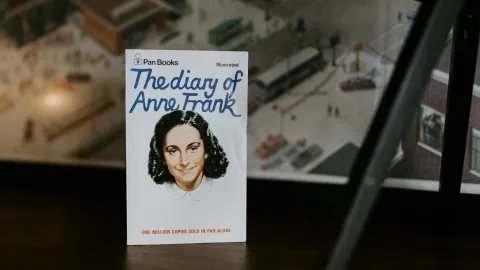
Territorial copyright and the borderless Internet have never sat comfortably together. The CJEU’s judgment in Anne Frank Fonds (C-788/24), delivered on 9 July, demonstrates that this tension remains…
In many copyright infringement cases filed in the United States against AI companies because of their unlicensed use of copyrighted works in the training of AI models, defendants raise fair use as a…
Few rights look more thoroughly harmonised than the right of “communication to the public”. Article 3(1) of the InfoSoc Directive, and the CJEU’s “new public” doctrine built to give it a uniform…
Copyright protection of everyday (utility) objects is one of the most challenging and controversial areas of copyright law. The legal framework for such cases has recently been refined by the rulings…
In the lead-up to Australia’s 2025 federal election, residents of Burnie, a coastal city in Tasmania (Australia), were asked to listen to a recording of Senator Jacqui Lambie outlining a re-election…
Constructive trusts can be imposed to recognise a plaintiff’s interest in property owned by others. Courts in Australia and the UK (Attorney General v Guardian Newspapers and others (No 2) [1988] 3…