


Australia is to propose new legislation on AI and copyright licensing, but what it will look like?
September 24, 2026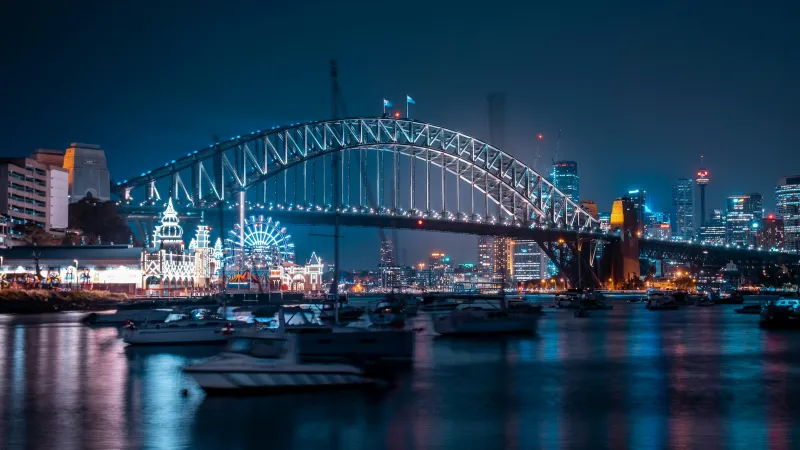
The debate over AI and copyright policy, and how to ensure remuneration for right holders, is gaining momentum around the world. There have been calls to review EU copyright law, India has proposed the introduction of a statutory licensing scheme, and the Australian Government is working behind the scenes to develop its own solution.
In October 2025, the Australian Government rejected the introduction of an EU-style TDM exception to cover AI development activities and, instead, suggested that various licensing options should be considered. So far, licensing of content for AI development in Australia remains very limited. Among the few examples, a few large media companies have managed to strike deals with AI developers, but most right holders do not receive any remuneration despite Australia’s broad copyright protections.
In August 2026, the Australian Prime Minister Albanese, as part of the announcement of a new AI policy for Australia, reiterated the commitment to strong protection for the creative industries. While he did not provide details on how this would be achieved, he promised that draft legislation would be proposed in the first quarter of 2027. Active consultations are currently taking place in various circles, but no draft legislation has yet been leaked.
Possible options
There are a few main options that can be considered, but none of them offers a perfect solution.
Compulsory licensing, known as ‘statutory licensing’ in Australia, is the first option. Australia has a long experience with statutory licences in the educational and government sectors, and these can indeed make licensing much more effective. However, there is strong opposition among right holders to the compulsory nature of licensing in the AI context. Some right holders are not willing to license their content to AI companies at all. Interestingly, AI developers, who would logically be most interested in this option, also argue against it. Unsurprisingly, they continue to lobby for a TDM exception.
Extended collective licensing (ECL) is another option. While Australia has not yet had ECL as a part of copyright law, it may appear more attractive to creative industries because of its ‘voluntary’ nature. First, it is up to collective management organisations (CMOs) to decide whether they want to offer the licence, and doing so would require sufficient buy-in from their right holders. Second, right holders can opt out of the licensing scheme. At the same time, large right holders have indicated that they are interested in direct licensing and, if they opt out, CMO licences, even with their extended effect, may not be sufficiently attractive to AI developers and could remain underutilised.
There are also a few systemic problems with any collective licensing scheme. The first relates to the territorial nature of copyright law and collective licensing. Although some collecting societies could potentially represent foreign right holders in AI licensing arrangements, CMOs can generally require and grant licences only for AI training activities taking place within their own jurisdiction (for example, Australia), rather than for AI development conducted in other countries.
The second concerns the distribution of licensing revenue. Under the internationally recognised principle of national treatment, a substantial proportion of collected licence fees would need to be distributed to overseas right holders, leaving only a portion for domestic right holders. Furthermore, of the fees remaining in Australia, the majority would likely be distributed to secondary right holders, as original authors typically assign all or most of their rights.
Due to these limitations, as well as other concerns, solutions outside copyright have also been discussed. One option is to establish some form of AI cultural fund, to which AI companies offering or providing AI models or services in Australia could contribute. The amounts collected would then be distributed among the creative industries. Anthropic has strongly supported this approach, but it has not been well received by the creative industries.
Another option could be to introduce a levy on AI systems. The Australian Government has recently introduced the News Media Bargaining (Administration) Bill 2026, also known as News Media Initiative. This updated version of the previous Media Bargaining Code requires social media platforms either to enter into remuneration agreements with Australian new media organizations or to pay a levy of up to 2.5% of local advertising revenue. One could consider whether a similar levy model could be introduced for generative AI systems. Notably, the levy for private copying has been recognised as unconstitutional by the High Court of Australia, and thus this option may face significant constitutional difficulties in Australia.
Finally, the public lending right has been mentioned in the debate. Under the current public lending scheme, the Australian federal government provides a certain amount of compensation to Australian right holders whose books are lent in public libraries. Some stakeholders have suggested that a similar compensation scheme could be established for the use of copyright-protected content in AI development. The main problem with this approach is that the funds would need to come from the Australian Government budget, and remuneration levels are likely to be very modest.
Three recommendations
The above brief overview shows that none of the approaches is likely to work particularly well on its own, and most likely a combination of approaches will be needed to properly balance the competing interests.
However the scheme is designed, we suggest that the government takes three important considerations into account:
First, governments should consider shifting the focus of AI copyright remuneration from the development stage to the deployment stage. Rather than requiring AI developers to obtain licences when training models, remuneration could be required when AI models or AI-enabled products are commercialised in Australia. This would create a level playing field between domestic and foreign providers, reduce upfront costs for developers, and potentially generate higher remuneration for right holders by linking payments to commercial success.
The second proposal is to ensure that remuneration collected in Australia primarily benefits Australian right holders. Conventional collective licensing may require payments to foreign right holders because of national-treatment principles, even where Australian creators receive little or no reciprocal remuneration overseas (e.g., due to fair use or TDM exceptions). Alternatives to copyright-based models such as an AI levy or an AI cultural fund could channel payments from AI companies into Australia’s creative industries while avoiding some of the limitations of copyright-based licensing.
Finally, the scheme should ensure that creators, and not only secondary right holders, receive a fair share of AI-related remuneration, regardless of whether they have previously assigned their copyright. One option is to establish non-transferable, non-waivable remuneration rights for creators, potentially administered collectively. If remuneration is instead distributed through a levy or cultural fund, allocation rules should be designed around broader public policy objectives rather than copyright ownership alone, ensuring an equitable distribution among different creative stakeholders.
This blog post is based on Matulionyte, Rita, AI and Copyright Collective Licensing: Australia as a Case Study (September 04, 2026). Available at SSRN: AI and Copyright Collective Licensing: Australia as a Case Study by Rita Matulionyte :: SSRN
Photo by Maximalfocus on Unsplash
Comments (0)
Your email address will not be published.





You may also like





August 27, 2026