From Upcycling to Book Destruction: Copyright Exhaustion’s Environmental Paradox
September 14, 2026
Copyright exhaustion has an environmental problem. In the EU, transforming a lawfully purchased physical copy can move the act beyond the exhausted distribution right and trigger the copyright holder’s reproduction right, creating obstacles to upcycling and other circular practices. In the US, destroying a physical copy after digitising it can strengthen the fair use case for making the digital copy. So while EU and US copyright laws treat the transformation of physical objects very differently, both can work against circularity: one can make it harder to give old objects a new life, while the other can make destroying them legally useful. And this comes at a time when governments around the world are seeking to restrict unnecessary product destruction for environmental reasons – consider, for instance, the EU’s recent ban on destroying unsold clothes.
The EU: when transformation defeats exhaustion
The EU problem starts with the familiar Art & Allposters judgment. The case concerned lawfully marketed paper posters reproducing protected artworks, whose images were subsequently transferred onto canvas. Although the process did not multiply the protected images (they disappeared from the original posters during the transfer), the CJEU held that exhaustion could not apply. The replacement of the paper medium by canvas resulted in a new object and amounted to a new reproduction (paras 43-46).
The implications of this reasoning for the circular economy have since become concrete.
In the Finnish Copyright Council’s Tableware Jewellery opinion (TN 2021:9), a jewellery maker created earrings and necklaces from pieces of broken porcelain tableware carrying copyright-protected decorative patterns. Unlike in Allposters, no protected image was transferred onto another material: fragments of the original physical objects were themselves incorporated into the jewellery. Nevertheless, relying expressly on Allposters, the majority considered that the transformation resulted in new objects and fell outside exhaustion.
The issue resurfaced before the Paris Judicial Court in Hermès v Maison R&C in April 2025. The defendants purchased second-hand Hermès silk scarves, cut them up and incorporated pieces into denim jackets, presenting their activity as surcyclage – upcycling. The court again followed Allposters. It considered that, once cut and sewn into jackets, the pieces had lost the form and function of scarves, with the resulting jackets therefore constituting new reproductions to which exhaustion did not apply.
This creates a peculiar problem for upcycling. Circular practices characteristically depend on altering existing objects – cutting, combining and repurposing them so that their materials acquire a new useful life. Yet the more extensive the transformation, the easier it may become under Allposters to characterise the result as a new reproduction outside exhaustion.
Copyright can therefore make unchanged resale legally safer than transformation, even where transformation would give an otherwise unwanted object a new productive life.
The US: when destruction helps
The US example starts from the same basic situation – a lawfully acquired physical copy is transformed – but copyright law deals with that transformation very differently.
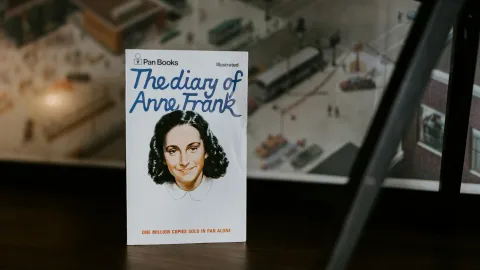
In Bartz v Anthropic, the Northern District of California considered, among other things, Anthropic’s creation of a vast digital research library, used in part to train its large language models. Alongside books obtained from pirate libraries (which the court treated differently) Anthropic spent millions of dollars purchasing millions of physical books. Their bindings were stripped, their pages cut and scanned, and the paper originals discarded.
Buying the books did not itself give Anthropic the right to reproduce them. First sale entitled Anthropic to dispose of the physical copies, but did not exhaust the reproduction right. The creation of digital copies therefore required an independent justification under fair use.
And this is where the destruction of the physical books became legally relevant. Judge Alsup held the print-to-digital conversion to be fair use, with the destruction of the originals forming part of that reasoning. The court characterised the process as a one-for-one format substitution: one physical copy was purchased and one digital copy took its place. As the judgment put it: “The print original was destroyed. One replaced the other”.
US copyright law does not require a physical book to be destroyed before it is digitised. But Bartz gives the destruction legal weight: it helped Anthropic argue that the digital copy replaced the physical one rather than adding another permanent copy to its library. From an environmental perspective, that incentive points in the wrong direction. Keeping the physical book after digitisation would preserve the possibility of its continued use; destroying it removes that possibility while strengthening the copyright argument for the digital replacement.
The scale of Anthropic’s operation shows why this matters in practice. Court filings revealed that its internal “Project Panama” sought to “destructively scan all the books in the world”, with millions of books acquired and processed. Destructive scanning is efficient: removing bindings allows loose pages to be processed quickly, whereas preserving or rebinding the originals adds costs. But physical books that survive digitisation can still be resold, donated, lent, collected or preserved. Destroying them ends all of those possible further uses and turns existing products into waste. Reports that rare and out-of-print books are also being purchased and destructively scanned for AI development add a further knowledge-access and preservation concern.
The implications of this reasoning may extend beyond books, particularly where a physical copy can meaningfully be replaced by a digital one – photographs, prints or maps, for example. The analogy is less straightforward for clothes, furniture or other objects relevant to upcycling, since digitising the protected work they incorporate does not replace the material object itself. But this difference also brings the broader problem into focus. Copyright can attach legal consequences to whether a physical object carrying a protected work is preserved, transformed or destroyed, while leaving the environmental (and broader sustainability) consequences of those choices largely outside the analysis.
Copyright through the environmental lens
So the resulting picture is this. EU and US copyright approach the transformative reuse of physical copies carrying protected works very differently. Under the EU approach, transforming a physical copy whose distribution right has otherwise been exhausted by its first sale may amount to the making of a new reproduction and thus require the copyright holder’s consent. In Bartz, by contrast, the US court accepted the print-to-digital transformation as fair use, but the destruction of the physical originals was an important part of its “one in, one out” logic. Different doctrinal routes thus lead to a similar environmental problem: neither approach gives much weight to circularity or sustainability, and both can ultimately create incentives for destruction rather than the continued use of existing physical objects.
Greater flexibility alone is therefore not the answer. The openness of fair use may avoid some of the rigidity associated with EU exhaustion, but Bartz shows that flexibility does not necessarily translate into environmentally supportive outcomes. What is missing in both settings is attention to the environmental and broader societal consequences of the interpretive choices being made.
The human right to a clean, healthy and sustainable environment (HR2HE) provides a useful lens through which to address this problem. Recognised by the UN General Assembly in 2022, it strengthens the case for bringing environmental considerations into the interpretation and application of IP rules, particularly where those rules can facilitate or hinder more sustainable forms of production and consumption. In EU law, this interpretive direction finds additional support in Article 37 of the EU Charter and Article 11 TFEU, both of which establish the integration of environmental protection into Union policies and activities.
For EU exhaustion, this means taking seriously an interpretation under which copyright control can revive when transformation keeps existing materials in circulation instead of sending them to the landfill. For US fair use, the concern runs in the opposite direction: if destruction of the physical original contributes positively to the legal justification for copying it, copyright itself risks creating an environmentally (and socially) perverse incentive.
Neither conclusion requires environmental protection invariably to prevail over copyright. It requires its consequences to enter the legal field of vision.
Tags:
upcycling,
environment
Comments (0)
Your email address will not be published.



You may also like


August 27, 2026