


The Rise of ICSID Claims Against Sub-Saharan African States
May 18, 2026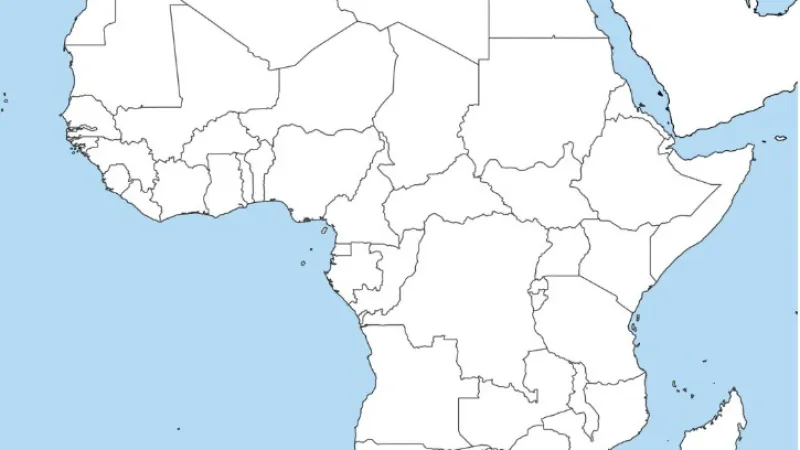
On 17 February 2026, ICSID published its report on cases registered in 2025. This report revealed that a record number of cases were filed against states in Sub-Saharan Africa. Indeed, ICSID’s statistics indicate that 15 cases were registered against these states (ICSID Caseload – 2026-1 Report), constituting almost a quarter of all ICSID cases registered in 2025.
This blog post provides an overview of these cases and addresses one of the potential reasons behind the recent spike.
Overview
Between 2012 and 2021, an average of around seven cases were filed against states in Sub-Saharan Africa each year. After a downturn in 2022, with only two registered cases, cases against Sub-Saharan African states returned to pre-2022 levels, with seven cases registered in 2023, and eight cases registered in 2024. Recently, ICSID has reported a significant increase in cases filed against states in Sub-Saharan Africa, as 15 such cases were registered in 2025. Notably, only one non-ICSID ISDS claim was filed against these States in 2025: a claim by a UK investor against Ghana under the UNCTRAL Rules (BGHL v. Ghana).
The 15 ICSID cases filed against Sub-Saharan states in 2025 each involved at least one of these three types of circumstances: (1) contractual breaches, (2) measures intended to increase state revenues, or (3) cancellation of licenses and refusal to extend new licenses.
First, seven of these cases are contractual disputes with varying backgrounds.
In three related cases, Tanzania faces allegations of contractual violations and harassment arising from production sharing and gas agreements with the state (PanAfrican Energy Corporation v. United Republic of Tanzania (ICSID Case No. ARB/25/42; PanAfrican Energy Tanzania Limited v. United Republic of Tanzania and Tanzania Petroleum Development Corporation (ICSID Case No. ARB/25/43); PanAfrican Energy Tanzania Limited v. United Republic of Tanzania and Tanzania Petroleum Development Corporation (ICSID Case No. ARB/25/44)).
Kenya, Angola, Togo, and Niger face one claim each. An investor filed a claim against Kenya after the termination of a contract on border security services, asserting that Kenya improperly used its intellectual property (Travizory Border Security SA v. Republic of Kenya). Although Angola is one of the newest signatories to ICSID, it is already facing its second ICSID claim, arising from its alleged failure to make a payment of USD 100 million regarding the construction of a cement plant (ETA Star International LLC v. Republic of Angola).
Togo, which struggled to meet payment demands of the operator of the country’s largest electricity plant, initiated conciliation proceedings (Republic of Togo v. ContourGlobal Togo SA) - the second ICSID conciliation proceedings initiated by a State. Notably, the first were also initiated by an African State: the Republic of Equatorial Guinea (ICSID). Further, in Orano Mining SAS v. Republic of Niger, Niger faces a claim regarding its seizure of operational control over its joint venture with Orano.
Although there is not much information available, the UNCITRAL case BGHL v. Ghana also seems to be contractual in nature and concerns the termination of mining leases for the Bogoso Prestea Mine by the country’s Minerals Commission in 2024. An interim management committee formed by the Minerals Commission assumed managerial control of the mine site after the notice of termination.
Second, some of these disputes involve measures intended to increase state revenues. For example, Woodside Energy (Sénégal) B.V. v. Republic of Senegal seems to relate to a challenged tax assessment by the Senegalese authorities (although little information has become publicly available so far). Further, the measures challenged by the investor in Société des Mines de Loulo S.A. and Société des Mines de Gounkoto S.A. v. Republic of Mali include the revision of Mali’s tax regime, increased royalty rates, and mandatory state participations.
Third, ten ICSID cases filed against sub-Saharan states in 2025 involve licenses and concessions.
Notably, Comoros faced its first ICSID claim after providing citizenship to the stateless ‘Bidoon’ people in exchange for investments. Following a corruption scandal, Comoros revoked the previously granted concessions (United Operations Limited v. Union of the Comoros).
The remaining nine of these ten cases involving license or concession issues concern the mining sector, discussed below.
Mining Disputes Involving License/Concessions
Although mining disputes are common in this region, the coups d'état that recently took place stand out as a potential reason behind the recent spike.
Notably, six mining cases were filed against Guinea, Mali, and Niger in 2025, following coups d'état that took place between 2021 and 2023. This section addresses these cases and the developments that gave rise to them.
Guinea
In 2021, Mamady Doumbouya installed himself as Guinea’s leader after ousting President Alpha Condé following a military coup (The Guardian). After seizing power, Doumbouya complained that the country was not sufficiently benefiting from its natural resources. He then pledged to assert greater national control over these resources, including by reviewing mining contracts and concessions (African Security Analysis). Thereafter, in May 2025, Guinea cancelled approximately 50 mining concessions granted to foreign investors on the basis that these concessions are either non-operational or underused and, consequently, forfeited by the investors (African Law & Business).
In response, Nomad Bauxite Corporation Pte Ltd and Almas Mynbayev, and Nimba Investment LLC filed claims against Guinea in 2025. Little is known about these cases so far, but the ICSID website indicates that these cases involve ‘mining license’ and ‘mining and transportation,’ respectively.
In 2026, another investor filed a claim against Guinea arising again from a license issue in the oil & gas and mining sectors (Axis International Limited v. Republic of Guinea). The investor seeks USD 29 billion.
Mali
In 2021, Col Assimi Goïta declared himself president following a coup d'état, ousting President Bah Ndaw. In response, France, whose troops had been in Mali to fight Islamist groups, suspended military ties with Mali (BBC). Mali then turned to Russia’s Wagner Group for military support (BBC).
In 2023, Mali’s military leaders overhauled the country’s mining laws by removing tax exemptions, increasing the mandatory stake held by the state and locals in mining projects from 20% to as much as 35%, preventing monopolization by limiting permits per entity, and adopting stricter change-of-control provisions (UNCTAD). The amendments seek to increase its mining revenues by 50% (SWP).
Those amendments led to tensions with Barrick Mining Corporation, a Canadian shareholder of Société des Mines de Loulo S.A. and Société des Mines de Gounkoto S.A., which hold 80% of the gold mining operations in ‘Loulo and Gounkoto’, located in Mali. These tensions culminated in Malian authorities detaining some of Barrick’s employees, suspending the investor’s gold exports, and halting operations.
In 2025, Barrick filed a claim (Société des Mines de Loulo S.A. and Société des Mines de Gounkoto S.A. v. Republic of Mali) against Mali. Thereafter, Barrick settled with Mali by agreeing to pay USD 430 million for the release of its employees and being allowed to resume mining operations in Mali (AfronomicsLaw).
Niger
In 2023, the military seized power, deposing President Mohamed Bazoum, who had maintained friendly relations with France (IISS). In contrast to the previous government, the new military leaders sought to end ties with France.
The hostilities directly affected Orano Mining SAS, a company that is majority owned by the French state. Niger’s military junta seized operational control over Orano’s mines at Somaïr in December 2024 (BBC). Thereafter, Orano filed two ICSID claims against Niger (Orano Mining SAS v. Republic of Niger (ICSID Case No. ARB/25/8); Orano Mining SAS v. Republic of Niger (ICSID Case No. ARB/25/9)).
Similarly, the Canadian GoviEx Uranium Inc. commenced ICSID proceedings against Niger after it revoked its license. The case was temporarily suspended until September 2025 while the company was negotiating with Niger (GoviEx Niger Holdings Ltd. and GoviEx Uranium Inc. v. Republic of Niger).
While Niger took steps to cut ties with France, Niger’s state-owned uranium company, Timersoi National Uranium Company, signed a memorandum of understanding with the Russian Uranium One Group, envisaging the joint development of uranium mines in Niger (World Nuclear News).
In March, Niger rescinded three gold mining and refining concessions on the basis that the companies did not honor their commitment to contribute to local development (African Law & Business).
Conclusion—What’s Next
The record number of cases filed against Sub-Saharan African states in 2025 may partly be traced back to the coups d'état that occurred in Guinea, Mali, and Niger between 2021 and 2023.
Guinea, Mali, and Niger are not the only countries that recently experienced a government transition through a coup d'état. Indeed, since 2020, nine coups d'état have taken place in Africa, including in Burkina Faso, Sudan, Guinea-Bissau, Chad, and Gabon. The political circumstances in those countries may give rise to further mining disputes in the region. For instance, Burkina Faso enacted a new mining code in 2024 that increases the state’s share in mining ventures from 10% to 15% (without compensation) and withdraws tax and customs exemptions previously granted to mining companies (SWP). In contrast, Gabon—after having established an elected government—enacted a new law regarding mining investments, and seeks to attract investment by granting fiscal incentives (MiningReview).
Other countries have also recently made changes that might lead to foreign investment disputes. For example, in March 2026, Ghana introduced a new royalty scheme that increases the state’s share of mining revenues when gold prices rise (African Leadership Magazine). It is therefore likely that ICSID will register a significant number of cases against Sub-Saharan African states in 2026 as well.
Comments (0)
Your email address will not be published.


You may also like
September 30, 2026
September 24, 2026