


Why Brand Owners Can No Longer Afford to Ignore Web3 Domains — And What They Can Do About It
July 22, 2025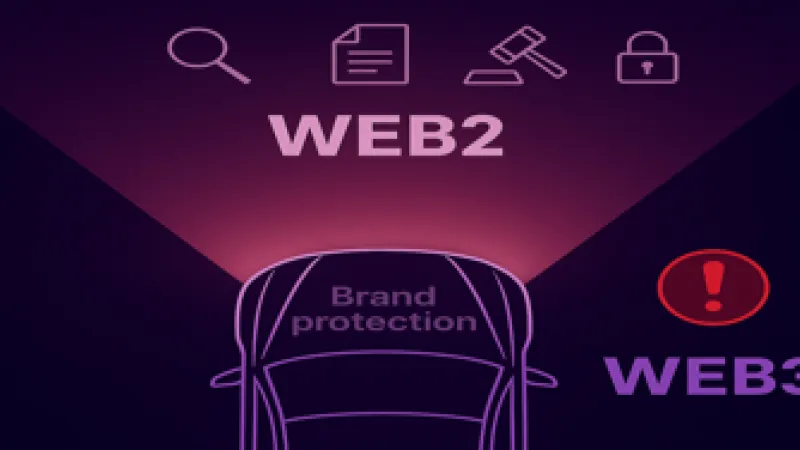
Web3 domains have long been seen as a fringe issue - complex, decentralized, and outside the scope of most brand protection strategies. Many trademark professionals and brand owners have understandably taken a wait-and-see approach, especially if their clients or organizations have no immediate plans to launch Web3 products or services or if they flat-out can’t be bothered with it.
But that approach is quickly becoming untenable. The Web3 domain space presents a growing risk for brand owners and differs fundamentally from traditional (Web2) domain environments. Reactive enforcement methods are largely ineffective in this space. Blocking is emerging as a viable brand protection option in Web3 for those seeking a practical, proactive solution.
Web3 Domains: a new but real threat
Web3 domain names—such as those ending in .auth, .ntfs, .paynow, and thousands of other blockchain-based extensions—are not managed by traditional registries or regulated by ICANN. They are minted on the blockchain, owned outright by the registrant, and operate without central oversight.
For brand owners, this presents two critical challenges:
- There are no reliable takedown mechanisms. Once a domain is minted on the blockchain, it is generally permanent. Unlike with Web2 domains, there is no UDRP process, no registrar to issue a takedown, and no Whois to help identify the registrant.
- Infringement is irreversible. If a third party registers a Web3 domain using a brand name—say, volvo.4sale or uniqlo.ntfs—there is no meaningful way to recover it. Litigation options are limited and rarely effective, and reputational damage may already be done by the time a response is possible.
These realities make Web3 domains less forgiving and more urgent to address, even if a brand owner is not currently interested in the blockchain space.
Web2 strategies don’t translate to Web3
In the Web2 environment, brand owners have the flexibility to mix proactive and reactive approaches. Monitoring services, defensive registrations, and targeted enforcements have all proven to be effective in managing online infringement.
That framework doesn’t apply in Web3.
There is no centralized registry, no uniform dispute policy, and no reliable transparency around registrations. Waiting for an issue to arise before acting often means it's already too late. This makes proactive protection not only preferable but, in many cases, the only meaningful option.
The importance of blocking
Blocking is an important tool for brand owners in spaces like Web3, where traditional enforcement options are limited or nonexistent. By preventing trademarks from being registered as domain names upfront, blocking helps reduce the risk of infringement before it occurs while avoiding the need for monitoring, reactive enforcement, wallets and gas fees. While still emerging in the Web3 space, some platforms are beginning to adopt this approach. For example, Freename, one of the largest platforms for Web3 domains, recently partnered with NameBlock to offer a blocking solution sold via accredited resellers spanning thousands of currently existing Web3 TLDs as well as offering protection in any future TLD created on the platform, and separately, GlobalBlock partnered with Unstoppable Domains to offer blocking in twenty Web3 TLDs on Unstoppable’s platform. This is hopefully marking an early step toward adapting proven Web2 brand protection strategies to a decentralized environment. In the meantime, utilizing blocking services allows brand owners to prevent potential misuse at scale, in a cost-effective way, until/if a long-term web3 strategy is established for the brand, without the need for wallets or blockchain expertise.
The takeaway
Web3 domains are not a future concern—they are already being minted, traded, and used in ways that can affect brand equity. The lack of enforcement options and transparency in this space make reactive strategies ineffective, and the risks of reputational and legal exposure are real.
Fortunately, with the introduction of blocking tools on certain platforms, brand owners now have a way to address these risks proactively—without needing to invest time and resources into building an entire Web3 strategy or presence.
In other words, now is a good time for trademark counsel and brand protection professionals to factor Web3 into your risk assessments, and to take advantage of the tools that are finally starting to emerge.
*Jeanette Eriksson is a freelance consultant and advisor to NameBlock.
Comments (1)
Your email address will not be published.
Become a contributor!
Interested in contributing? Submit your proposal for a blog post now and become a part of our legal community!
Contact Editorial Guidelines



You may also like

October 1, 2026


September 22, 2026



NamerTips
It's important to point out that decentralized naming brings with it a host of new context considerations. Among them are how a name is used, its language and whether it incorporates special characters or emojis for distinction purposes. Trademark holders shouldn't walk into the decentralized naming arena with an entitlement mindset as their marks don't give them ownership over words, numbers, phrases and images in general. A sound strategy for trademark holders would be to view decentralized naming through the lens of innovation and opportunity. This doesn't imply tolerating their marks being infringed upon. It's merely to suggest they should choose to understand how a name can be used before taking a defensive stance out of angst, ignorance and maybe even greed in some cases. They should understand "decentralized naming" isn't about brands as much as it is about "digital identity". In closing, it's worth pointing out that a trademark holder doesn't have the right to every domain, in every extension, across every digital medium. As the digital landscape evolves, so should their strategic approach to aligning their operations with the times. This applies to everything from decentralized naming to AI and beyond. Trademark holders should view their marks as valuable enough to keep tabs on where technology is headed, who it empowers and what their reach is.