The Paris Court Confirms Once Again That Upcycling Does Not Preclude Trade Mark Infringement
September 29, 2026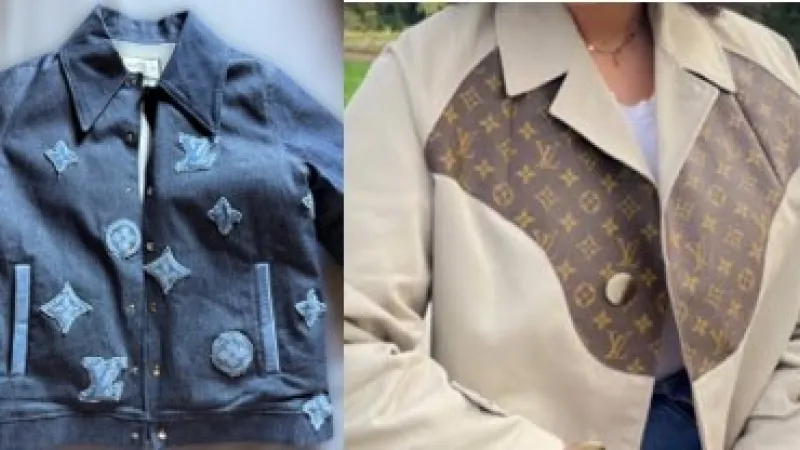
On 17 September 2026, the Paris Judicial Court delivered another judgment in a dispute between a luxury brand, this time Louis Vuitton, and a company manufacturing and marketing clothing made from pieces of authentic Louis Vuitton products, bearing Vuitton’s famous trade marks, including the LV monogram and Damier pattern. Chanel recently obtained a decision against the same infringer, commented here.
In the Vuitton case, the Court found infringement on the basis of the enhanced protection of trade marks with a reputation. The defendant relied on the arguments typically raised in such cases, namely trade mark exhaustion, environmental protection and freedom of expression, which, it claimed, justified its upcycling activities. The Court dismissed each of these arguments.
With regard to the exhaustion defence, the Court held that the goods marketed by the defendant were not the same goods as those originally put on the market by Louis Vuitton. Their marketing therefore required the consent of the trade mark proprietor. Accordingly, the exhaustion provisions could not apply. This reasoning is consistent with the previous case law and appears entirely correct. Indeed, the primary requirement for exhaustion, namely that the goods bearing the mark have been put on the market with the proprietor’s consent, is not satisfied in such circumstances. Consequently, the marketing of such goods cannot constitute ‘further commercialisation’ within the meaning of the exhaustion provisions.
Concerning the argument based on environmental protection, the Court refused to accept that upcycling could serve as a justification for trade mark infringement. It noted that no legal provision recognises environmental objectives as a basis for restricting intellectual property rights in such circumstances. Far from pursuing a genuine environmental purpose, the defendant's activities formed part of a commercial undertaking designed to generate profit. The evidence showed that the authentic products used by the defendant retained substantial value on the second-hand market and could have been resold without modification. By transforming those products instead, the defendant contributed to the replacement of goods that remained perfectly marketable, thereby undermining its own sustainability argument. The Court therefore concluded that no environmental grounds could justify the infringement of Louis Vuitton's trade mark rights.
As regards the freedom of expression argument, the Court held that, even assuming that the clothing manufactured by the defendant was original, the defendant was in reality seeking to circumvent trade mark law in order to market goods as part of its commercial activities, which could not serve as a justification for trade mark infringement. The defendant invoked provisions relating to the protection of freedom of expression, including Article 11 of the Charter of Fundamental Rights. Somewhat surprisingly, it did not specifically rely on the due cause defence available under the provisions governing the enhanced protection of reputed marks. In any event, such a defence would likely have failed. The Court’s reasoning in rejecting freedom of expression as a defence to trade mark infringement is indeed fully consistent with the recent IKEA ruling of the Court of Justice, discussed here. According to that judgment, freedom of expression cannot prevail over trade mark rights, and constitute due cause, where the expression in question does not contribute to a public interest debate but occurs in a strictly commercial context.
Comments (0)
Your email address will not be published.
Become a contributor!
Interested in contributing? Submit your proposal for a blog post now and become a part of our legal community!
Contact Editorial Guidelines



You may also like

October 1, 2026

September 22, 2026