


When milk turns sour: Oatly v Dairy UK
March 5, 2026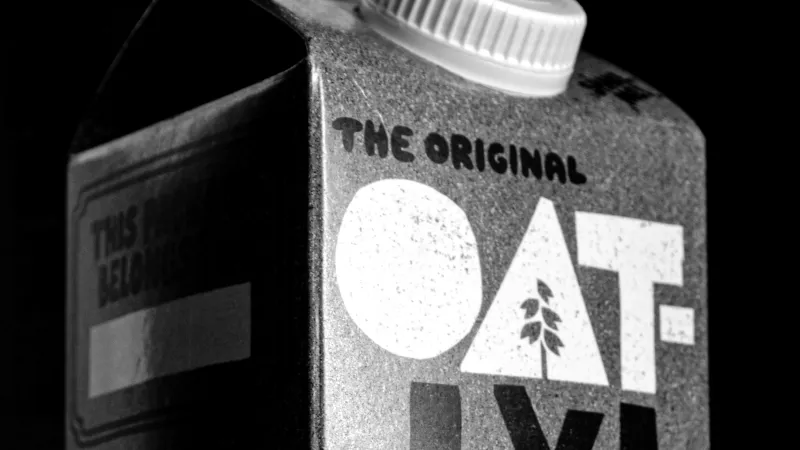
Back in 2021, Oatly, a Swedish manufacturer of oat drinks, obtained a registration for the trade mark POST MILK GENERATION in the UK for goods including milk substitutes, yoghurt substitute, and other food products, all being oat-based.
Dairy UK Ltd, the trade association for the UK dairy industry, filed an invalidation action a few months later claiming that the mark is prohibited by law and should not be registered as according to retained EU regulation the term ‘milk’ can only be used in relation to animal-based products. They also claimed that using this term for non-animal-based products will deceive the public.
In the first instance, before the UKIPO, the Hearing Officer decided that POST MILK GENERATION is not deceptive for the average consumer. However, it was accepted that, as the mark contains the word ‘milk’ but covers goods which do not contain milk, the mark infringes the regulation and is invalid.
Oatly successfully appealed the decision before the High Court. The judge considered that the mark was not a generic description of a product and the regulation does not apply in this case.
Then High Court’s decision was overturned by the Court of Appeal who decided in Dairy UK’s favour on the basis that no notional fair use of the mark could avoid regulatory prohibition.
Finally, Oatly appealed the decision before the Supreme Court, which is the final stop in this process. In this final decision of a four-year saga, the Supreme Court decided in Dairy UK’s favour.
Oatly appeal the Court of Appeal’s decision on the basis that it made an error of law in the interpretation of the regulation.
The key provision requiring interpretation here provides “that the ‘designations’ of ‘milk’ and ‘milk products’ ‘may not be used for any product other than those referred to in that point’”.
The first question asked to the Supreme Court was how should the term ‘designation’ be interpreted and does the mark in question fall within the scope of the regulation on the basis that it uses the term ‘milk’ as a designation?
Oatly submitted that the mark is not a designation as it is not the name of a product per se. On the other hand, Dairy UK argued that ‘designation’ covers any use of the word ‘milk’ due to its wide meaning.
The Supreme Court sided with Dairy UK as the terms, ‘designation’ and ‘name’ are both used independently in the regulation and therefore have different meanings. As a result, when the word ‘milk’ is used in a mark, it describes the goods and cannot function as a trade mark. It was also decided that the objective of this provision is not to protect consumers from deception. Therefore, this first ground of appeal failed and the word ‘milk’ in the mark was determined to be a designation.
The second question is whether the regulation applies to the mark, given that the mark is intended to describe a characteristic of the goods for which it is registered.
Oatly took the position that even if POST MILK GENERATION is covered by the regulation, it is only used to denote the milk free nature of the contested products. Therefore, it is clear that there is no milk contained in the product it is promoting. Meanwhile, Dairy UK submitted that the mark refers to the younger demographics – i.e. the consumers, not the products. Therefore, the mark cannot make clear that the products promoted under the mark do not contain milk.
Tthe Supreme Court agreed with Dairy UK. They considered that the mark describes the younger generation concerned by the impact of the milk production, rather than the goods themselves. They also added that, even if the mark alludes to the milk‑free nature of the products, it is unclear whether it denotes a complete absence of milk or simply a low milk content.
This second ground also failed, and the mark is invalidated in relation to all oat-based goods.
This decision might be a blow to the plant-based industry. However, the language evolves faster than the law and the words “oat milk” and “almond milk” have entered everyday language. This is where the real win might lie for Oatly and other plant-based drink producers.
Tags:
EUTM
Comments (0)
Your email address will not be published.
Become a contributor!
Interested in contributing? Submit your proposal for a blog post now and become a part of our legal community!
Contact Editorial Guidelines

You may also like

February 10, 2026
February 9, 2026
February 6, 2026

February 2, 2026