


The Dracula paradox: temporal limitations in EU trademark law
February 6, 2026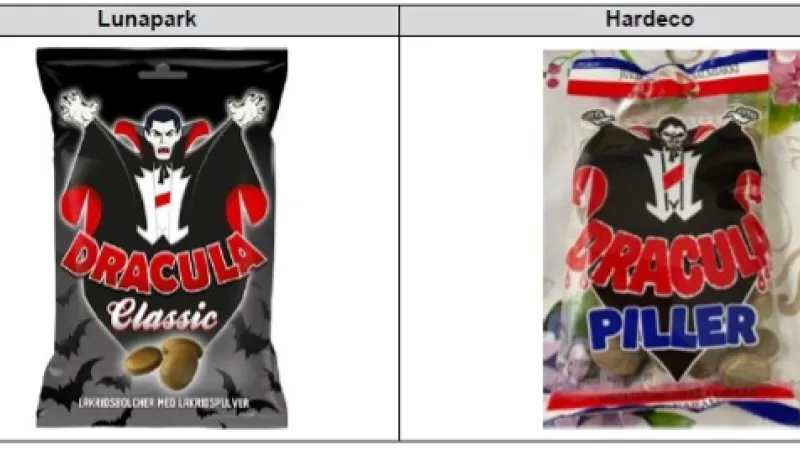
The CJEU's recent judgment in Lunapark (C-452/24) has sent shockwaves through EU trademark law by holding that national courts cannot limit trademark rights for reasons of tolerance beyond the concept of acquiescence provided in Articles 18(1) and 9(1)-(2) of Directive 2015/2436. The case involved a dispute where Lunapark held the registered "DRACULA" trademark whilst Hardeco's predecessor had used the sign for years without any exclusive rights. Despite Lunapark's significant delay in bringing proceedings, the Finnish court's application of a "reasonable time" requirement was challenged.
The CJEU held that Article 18(1) fully harmonises the conditions for limiting a trademark's exclusive rights due to holder inactivity, allowing for acquiescence of a subsequently registered trademark, but not an unregistered sign which confers no exclusive right. The judgment is grounded in textual interpretation: if Article 18(1) expressly mentions acquiescence to later registered trademarks, this excludes tolerance of unregistered signs. The CJEU correctly observed that neither Karkkimies nor Hardeco acquired exclusive rights over "Dracula" through registration or use, protecting the integrity of the trademark registration system. The CJEU prevented Member States from circumventing harmonised acquiescence rules through general principles of national law, ensuring uniform application across the EU.
Despite its doctrinal coherence, the judgment raises serious concerns. Most significantly, the CJEU fails to adequately distinguish between substantive limitations and procedural rules governing enforcement. The Finnish "reasonable time" rule arguably functioned as a procedural requirement, and the CJEU should have assessed it against the principles of equivalence and effectiveness rather than excluding its application outright.
In areas of full harmonisation, Member States retain procedural autonomy only to the extent that their rules do not undermine uniform application of EU law. The CJEU's own jurisprudence in Rewe-Zentralfinanz (C-33/76) and Comet (C-45/76) established that national limitation periods are compatible with EU law provided they satisfy the equivalence and effectiveness tests. A crucial distinction lies in available remedies: many Member States time-bar damage claims differently from injunctive relief, and clarifying that national time limits may bar damage claims but not injunctions would reduce conflict with EU law whilst maintaining uniform trademark protection.
The judgment gives insufficient weight to legitimate expectations of third parties who have used signs for extended periods without opposition, potentially producing inequitable results where a party using a sign for 20 years faces infringement proceedings despite the trademark owner's prolonged inaction. This tension between legal certainty and equitable outcomes lies at the heart of the Lunapark paradox. Moreover, the practical implications extend beyond individual disputes. Businesses operating across multiple Member States now face uncertainty regarding how long they might remain vulnerable to infringement claims. The elimination of national temporal limitations could encourage strategic delay by trademark proprietors, undermining the policy objectives of promoting diligent enforcement and protecting reliance interests.
On 3 November 2025, the Municipal Court in Prague referred three critical questions to the CJEU in MPM v ELTON (C-693/25), directly challenging the consequences of Lunapark. The first question asks whether the acquiescence period may be suspended during legal impossibility. The second asks whether the right to prohibit use can become time-barred under national law before the five-year EU period expires. This is a direct test of the harmonisation-autonomy balance. The third concerns prior use rights where a sign was used for over 50 years before the later trademark registration.
The central issue is whether full harmonisation of substantive rights precludes all national temporal limitations. Whilst national rules creating additional substantive grounds for limiting trademark rights are incompatible with Directive 2015/2436, procedural rules governing enforcement should remain within national competence subject to equivalence and effectiveness. The CJEU should clarify in MPM v ELTON that national procedural rules governing enforcement timing remain within national competence. The EU legislature should also consider amending Directive 2015/2436 to explicitly preserve Member States' procedural autonomy whilst addressing the relationship between acquiescence and limitation periods, suspension during legal impossibility, and substantive prior use rights. The fundamental question remains: should mere registration always triumph over decades of good-faith use? The answer may determine whether EU trademark law achieves its goal of balancing proprietor rights with legitimate expectations of third parties, or whether it creates a system where rights exist indefinitely without meaningful temporal boundaries on enforcement.
Comments (1)
Your email address will not be published.
Become a contributor!
Interested in contributing? Submit your proposal for a blog post now and become a part of our legal community!
Contact Editorial Guidelines
Image

Books
Reputed Trade Marks and Their Protection
€205.00
You may also like

October 9, 2026
October 1, 2026


September 22, 2026


Charles Gielen
The reader of these comments might be interested in reading my brief note on Lunapark published end of last year in the Dutch case law reports NOTE by Charles Gielen on ECJ 1 AUG. 2025, C-452/24, ECLI:EU:C:2025:618 (Lunapark) 1. A short and powerful judgment by the European Court of Justice, delivered without an opinion of an Advocate General. The initial reaction is: is this judgment worth commenting on? In my opinion, the answer is that what the Court does certainly deserves attention. In short, it concerns the question of whether a national (in this case Finnish) rule on acquiescence can still be applied alongside the harmonised provisions of trade mark law. The Court rules that this is not possible. As explained below, I question this conclusion. 2. What was the issue? The holder of a national trade mark registration for the DRACULA trademark for confectionery (Lunapark), registered in 2009, initiated trade mark infringement proceedings in 2020 against a company (Hardeco) that also markets confectionery using the DRACULA trade mark. This company does not have a trade mark registration. Seemingly a clear-cut case. However, that company (or at least its legal predecessor) was already using the DRACULA trade mark before Lunapark registered its DRACULA trade mark. It defended itself by arguing that Lunapark had lost its rights to take action against the use of the trade mark, which followed from a general principle of Finnish private law, which states that a person must assert its rights within a reasonable period of time after it became aware or should have become aware of the facts on which the claim is based. Lunapark had never taken any action against the use by Hardeco and its predecessor. The Finnish court of first instance applied this principle. On appeal, Lunapark argued that this principle of Finnish private law was contrary to the provisions of the EU Trade Marks Directive. In short, because this directive provides for a specific rule on acquiescence (Article 18(1) and Article 9(1)) which, insofar as relevant here, provides that the holder of an earlier trade mark right who has knowingly tolerated the use of a later registered (emphasis added, ChG) trade mark for five consecutive years, can no longer claim the invalidity of the registration and a prohibition on the use of that tolerated mark. The attentive reader will immediately notice that Hardeco's DRACULA trademark is not registered. So strictly speaking, this rule of acquiescence from the Trade Marks Directive does not apply. However, Hardeco was nevertheless helped by the fact that, as mentioned above, according to the principles of Finnish private law, the right to prohibit use may be lost if someone who was aware of the use of the allegedly infringing sign does not take action within a reasonable period of time. The Finnish appeal court asked the European Court of Justice whether the Trade Marks Directive precludes the application of these principles. 3. In short, the European Court's answer is: yes, the Trade Marks Directive precludes further restriction of the rights of the trade mark proprietor. How did the Court arrive at this conclusion? First of all, reference is made (in paragraph 28) to the Court’s case law (including the judgment of 27 October 2022, C-197-21, ECLI:EU:C:2022:834, Soda-Club), in which it was decided that Article 10 of the Trade Marks Directive achieves full harmonisation of the rules governing the rights associated with the trade mark. Then, in paragraph 31, reference is made to the Budějovický Budvar judgment of 22 September 2011 (C-482/09, ECLI:EU:C:2011:605, paragraph 33), in which it was decided that, with regard to estoppel due to acquiescence in invalidity proceedings, Article 9 achieves full harmonisation of the conditions under which the proprietor of a registered (underlined, ChG) trade mark can retain his right to a trade mark when its invalidity is claimed. However, as emphasised, this concerns registered trade marks. DRACULA, used by Hardeco, was, as mentioned, not registered. And then comes the Court's conclusion in paragraph 36 of the Lunapark decision: as is apparent from the foregoing …, a national court cannot, in the context of a dispute concerning the exclusive right conferred by a trade mark, limit the exercise of that right beyond what is provided for in Article 18(1) of Directive 2015/2436, read in conjunction with Article 9(1) or (2) thereof. According to the Court, any other interpretation of the provisions of the Trade Marks Directive would undermine the objective of the directive, which, according to the Court, is to ensure that registered trade marks enjoy the same legal protection in all Member States. 4. I do not find this conclusion convincing. The Court too easily overlooks the fact that, according to the text, the rules on acquiescence in Article 18 in conjunction with Article 9 of the Trade Marks Directive only concern restrictions on the exercise of rights in relation to registered trade marks and that full harmonisation is only intended in that regard. What then remains of the Court's decision in the aforementioned Budějovický Budvar decision? It states that the conditions of this provision, and in particular the concept of acquiescence, is a concept of European law and that four conditions must be satisfied before the period of limitation in consequence of acquiescence starts running if there is use of a later trade mark which is identical with the earlier trade mark or confusingly similar (see paragraph 53 of the Budějovický Budvar judgment). One of these (the first condition) is that it must concern the acquiescence to a later registered trade mark. I quote from my note under this judgment in the Dutch case law reports (Nederlandse Jurisprudentie 2013/117): 'According to the Court in paragraph 54, the limitation period cannot therefore commence from the moment a younger trade mark is simply used. This immediately raises a particularly important question. What is the scope of national (private) law in situations where there has been long-term acquiescence to a used (and unregistered) trade mark (with all kinds of sub-questions: what about situations where the later trade mark is also used as a domain name or trade name)? A strict interpretation of what the Court says about full harmonisation means that the national court is free to apply national law on acquiescence or abuse of power in a situation where a younger, unregistered trade mark is tolerated. After all, the Court expressly states in paragraph 53 that full harmonisation relates to the tolerance of a younger registered (emphasis added, ChG) trade mark. A broad interpretation would mean that in the event of acquiescence due to tolerance, full harmonisation of this concept would preclude the application of national law if the later trade mark is not registered. I believe that the strict interpretation is the correct one. The Court attaches great importance to the conditions expressly laid down in Article 9. Since full harmonisation applies to those conditions of acquiescence, I believe that this means that the court is free to apply national law in cases that do not meet one or more of the conditions. Reference should also be made to the non-binding Joint Statements adopted by the European Council when the Directive was adopted (see ECTA Law Book IX, Community Trade Mark); statement No 8 essentially states that the provisions of Article 9 do not prevent national authorities from deciding that the right to take action has been lost due to other circumstances.” I maintain that this strict interpretation, which I defended at the time, is the correct one and that, in other words, the Court of Justice, in the Lunapark-judgment, decided otherwise in an unconvincing manner. 5. In short: in situations such as those arising in the Lunapark case, I believe there should certainly be scope to reject a claim by a trade mark holder who has been inactive for too long, applying arguments of reasonableness and fairness. I would like to refer to what I argued in my inaugural lecture as a professor of IP-law at the University in Groningen, The Netherlands, on 9 November 1993 (“Volghende het rechte oordeel van redene”), namely that prolonged inactivity quickly leads to the exercise of rights that is contrary to the standard of reasonableness and fairness. Contrary to the Court's opinion, I believe that such a standard should be applicable outside the cases expressly provided for in the Trade Marks Directive and in respect of which there is therefore complete harmonisation. That standard is then a standard of national law (such as the Finnish regulation in the present case and, for example, that of Article 21(4) of the German Trade Marks Act, according to which the implemented principles of harmonised acquiescence (from the Directive, ChG) leave the 'allgemeiner Grundsätze über die Verwirkung von Ansprüchen unberührt' (“general principles on the forfeiture of claims unaffected”). Support for this can also be found in consideration 40 of the Directive saying: “This Directive should not exclude the application to trade marks of provisions of law of the Member States other than trade mark law, such as provisions relating to unfair competition, civil liability or consumer protection.” 6. Finally, if the Court is correct in this Lunapark judgment, the question arises as to whether the Court's decision also applies to limitation periods. The Trade Marks Directive does not mention limitation periods, but limitation periods can lead to a restriction in the exercise of a trade mark right and so, in line with Lunapark, the Court could decide that there is no room for this outside the Trade Marks Directive. Ch. Gielen