Pirate or Not? Non-Use, Invalidity, and the Question of Trademark Squatting in Kazakhstan
November 25, 2025
Recent Kazakh court decisions have renewed attention to how territoriality, non-use, and misleading nature are applied in trademark disputes. The LOGNEX cases, involving a Russian company and a local trademark owner, raised the question of whether foreign reputation can overcome an earlier national filing and whether the situation could be viewed as trademark squatting. The three proceedings, a non-use action, an invalidation claim, and an appeal, offer practical guidance for foreign companies operating in Kazakhstan.
Background of the Disputes
At the center of the conflict lies the sign “МОЙ СКЛАД” (“My Warehouse”), used by LOGNEX for its warehouse-management SaaS platform in Russia for many years. In Kazakhstan, however, the name was registered by a local entrepreneur, Ms. Loginova, who filed the application on 14 January 2021 and obtained registration No. 75601 later that year. LOGNEX extended its own mark №1690410 to Kazakhstan only in 2022 under the Madrid System, placing it in conflict with the existing national right.
Image
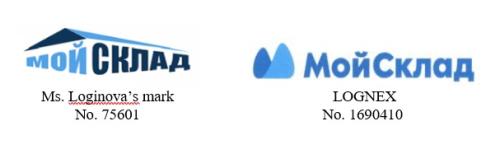
LOGNEX argued that its reputation in Russia and its growing user base among Kazakh businesses meant that Loginova’s registration was misleading and represented a form of trademark squatting. These arguments formed the basis of three successive actions: a non-use claim, an invalidation request, and an appeal.
The Non-Use Action
In summer 2024, LOGNEX first sought to cancel Loginova’s mark for non-use in classes 39 and 42, but the Interdistrict Civil Court of Astana dismissed the claim because the statutory three-year period had not yet elapsed. While the application was filed in January 2021, the obligation to use a trademark in Kazakhstan arises only from the registration date, 25 October 2021. The court emphasized that non-use cannot be alleged before the statutory period expires, and online searches or similar indicators cannot override this rule.
Misleading nature?
In May 2025, the second action focused on invalidating registration No. 75601 on the ground that it was misleading. LOGNEX argued that consumers in Kazakhstan would associate the sign with its well-known Russian platform. The Specialized Administrative Court examined the matter with assistance from an independent specialist. The expert confirmed phonetic and semantic similarity between the two signs, as well as the overlap of offered services, particularly in classes 35 and 42.
However, similarity alone is insufficient to render a mark misleading under Kazakh law. LOGNEX had to show that before the filing date of the contested mark, Kazakh consumers already associated “Мой Склад” with LOGNEX. The evidence could not establish this. Most materials concerned LOGNEX’s Russian reputation were dated after 2021.
The court therefore dismissed the invalidation claim. LOGNEX’s appeal to the Appellate Court of Astana was unsuccessful.
A Note on Negotiations: Fight or Buy?
Alongside the litigation, the parties also explored a commercial settlement. While Kazakhstan’s currency is tenge, the negotiations were conducted in Russian rubles, with LOGNEX setting the currency and Ms. Loginova following suit. The initial offer around EUR 3,300 was met with counteroffers reportedly reaching about EUR 176,000, underscoring the bargaining strength conferred by an earlier national right.
Image
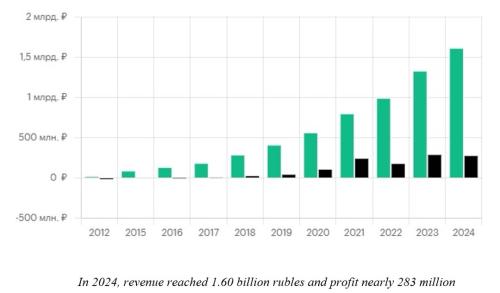
Public financial data indicates that LOGNEX has shown steady revenue growth in recent years, meaning that, in practice, the company faced a tough choice: purchase the mark or challenge it through litigation. While LOGNEX was fully entitled to contest the registration, companies entering new markets may sometimes find that a negotiated acquisition offers a more efficient and commercially predictable route than prolonged legal proceedings.
Conclusion
The LOGNEX cases illustrate that foreign reputation does not extend automatically into Kazakhstan, and allegations of trademark squatting require concrete proof of earlier local use or recognition. Non-use claims cannot proceed until the statutory three-year period has elapsed. From the courts’ perspective, this was not a case of trademark “piracy”: with no evidence of consumer association in Kazakhstan at the relevant time, and with the non-use period still pending, Loginova’s registration remained legally sound.
Author’s Note:
The contributor participated in the proceedings on behalf of the National IP Institute (Qazpatent). The views expressed herein do not represent the position of any party or institution involved.
Tags:
Trademark squatting
Comments (0)
Your email address will not be published.
Become a contributor!
Interested in contributing? Submit your proposal for a blog post now and become a part of our legal community!
Contact Editorial Guidelines


You may also like

March 5, 2026

February 10, 2026
February 9, 2026
February 6, 2026