


Human Rights and IP before the European Courts: What Four Decades of Case Law Reveal about European Copyright Law
October 19, 2026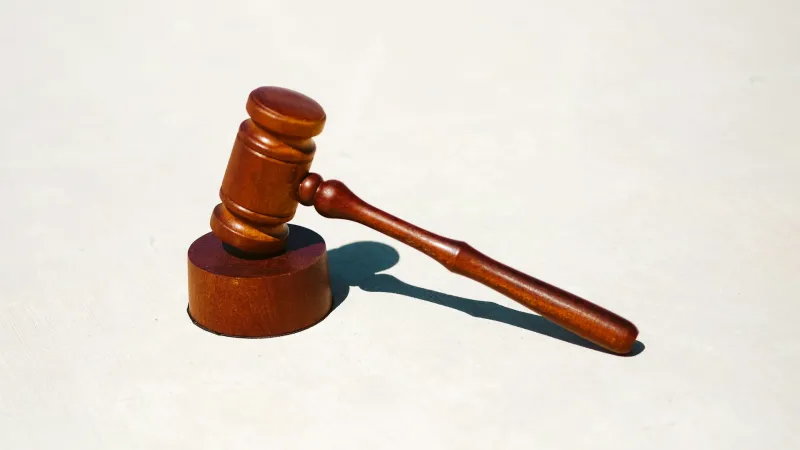
The copyright and human rights literature has traditionally focused on a relatively small number of well-known judgments – Ashby Donald, The Pirate Bay, Deckmyn, Pelham (with Pelham II already attracting scholarly commentary, and no doubt more to follow), Funke Medien and Poland v. Parliament and Council. Looking across the broader body of CJEUand ECtHR case law, however, reveals a richer picture and a longer history of human rights use in intellectual property (IP) case law (and vice versa). Several developments become apparent once the cases are viewed together rather than in isolation.
Freedom of expression is no longer the only fundamental right shaping copyright
Freedom of expression understandably dominates academic discussions (see, for example, here, here and here). Yet the European courts now routinely resolve copyright disputes through a much broader set of fundamental rights. Privacy, personal data protection, freedom to conduct a business, non-discrimination, fair trial, effective remedy, and, more recently, even the freedom of the arts and the right to education have all become relevant considerations in copyright litigation. The constitutionalisation of copyright is therefore considerably broader than debates surrounding Article 10 ECHR or Article 11 of the Charter on freedom of expression alone suggest.
Luxembourg and Strasbourg continue to speak different constitutional languages
Although the CJEU and the ECtHR often reach compatible outcomes, they do so through markedly different constitutional methodologies. The ECtHR generally approaches IP disputes by asking whether the impugned measure constitutes an interference with a Convention right and, if so, whether that interference is justified under the Convention’s established proportionality framework. The CJEU, by contrast, tends to integrate fundamental rights directly into the interpretation and application of EU IP law, seeking to reconcile competing rights from within the legislative framework itself. Across areas ranging from copyright and freedom of expression to privacy, property, procedural guarantees and business freedom, Strasbourg reviews the compatibility of the resulting interference with the Convention, whereas Luxembourg’s emphasis is on interpreting secondary legislation in the light of the Charter. The practical outcomes often converge, but the constitutional methodology remains distinct. This might also be the result of the different institutional mandates of the two Courts: while the Strasbourg Court is a human rights court with the protection of human rights as its primary purpose, the CJEU also has other objectives, such as ensuring a harmonised interpretation of EU law. These different objectives can result in different priorities and outcomes in their decisions.
Procedural rights matter just as much as substantive rights
Many of the significant human rights questions arise not when defining the scope of copyright, but when enforcing it. Cases concerning disclosure orders, website blocking and search measures demonstrate that the proportionality of copyright enforcement has become a recurring constitutional question. Questions of access to a court, procedural fairness and effective judicial remedies have also become important aspects of judicial scrutiny of copyright enforcement. This procedural dimension receives considerably less academic attention than substantive copyright limitations, despite occupying an increasingly prominent place in the case law.
The catalogue of relevant fundamental rights continues to expand
While freedom of expression, the right to property, the right to privacy, freedom to conduct a business and the right to a fair trial have become firmly established in European copyright jurisprudence, other fundamental rights remain comparatively underexplored. This is true, for instance, of the right to education under Article 2 of Protocol No. 1 to the ECHR and Article 14 of the EU Charter, as well as the freedom of the arts and sciences protected by Article 13 of the Charter. Their appearance in cases such as Renckhoff and Pelham (and now also in Pelham II) nevertheless suggests that the catalogue of relevant fundamental rights may continue to expand as new questions emerge around education, right to research, cultural participation and artistic creation in digital environments. Looking ahead, Article 37 of the Charter, which requires a high level of environmental protection to be integrated into Union policies and activities, may also acquire greater significance. As disputes concerning the repair, reuse and, in particular, the upcycling of copyright-protected products become more common, courts may be asked to consider whether copyright rules should be interpreted in a manner that supports the Union’s environmental and circular economy objectives, rather than unnecessarily impeding them. This adds a new “sustainability” angle to copyright discussions, with vast implications for the entire innovation law more generally.
The conversation has moved beyond “copyright versus human rights”
Perhaps the clearest lesson from four decades of European case law is that framing copyright and human rights as inherently opposing interests has become difficult to sustain. Within the European legal order, copyright itself enjoys fundamental rights protection as an aspect of the right to property under Article 1 of Protocol No. 1 ECHR and Article 17(2) of the EU Charter. Copyright disputes thus frequently involve the reconciliation of several fundamental rights, rather than a confrontation between copyright and human rights as separate categories. The more interesting question is therefore no longer whether human rights matter for copyright, but how different fundamental rights should interact within the copyright framework.
This European constitutional approach should not, however, be taken for granted. At the international level, the proposition that copyright as such constitutes a human right remains considerably more contested. Notably, the UN Committee on Economic, Social and Cultural Rights has distinguished the human right of authors to benefit from the protection of their moral and material interests from IP rights as state-created economic instruments, cautioning against conflating the two. In this respect, European law has charted a more categorical constitutional course, one that continues to shape the evolution of copyright jurisprudence before both the CJEU and the ECtHR.
Conclusion
The case law suggests that the relationship between copyright and fundamental rights has entered a new phase. Attention has shifted from the question of whether human rights law is relevant to copyright in principle to how exactly, and through which methodologies, different rights should be accommodated within the EU’s progressively harmonised copyright framework. As new challenges emerge – from generative AI to platform governance, regulatory questions related to the digital environment, and environmental sustainability – the European courts are likely to face even more complex balancing exercises. Looking at the existing case law as a whole provides a useful starting point for understanding where this jurisprudence may be heading. These developments are explored in greater detail in our recent book Human Rights and Intellectual Property Before the European Courts.
Photo by Tingey Injury Law Firm on Unsplash
Tags:
human rights
Comments (0)
Your email address will not be published.


You may also like


October 7, 2026

September 30, 2026

September 23, 2026