What U.S. Tort Practice Can Offer Energy Arbitration
August 21, 2026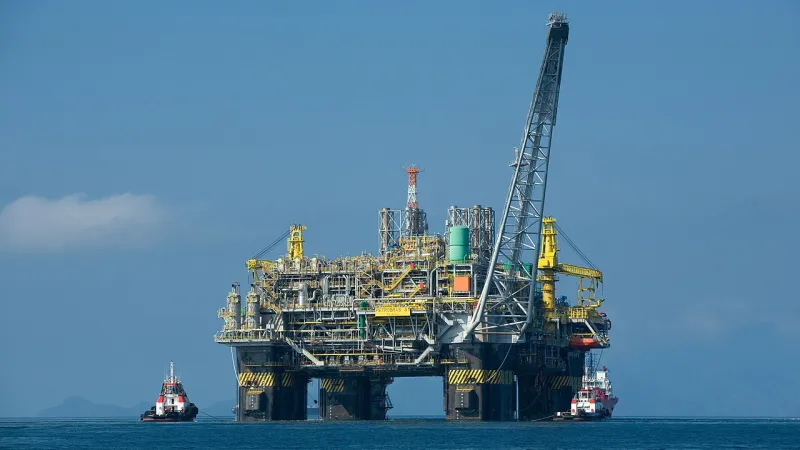
International energy arbitration remains one of the busiest segments of institutional caseloads. According to published LCIA 2024 Annual Casework Report and ICC Dispute Resolution Statistics 2024, energy and resource disputes have accounted for a substantial share of recent arbitration activity. Much of that work sits at the intersection of commercial contract disputes and underlying liability questions: joint venture disagreements over operator conduct, construction defect claims, incident-related losses, and third-party exposure that may affect cost allocation and damages. Tribunals in these disputes are often composed of highly experienced commercial and energy practitioners, many of whom have substantial familiarity with issues of fault, causation, expert evidence, and damages. That expertise remains essential.
A meaningful subset of energy arbitration disputes, however, are, in substance, mixed contract-and-liability disputes wearing commercial clothing. Consider a common U.S.-linked example: a joint operating agreement for a Gulf of Mexico development contains a broad arbitration clause covering disputes “arising out of or relating to” the agreement and a New York choice-of-law clause. After a major equipment failure and shutdown, the non-operator alleges not only breach of the JOA, but also fraudulent inducement and negligent misrepresentation based on pre-contract statements about equipment condition and maintenance history, as well as negligence in post-closing operations. The arbitration clause is broad enough to capture all of those claims, but some of the non-contract issues may require analysis under law other than the contract’s chosen law, depending on the governing conflicts rules and the claim’s connection to another jurisdiction. In that setting, practitioners with backgrounds in tort, medical malpractice, personal injury, and other liability litigation may bring an additional set of analytical tools — particularly in testing standard of care, misrepresentation, technical causation, underlying exposure, and damages models — that can usefully complement more traditional commercial arbitration experience.
This is not just a common law point. Civil law systems may not use the label “tort,” but they likewise recognise doctrines of extra-contractual liability, fault, causation, fraud, reliance, and non-contractual loss. The point here is functional rather than terminological: some arbitrations require tribunals to resolve mixed contract-and-liability disputes, whatever doctrinal vocabulary the governing law employs. The U.S.-specific point is not that only U.S. lawyers or arbitrators deal with fault, causation, or damages. They plainly do not solely have that expertise. It is that U.S. tort practice has developed particularly deep experience in trying and valuing claims for fraudulent inducement, negligent misrepresentation, operational negligence, third-party injury exposure, proximate cause, and layered damages.
The point is not that every energy arbitration needs a tort-trained arbitrator. Many turn entirely on pricing, force majeure, tax, regulatory, jurisdictional, or contract-interpretation issues. The point is narrower: where the dispute depends on findings about operational fault, misrepresentation, causation, bodily injury, property damage, or downstream loss allocation, U.S. tort experience may be especially valuable.
1. Where the liability issues arise
These mixed disputes tend to recur in a few identifiable forms, and the common feature is that contract claims alone do not fully describe what the tribunal must decide.
A. Operator standard-of-care disputes. JOAs typically include a “prudent operator” standard — a contractual benchmark asking whether the operator acted with the care, skill, diligence, and judgment reasonably expected of a competent operator conducting similar operations in similar circumstances. Allegations that an operator breached that standard, whether through ordinary negligence or conduct rising to gross negligence, can become a central issue in JV arbitration. In practice, these allegations may concern inspection schedules, contractor supervision, HSE compliance, emergency shutdown procedures, or whether production pressures led the operator to defer repairs or maintenance that a prudent operator would have undertaken.
B. Misrepresentation and inducement claims. Some energy arbitrations do not involve only performance disputes under the contract. They also include allegations of fraudulent inducement or negligent misrepresentation arising from pre-contract statements about reserves, equipment condition, maintenance history, safety practices, or regulatory compliance. Those claims can require tribunals to analyse reliance, materiality, causation, and loss using tools more familiar from liability litigation than from pure contract interpretation.
C. Incident-driven exposure and allocation disputes. A single operational incident — an equipment failure, platform accident, well-control event, or construction defect — may trigger not only contract claims between venture participants but also underlying third-party injury or property-damage exposure. Even when the third-party claims are proceeding elsewhere, the arbitration may still require the tribunal to evaluate whether the operator’s conduct caused the event, whether the resulting exposure is overstated, and how the resulting losses should be allocated among commercial parties.
2. What this background adds
The contribution of U.S. tort practice is not a different set of procedural rules. It is a style of analysis developed through repeated engagement with fault-based, expert-heavy disputes.
A. Standard of care. A prudent-operator dispute requires a tribunal to separate a bad outcome from a breach of the applicable standard. Tort-trained adjudicators are accustomed to evaluating whether conduct actually fell below the relevant level of care, based on competing factual accounts and expert testimony, rather than assuming that a serious incident proves fault.
B. Causation. Energy disputes often involve competing explanations: a manufacturing defect, contractor error, regulatory failure, an act of nature, misleading pre-contract disclosures, or a series of operational decisions made under pressure. Tort practice develops fluency in distinguishing contributing factors from legally operative causes and in translating technical evidence into a framework that can support a legal finding.
C. Damages and exposure valuation. U.S. tort practice has developed detailed methods for valuing loss, including future exposure, economic projections, present-value calculations, and structured testing of expert damages models. Where an arbitration requires the tribunal to assess the likely value of underlying injury, property-damage, shutdown, or business-interruption exposure as part of a contribution, indemnity, or cost-allocation dispute, that experience can help the tribunal scrutinise damages evidence with more than surface-level deference.
D. Expert-heavy factual analysis. Tort and liability litigation regularly turns on engineers, physicians, economists, safety specialists, and other experts whose conclusions depend on layered assumptions. The discipline of testing those assumptions, identifying analytical gaps, and distinguishing methodology from advocacy translates directly to incident-driven energy disputes.
3. How the issue looks in practice
A hypothetical helps show why the point is practical rather than abstract.
A JOA governs an offshore platform, with Company A as operator and Company B as non-operator. The JOA contains a gross-negligence liability shield for the operator. Before closing, Company A represented that key safety-critical components had been inspected and maintained in accordance with both internal procedures and manufacturer guidance. After closing, a pressure valve fails during routine operations, causing a serious contractor injury, a shutdown, and significant remediation and business-interruption costs.
Company B commences arbitration. It alleges that Company A not only breached the prudent-operator standard in post-closing operations, but also fraudulently induced the transaction, or at least negligently misrepresented the condition and maintenance history of the equipment before the parties entered the JOA. Company A responds that the failure was caused by an independent manufacturing defect, that any pre-contract statements were immaterial or non-actionable, and that the claimed downstream exposure and losses are overstated.
That arbitration may be framed as a commercial dispute, but the tribunal must do more than interpret the contract. It must determine what was said before the agreement, whether any statement was false or misleading, whether the non-operator relied on it, whether post-closing conduct fell below the prudent-operator standard, whether any breach or misrepresentation caused the failure, and what losses are fairly attributable to that conduct. Those are the kinds of issues on which U.S. tort-trained adjudicators spend years building judgment.
4. Implications for tribunal composition
The case for broadening tribunal composition is not that commercial arbitration expertise should be displaced. It is additive. For incident-driven energy disputes, a tribunal that includes a member with deep experience in liability analysis, expert proof, causation, and damages may be better equipped to scrutinise the evidence that drives the outcome.
This is particularly relevant for co-arbitrator appointments and bifurcated proceedings. Procedural fluency can be built through co-arbitration with experienced international arbitration colleagues; substantive analytical training in negligence, misrepresentation, expert proof, causation, and damages takes years to develop. Parties need not wait for institutions to redesign rosters. Counsel selecting party-appointed arbitrators can ask whether a dispute’s decisive issues are primarily contractual, technical, liability-based, or quantum-based, and then appoint accordingly.
5. Conclusion
As energy arbitration continues to grow and diversify, some disputes within it increasingly resemble, in substance, mixed contract-and-liability disputes that require rigorous analysis of fault, misrepresentation, causation, expert evidence, and damages. Parties, counsel, and institutions stand to benefit from looking beyond the traditional international arbitration profile — not as a substitute for commercial arbitration expertise, but as a complement to it. Where energy disputes turn on those issues, U.S. tort practice may bring precisely the experience the tribunal needs.
Comments (0)
Your email address will not be published.

You may also like




September 30, 2026