Of Course Arbitrators Are Using AI: The Case for a Standard AI Clause
September 30, 2026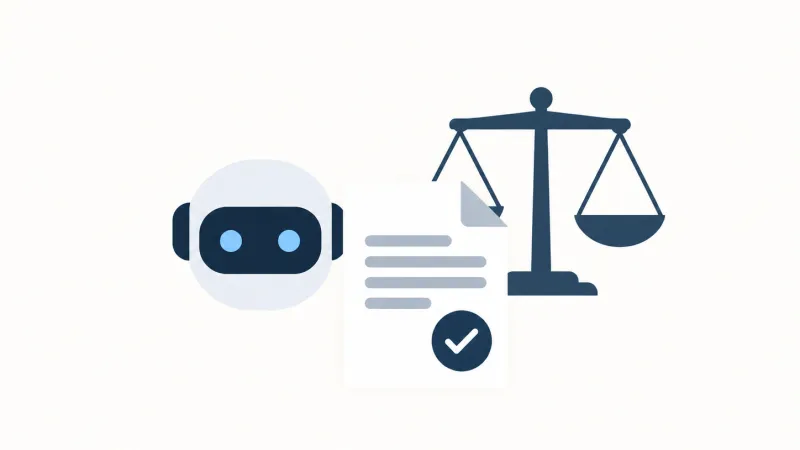
Generative artificial intelligence (“AI”) has rapidly entered the daily practice of many professions and shows little sign of retreating. The legal profession is no exception. AI is already part of the workstream of many law firms and may soon become a standard professional tool, akin to a laptop or a legal research platform. According to Wolters Kluwer’s 2026 Future Ready Lawyer Survey Report, 92% of legal professionals now use at least one AI tool.
It is not only lawyers, but also arbitral tribunals who use AI. In a recent judgment dated 22 April 2026, the Superior Court of Quebec found that an arbitrator used AI improperly. The Court annulled the domestic award after finding that all doctrinal and case-law references on which it relied had been “hallucinated”, concluding that the arbitrator had effectively delegated part of the decision-making process to AI and failed to discharge his own duty to verify the resulting output (¶¶ 113-116) (reported here). The Court however also noted that not every (mis)use by AI warrants annulment, for example where the use of AI is minimal or concerns a less important issue (¶¶ 117-118).
The authors agree that the tribunal’s use of AI is not the problem in itself. AI’s ability to enhance drafting, locate specific facts, or help digest complex material is hard to deny. The real question is how far AI can assist a tribunal without compromising the very purpose for which it was appointed. The debate is not entirely new. It recalls the controversy that once surrounded tribunal secretaries, where the central concern was not assistance as such, but the risk that assistance might turn into delegation (e.g. here; here; here).
A Standard AI Clause
To avoid later challenges to the tribunal's use of AI, we propose that tribunals address the issue at the outset of the proceedings by identifying the uses of AI that may be contemplated, the functions that must remain strictly non-delegable—including substantive drafting and decision-making—and the safeguards that will govern any permitted use. This would give the parties an opportunity to comment, request additional protections or object to particular uses.
It is against this backdrop that we have prepared a draft standard clause on arbitrators’ use of AI, intended for inclusion in, for example, Procedural Order No. 1 (“PO1”), as can be found at the end of this post. The clause was drafted collaboratively between the authors of the present blog post and arbitrators, and has already been circulated within various professional networks and practitioner groups for comment, before being shared here with the wider public.
The clause is intended as a practical starting point. Tribunals and parties may adopt it as drafted or tailor it to the circumstances of a particular case. An overly prescriptive list of permitted or prohibited AI tools could become outdated within the lifetime of a single proceeding, given the pace at which new tools are developed. The proposed clause therefore focuses on the tasks tribunals can delegate to AI, safeguards and confidentiality concerns rather than specific technologies. It deliberately does not regulate the parties’ use of AI, leaving that issue to be addressed separately if the parties choose to. Even so, introducing the clause may prompt the parties and the tribunal to consider whether reciprocal rules are needed.
Why Add an AI Clause?
One might argue that addressing the use of AI would be no more necessary than addressing the use of a calculator, Microsoft Word or even Google. The use of AI is, however, fundamentally different from most other technologies available to tribunals, since AI is in fact capable of generating a full assessment and decision of the issues at hand.
That is precisely why institutions and associations such as the ICC and the IBA are working on, and in some cases already have, dedicated guidelines and best practices. Their efforts confirm that the use of AI in modern international arbitration genuinely needs addressing. The standard clause proposed here serves a similar purpose, but it does so by more specifically targeting the individual process, tribunal and parties in a given dispute. It provides a framework for a tribunal wishing to regulate its use of AI tools from the outset, and creates a starting point for a conversation between the tribunal and the parties as to its use in a specific dispute.
In a world where PO1s tend to be sufficiently lengthy on their own, a separate clause addressing the potential use of AI should only be incorporated where it serves a meaningful procedural purpose. We believe that a concise clause can serve such a purpose and should feature with increasing frequency in new cases.
A standard AI clause may be beneficial and even necessary in some cases for several reasons:
First, it creates a baseline for discussion early in the proceedings. Even if the tribunal contemplates only limited AI use, the clause forces the issue to be addressed explicitly rather than left ambiguous.
Second, it manages expectations. Parties know what kind of AI use is contemplated by the tribunal and, just as importantly, what is excluded.
Third, it protects tribunals. Clarifying the boundaries at the outset helps minimize later allegations that decision-making was outsourced or improperly influenced and is also more efficient than dealing with objections after an award has been rendered.
Fourth, it promotes procedural consistency. A model clause can reduce ad hoc approaches across cases and make disclosure easier to implement in day-to-day practice.
Finally, it encourages responsible and transparent use. If tribunals are likely to use AI in at least some form, express parameters are more constructive than pretending it is not happening.
Conclusions and Outlook: What’s Next?
A standard clause on the use of AI is not a panacea for all issues arising from the (mis)use of AI in the profession. As a first step, however, we deem it prudent and useful for tribunals to begin contemplating such a clause and not wait for the parties to bring it up. At the same time, we believe that the below draft clause could spark further consideration by counsel and a constructive debate between all parties.
Meaningful disclosure can help draw clear red lines, protect confidentiality and reduce the risk of procedural or enforcement challenges. It does not eliminate every risk, but it replaces uncertainty with an agreed framework and makes responsibility explicit.
The purpose of this post is therefore both diagnostic and practical: to identify the need for transparency and to propose a concrete response in the form of the draft standard clause below. We invite practitioners, arbitrators and institutions to test, refine and develop the proposal so that it can evolve into a useful feature of arbitral practice.
***
Use of Artificial Intelligence Tools
The Tribunal considers it appropriate to address the potential use of artificial intelligence (AI) tools in the course of this arbitration.
The Tribunal confirms that it will not use AI tools for any decision-making function. In particular, AI tools will not be used to determine or influence any substantive decision on the merits of the dispute, the assessment of evidence, the evaluation of the Parties’ arguments, or any procedural ruling.
All decisions in this arbitration, whether procedural or substantive, will be made exclusively by the Tribunal, in the exercise of its independent analysis and judgment and in accordance with the applicable law and the Parties’ submissions.
The Tribunal may, however, use AI tools in a strictly limited and ancillary manner for non-substantive editorial assistance, such as:
(a) improving the structure or readability of text;
(b) identifying typographical or clerical errors;
(c) checking for internal linguistic inconsistencies or cross-references within drafts.
In the event that such tools are used, the Tribunal will ensure that:
(a) no confidential or identifying information is disclosed to any third-party system in a manner inconsistent with the Tribunal’s duty of confidentiality;
(b) any AI tool used is subject to appropriate safeguards, including secure processing and non-retention of data to the extent reasonably available;
(c) all used outputs are carefully reviewed and verified by the Tribunal.
The Tribunal further confirms that it remains fully responsible for the content of any procedural order, decision, or award, and that no part of the Tribunal’s mandate is delegated to any AI tool.
This approach is adopted to preserve the integrity, confidentiality, and fairness of the proceedings, while allowing limited use of technology for efficiency in purely administrative or editorial respects.
***
Any views expressed in this post are those of the authors alone. This piece does not reflect the views of their firms or their clients.
Comments (0)
Your email address will not be published.

You may also like




September 24, 2026