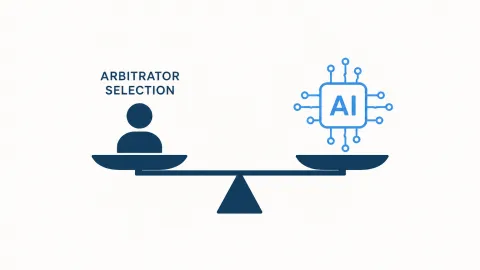
The 2026 ICC Arbitration Rules (the “Rules”) never mention artificial intelligence (“AI”). They already govern it. Articles 20, 46, 23(2), and 37(3) build the whole architecture for AI governance,…
The public consultation for which AI uses should classify as “high-risk” under the EU AI Act is closed. On 23 July 2026, the window shut on the European Commission's targeted consultation on its…
Artificial intelligence (“AI”) is usually described as the next frontier for dispute resolution: a technology that will make adjudication fast, cheap, and consistent. Feed the facts and the…
As recently noted in this blog, the European Commission published its long-awaited draft guidelines on the classification of high-risk AI systems on 19 May 2026. As part of the consultation process,…
When the Convention on the Recognition and Enforcement of Foreign Arbitral Awards (“New York Convention”) was adopted in 1958, the idea that an arbitral award might be assisted—or even generated—by a…
A little over two years ago – shortly after the EU AI Act of June 2024 (the “Act”) was adopted by the European Parliament – I wrote a post on this blog entitled “We Need to Talk About … the EU AI Act…
Artificial intelligence (“AI”) is no longer just confined to improving the efficiency of arbitration proceedings: it is increasingly becoming part of arbitral decision-making (see here). But can an…
What if a commercial dispute that would typically take years and cost millions of dollars could be resolved in days, not by a tribunal, but by a prediction market? International arbitration is facing…
The eBRAM International Online Dispute Resolution Centre (“eBRAM”) in Hong Kong aims to elevate arbitration and mediation services through online dispute resolution (“ODR”) and LawTech facilities…