Interviews with Our Editors: In Conversation with Stephen Hanna, Executive Director of the International Games and Esports Tribunal
August 17, 2026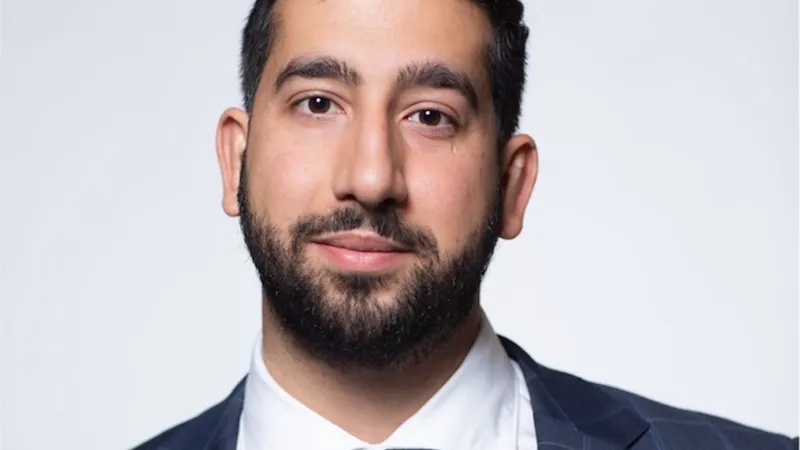
The International Games and Esports Tribunal (“IGET”) is a pioneering not-for-profit joint initiative by the Esports Integrity Commission (“ESIC”) and the World Intellectual Property Organization Arbitration and Mediation Center (“WIPO AMC”). IGET offers specialized Alternative Dispute Resolution (“ADR”) within the global video games and esports industries, administering integrity disputes (in collaboration with ESIC) and commercial and intellectual property disputes (in collaboration with WIPO AMC).
The initiative was spearheaded by Stephen Hanna, Chief Executive Officer of ESIC and Executive Director of IGET, who has been at the forefront of developing governance, policy, and enforcement mechanisms across competitive gaming during the last decade. We are delighted to welcome Stephen to the Blog.
1. Thank you for agreeing to this interview, Stephen. For the benefit of those who may not know you, could you briefly introduce yourself, and share something about yourself that we might not easily find online?
Thank you for having me. I am the Chief Executive Officer of the ESIC and the Executive Director of the IGET. My professional background sits at the intersection of law, forensic work, governance and institution-building. Over the past decade, much of my focus has been on developing practical systems that help the global esports industry manage integrity risk and resolve disputes fairly.
Something that may be less apparent online is that I approach this work as a lifelong gamer, not simply as an adviser who entered the sector professionally. I grew up playing across the major console generations, and that personal connection still shapes how I think about governance. I care about preserving what makes games and esports distinctive. The objective is not to transplant traditional sport or court structures wholesale, but to build systems that are credible, proportionate and genuinely workable for this industry.
2. Could you give us an overview of IGET—its structure, mission, and how it fits into the broader esports and gaming dispute resolution ecosystem? We would be interested to hear more about the motivations behind IGET and what gap it seeks to fill in the dispute resolution landscape.
IGET is an independent, not-for-profit dispute resolution body established as a joint initiative of ESIC and the WIPO AMC. Its purpose is to provide a specialised forum for disputes arising across the video games and esports industries.
The structure reflects the breadth of that remit. IGET maintains a central case-management secretariat, supported by ESIC and WIPO AMC according to the nature of the case. Integrity disputes and appeals are administered in collaboration with ESIC, while commercial and intellectual property (“IP”) disputes are administered in collaboration with WIPO AMC. A party begins by emailing [email protected] to request an application form and then returns the completed form with supporting documents. IGET validates the application, allocates it to the appropriate division and notifies the parties; the assigned case team then serves as the parties’ point of contact. Parties that are unsure where to begin may book a complimentary orientation meeting through the IGET website. This allows IGET to address matters ranging from disciplinary and anti-doping cases to disputes arising from player contracts, prize money, sponsorship, publishing arrangements and IP.
The gap in the legal market was straightforward. The industry is global, digital and exceptionally fast-moving, yet parties were often left with national courts, internal publisher processes or generalist arbitration services. Each can be appropriate in some circumstances, but none was designed as a comprehensive, industry-specific forum. IGET seeks to provide a neutral and accessible alternative in which the decision-makers already understand the commercial structures, technical language and competitive realities of the sector.
3. Could you share more about how the ESIC and WIPO AMC partnership came about, and what made WIPO AMC a natural partner for this initiative? What value does this collaboration bring to IGET and to the broader esports dispute resolution landscape?
The partnership developed from a shared recognition that the industry needed dispute resolution infrastructure that combined genuine sector knowledge with established international ADR capability. ESIC had spent years working within esports integrity and had seen, first-hand, that many disputes extended beyond disciplinary questions into contracts, IP and broader commercial relationships.
WIPO AMC was a natural partner because of its international standing, its experience administering cross-border technology and IP disputes, and its long-established approach to arbitration, mediation and expert determination. Video games and esports are built on IP, technology and global contractual networks, so there was a strong alignment.
The value lies in the complementarity. ESIC contributes with its understanding of competitive gaming, integrity systems and stakeholder behaviour. WIPO AMC contributes deep institutional experience in neutral appointment, case administration and international ADR. Together, that allows IGET to be specialised without becoming insular, and innovative without sacrificing procedural rigour.
4. From a procedural perspective, could you walk us through the types of procedures currently available under IGET, and how these are tailored to meet the needs of the esports ecosystem?
IGET currently offers mediation, arbitration, expedited arbitration and expert determination services. The appropriate procedure depends on the nature and urgency of the relevant dispute.
Mediation is particularly valuable where the parties have an ongoing relationship (for example, a publisher and tournament organiser, or a player with their team) and want to preserve it. Arbitration provides a final and binding determination. Expedited arbitration is available where speed is critical, for example an eligibility or roster-lock dispute that must be resolved before a tournament begins. Expert determination is useful for a discrete technical or factual question, such as whether deliverables under a game-development agreement satisfy the agreed specification or whether royalties have been calculated in accordance with a publishing agreement.
The IGET Rules use separate integrity and commercial modes. The integrity modes govern matters arising under integrity rules and disciplinary frameworks, including ESIC appeals and esports anti-doping disputes. The commercial modes govern private contractual, IP and other business disputes, such as player-contract, sponsorship or licensing disputes. ESIC appeals and esports anti-doping matters proceed through arbitration, with appeals ordinarily handled under a fast-track, written process unless a hearing is justified. Commercial and IP disputes can be directed into the procedure best suited to the parties and the issue.
The process is designed to be practical. Following an application, IGET allocates the matter to the appropriate division and holds a preliminary conference to establish the procedure, tribunal composition, timetable and likely costs. That flexibility is important in an ecosystem where a dispute may need to be resolved before the next tournament, roster lock or product launch.
5. What types of disputes does IGET aim to resolve, and who will be its primary users? We understand that IGET is still in its infancy, but, nevertheless, are there any trends in expected cases or stakeholders involved that might surprise our readers?
The potential users are as diverse as the industry itself: individual players, teams, tournament organisers, publishers, developers, platforms, sponsors, content creators, and other businesses operating within gaming and esports.
The disputes can include integrity and disciplinary appeals, anti-doping matters, player contracts, unpaid prize money, sponsorship disagreements, tournament eligibility, IP, licensing, platform or terms-of-service disputes, and disagreements between developers or publishers.
One trend that may surprise readers is that many of the disputes most suited to IGET may not involve very large monetary claims. They may instead be highly time-sensitive or commercially existential for one party. A missed payment can materially affect a player or smaller team, an eligibility decision can determine whether months of preparation are lost, and an IP dispute can threaten an independent developer’s principal asset. These matters benefit from specialist, proportionate resolution rather than a process whose cost and duration exceed the value of the dispute.
6. How does IGET differ from existing mechanisms in esports and gaming, such as publisher-specific dispute systems or sports arbitration bodies?
IGET is intended to complement, rather than displace, existing mechanisms. Publishers must retain authority over their games and ecosystems, and internal processes can be effective for operational or rules-based decisions. The difficulty arises where a dispute crosses organisational boundaries, involves an independent contractual relationship, or would benefit from a neutral forum outside the decision-making structure of one stakeholder.
Traditional sports arbitration offers valuable lessons, but esports is not simply conventional sport in digital form. Publishers own the underlying game and IP, competition formats and rules can change rapidly, participants operate across jurisdictions, and evidence may involve in-game or server data, communications stored on messaging platforms, anti-cheat system outputs or betting information. Those features require specialist understanding.
IGET’s distinction is therefore its combination of independence, international reach, and subject-matter expertise. It can apply established ADR principles while remaining responsive to the structural realities of games and esports. Parties also have procedural choice, including mediation and expert determination, rather than being channelled into a single adjudicative model.
7. One of IGET’s distinctive features is its integration of legal and industry-specific expertise. Could you share more about how arbitrators or adjudicators are selected and what qualifications are considered critical for resolving esports-related disputes?
The quality and suitability of the neutral is central to the process. Candidates are drawn, where appropriate, from the WIPO-IGET Panel of Experts, which brings together arbitrators, mediators and experts with legal, commercial, technical and industry experience.
Selection is case-specific. Relevant considerations include dispute resolution experience, legal or technical qualifications, independence from the parties, language capabilities, jurisdictional familiarity and substantive expertise. For example, an IP dispute between developers may require a very different profile from an integrity appeal involving match data, betting evidence or anti-cheat technology.
Industry knowledge does not replace legal ability; both are required. A tribunal must understand due process, evidence and reasoned decision-making, but at the same time, it should not need the parties to spend a substantial part of the proceeding explaining basic concepts in this area such as publisher control, roster locks, tournament qualification or the effect of a game patch. The objective is to appoint neutrals who can identify the real issues quickly and decide them fairly.
8. Finally, looking ahead: what does success look like for IGET? Are there upcoming partnerships, milestones, or initiatives our readers should watch for?
In this stage of IGET’s lifecycle, the measure of success is not simply a high case count. It is industry confidence: parties incorporating the IGET model clause into their agreements, using the process when disputes arise, and trusting that the result will be independent, reasoned and enforceable.
We have already seen meaningful adoption by stakeholders including ESL FACEIT Group, MOONTON Games, and NODWIN Gaming. Through the publication of awards over time, IGET is also beginning to develop the body of decisions that will give substance and practical meaning to ADR in video games and esports. An early example is the Annihilation appeal, in which an IGET tribunal reviewed a professional Counter-Strike player’s challenge to an ESIC integrity sanction. The tribunal upheld a 12-month period of ineligibility and addressed the scope of a participant’s duty to report facts that may evidence corruption, even where there was no direct evidence that the player personally participated in match-fixing. Those are important early steps because institutions earn credibility through practice, not announcement.
The next phase is to deepen adoption, continue developing IGET’s specialist panel, refine accessible procedures for disputes of different sizes, and publish awards or de-identified outcomes where appropriate. The IGET Experts Workshop will also remain an important forum for bringing together members of the specialist panel, dispute-resolution practitioners and industry stakeholders. It allows participants to test procedures against real-world scenarios, discuss emerging legal and technical issues, and strengthen the consistency and practical effectiveness of IGET’s approach.
Ultimately, success would mean that referring a gaming or esports dispute to a specialised neutral forum becomes normal rather than novel. IGET should become infrastructure that the industry can rely upon quietly and consistently.
Thank you very much for your time and insights, Stephen! We look forward to seeing what’s next for IGET and wish you continued success with this important initiative.
This interview is part of Kluwer Arbitration Blog’s “Interviews with Our Editors” series. Past interviews are available here.
Comments (0)
Your email address will not be published.
You may also like

September 30, 2026