


Interviews with Our Editors: In Conversation with Professor Maxi Scherer and Dr. Remy Gerbay
December 1, 2025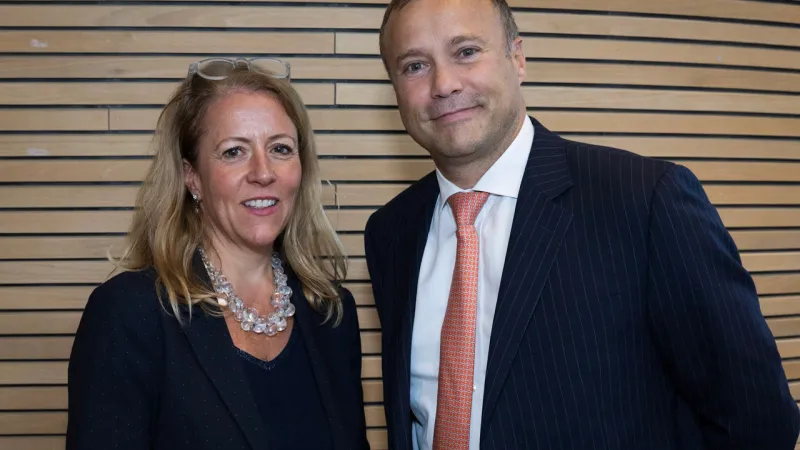
The Journal of International Arbitration (“JOIA” or “the Journal”) was first published in 1984. Since then, it is published six times a year by Wolters Kluwer. Under the leadership of Professor Dr. Maxi Scherer and others before her, the Journal has come to be regarded as one of the most prestigious arbitration journals globally. Prof. Scherer is a Professor of Law at Queen Mary University of London (“QMUL”), School of International Arbitration (“SIA” or “the School”). On 9 May 2025, she also assumed office as President of the London Court of International Arbitration (“LCIA”). After a 10-year tenure, Prof. Scherer decided to step down as the General Editor of the JOIA, and Dr. Remy Gerbay succeeded her. In addition to his new role, Dr. Gerbay is a Lecturer at QMUL, SIA, and a partner at Hughes Hubbard’s Washington, D.C. office. Formerly, Dr. Gerbay also served as a Deputy Registrar at the LCIA. To mark this handover, and also to celebrate Prof. Scherer’s appointment at the LCIA and her receipt of the Lexology (formerly Who’s Who Legal) Arbitration Lawyer of the Year award, announced during the 11th EFILA Annual Lecture she delivered, we invited Prof. Scherer and Dr. Gerbay for an interview.
Prof. Scherer, Dr. Gerbay, welcome to our Interviews series!
1. Prof. Scherer, as you reflect on your tenure as General Editor of the JOIA, what do you consider your most meaningful contributions or achievements?
Prof. Scherer: I feel both grateful and proud of what we have achieved. Over the past decade, I have had the privilege of reading and engaging with an extraordinary number of excellent manuscripts.
Beyond this, what has been most meaningful is our commitment to diversity and inclusiveness. From the outset, we have sought to ensure that the JOIA not only features leading voices in the field but also represents a wide range of jurisdictions and perspectives that are often underrepresented.
We have also curated several special issues that responded to key developments. Among the most memorable were a 2016 issue on Brexit, a 2017 issue on Asia, as well as a special issue on empirical research in international arbitration.
Of course, none of these achievements would have been possible without the dedication and hard work of our assistant editors and the editorial board.
2. Dr. Gerbay, congratulations on your appointment as General Editor of the JOIA. Having previously served on the editorial board, how will your new role differ, and what are your plans for the future development of the JOIA?
Dr. Gerbay: It is truly a privilege to take over from Prof. Maxi Scherer, whose tenure has greatly elevated the JOIA and solidified its position as a leading arbitration journal.
Having served on the Journal’s editorial board, I have been able to observe its inner workings, particularly the rigorous double peer-review process, its commitment to academic excellence, and its responsiveness to the evolving arbitration landscape.
As General Editor, my role will expand from contributing to and curating individual articles to helping shape JOIA’s strategic direction. My foremost goal is to continue strengthening JOIA’s reputation as the preeminent forum for arbitration scholarship. This means building on Prof. Scherer’s legacy by attracting submissions from both leading practitioners and academics, while also creating space for fresh and diverse voices.
From a practical perspective, two initiatives will be central. First, we will continue to refine and formalise the double peer-review model to ensure the highest standards of scholarly rigour. Second, beginning in 2026, issue 6 of each volume will be a special issue.
3. Prof. Scherer, Dr. Gerbay, what do you believe to be the biggest misconception about what it takes to publish in a leading arbitration journal like JOIA?
Prof. Scherer: I am not sure there are major misconceptions, but we do often receive questions about the review process. Although the procedure is outlined on our website, authors are curious about how it works in practice. As Dr. Gerbay mentioned, JOIA operates a double peer-review system, with each submission reviewed both by the General Editor and by an additional reviewer. After the substantive review stage, each article also undergoes professional copy-editing.
Because of this multi-step process, publication inevitably takes some time. While JOIA is quick in its turnaround, it is not realistic to expect an article to be published within a very short timeframe. Occasionally, contributors have overly ambitious timelines, and that may be one of the few misconceptions we encounter. Otherwise, I believe most authors have a good understanding of what publishing in a leading journal entails.
Dr. Gerbay: I would echo Prof. Scherer’s comments. There are perhaps not so many misconceptions as there are assumptions about the type of scholarship JOIA publishes. Some authors may think the Journal focuses exclusively on highly academic pieces, while others assume it prefers practice-oriented articles. In fact, JOIA is interested in both.
Our aim is to bridge the gap between theory and practice – something Prof. Scherer has fostered over the past decade. We welcome deeply researched academic work, whether doctrinal or empirical, as well as contributions that engage with evolving arbitral practice and new trends in arbitration law.
We also publish a variety of formats, from longer analytical pieces to shorter case law analyses and book reviews. What ultimately matters is quality: depth of analysis, clarity of thought, originality, and relevance to the arbitration community.
4. Prof. Scherer, your appointment as President of the LCIA is a significant and well-earned recognition, congratulations! You also became the third consecutive woman to hold the role, succeeding Paula Hodges KC and Judith Gill KC. Could you share your overall vision for your role during your term? Do you believe your four-year tenure as Vice President of the Court served as valuable preparation for your new role?
Prof. Scherer: Let me start with the second part of your question. My four years as Vice President of the Court have been excellent preparation for the presidency. The casework of the Court is a shared responsibility between the President and the Vice Presidents, supported by the Secretariat, under the leadership of the Registrar, Eliana Tornese and the Deputy Registrar, Wing Shek. The main differences in my new role as President lie in the broader representational aspects of the presidency and in dealing with some of the more complex or sensitive matters that come before the Court.
As for my vision, I would say that the LCIA is in a remarkably strong position, consistently ranked among the world’s leading arbitral institutions, with a great global reach. My intention is to build on this strong foundation: more of the same, as I like to say, but also with a forward-looking agenda. A key priority will be the next revision of the LCIA Rules, which follows the six-year cycle after the 2014 and 2020 updates. In addition, reflecting my long-standing interest in technology and artificial intelligence (“AI”), I am keen to explore how the LCIA can make optimal use of modern technologies, both internally, to enhance institutional efficiency, and externally, to better serve the needs of our users.
5. Dr. Gerbay, given your former role as Deputy Registrar of the LCIA, how do you view Prof. Scherer’s appointment as President, and what significance do you think her leadership holds for the institution’s direction and future?
Dr. Gerbay: Prof. Scherer’s appointment as President is both a recognition of her exceptional standing in international arbitration and a signal of the LCIA’s commitment to thought leadership and institutional excellence.
Having served as Deputy Registrar, I know firsthand how pivotal the President’s role is. Beyond the representational and policy-setting functions, the President is deeply involved in the day-to-day decision-making that defines the quality of the institution’s work. Many of the most complex questions ultimately reach the President’s desk, and the effectiveness of the LCIA depends greatly on the quality of those decisions. In that sense, Prof. Scherer’s appointment is excellent news for the institution.
She brings not only extensive practical experience but also an exceptional depth of scholarly engagement. Prof. Scherer and I have, for example, co-authored two commentaries on the LCIA Rules. Having collaborated closely with her at Queen Mary University of London, I have seen how her intellectual rigour and balanced judgment enhance everything she is involved in.
Her leadership reinforces the LCIA’s focus on procedural innovation, a priority that has long been central to the institution’s evolution.
6. Prof. Scherer, you recently left your role at a major US law firm to establish your own arbitration boutique, ArbBoutique. Dr. Gerbay, you currently lead the investment arbitration practice in another leading US firm, Hughes Hubbard. Could you both share some insight into the growing dynamic between Big Law firms and specialized boutiques in the arbitration space from your different perspectives?
Dr. Gerbay: I think the boutique model is poised to become even more successful – not only because of client preferences but due to structural shifts in how legal services are delivered.
Legal technology, including generative AI, is replacing categories of billable work that once required large teams of associates. We are also seeing the rise of new professionals, particularly in legal ops. This is a major but often overlooked development. With legal ops in the companies – sitting between in-house lawyers and legal-tech specialists – clients are becoming far more selective about what they outsource to external counsel.
Empirical studies show that billed hours across the AmLaw 100 and 200 are declining, while U.S. firms’ hourly rates continue to rise and are increasingly difficult to justify, even for sophisticated clients.
Together, these trends are shifting the market in ways that favor boutiques, which are well positioned to succeed. Legal tech – and generative AI in particular – appears to be narrowing the gap between small firms and big law in terms of the quality of work they can produce and help boutiques compete more effectively. The open question is whether affordable, off-the-shelf AI tools will continue to develop for firms that cannot invest millions in bespoke systems.
That said, big law remains essential for certain types of disputes, especially very large or multi-jurisdictional matters where clients still prefer a one-stop shop over a network of boutiques.
Both models will continue to have a role but the shifts we are seeing are permanent and will fundamentally reshape how legal services are provided and the business models behind them.
Prof. Scherer: I could not agree more with everything Remy said. Regarding our own experience with ArbBoutique: it is focused on arbitrator work. The move felt very natural after 25 years at WilmerHale, where I gradually shifted from counsel work to primarily arbitrator cases, and it made sense to move into a less conflict-heavy setting. It was a friendly transition, and I remain in close contact with my Wilmer colleagues.
We founded ArbBoutique a year ago, first with Niuscha Bassiri, and later joined by Chiann Bao. The idea was to avoid being a one-person arbitrator practice and instead have the benefit of being part of a team. Equally important was creating space for the next generation of arbitrators to grow within that team environment, such as my colleagues Emily Hay and Dr Ole Jensen.
The model behind our boutique – which is neither a law firm nor chambers – has attracted significant interest in the market because it is genuinely innovative.
7. Prof. Scherer, you are one of the key authorities on the use of AI in arbitration and its impact, and have contributed to the Blog on this topic. How do you personally involve AI in your legal practice, and what structural changes have you made, e.g., at ArbBoutique, to reflect the role of AI?
Prof. Scherer: At ArbBoutique, we use several AI tools, particularly in our counsel work, for the reasons Remy mentioned. Their use in arbitrator work is more complex. We are working with stakeholders to develop appropriate and sensitive tools, but the field is not quite there yet. There is still uncertainty in the arbitration community about the use of AI by arbitrators, so for now our focus is largely on the regulatory side. Hopefully some clarity will come soon.
Indeed, I co-chair the IBA Task Force on the use of AI in international arbitration, which is developing soft-law guidance, and my colleague Emily Hay co-chairs the ICC Task Force on Artificial Intelligence in Dispute Resolution, a think tank examining the same issues. We are engaging with industry experts, technology providers, and other stakeholders as regulatory frameworks evolve, because significant questions remain about how AI can be used in arbitrator work.
I also engage with these issues academically – through the articles and blog posts you mentioned, and through my Hague Academy lecture this summer on AI and private international relations.
8. Prof. Scherer, as an arbitrator, what practices do you believe currently contribute most to the inefficiency of arbitral proceedings? If you could eliminate one procedural element in international arbitration, what would it be and why?
Prof. Scherer: It is hard to single out one factor because delays arise from different sources in different proceedings. But one area I would reconsider is lengthy document production requests. I do not mean eliminating document production altogether – it is a useful tool – but poorly drafted requests consume an extraordinary amount of time. When they are unfocused and repetitive, it becomes unclear what is actually being sought. This makes them time-consuming for parties to answer and for tribunals to decide. That process could be streamlined considerably, both intellectually and time-wise.
Dr. Gerbay: I very much agree with Maxi. The arbitration community has identified some best practices to help avoid major delays. For example: booking not just a hearing date but also a backup date, ensuring three-member tribunals schedule time for post-hearing deliberations, and blocking dedicated time for drafting the award rather than squeezing it in between other commitments. Small measures like these can shave weeks off proceedings, but the key is to implement them consistently.
9. Prof. Scherer, Dr. Gerbay, what do you see as the most significant changes in arbitration over the past 20 years? How do you envision the field evolving over the next two decades? Do you think arbitration procedures will largely remain the same, or will they look completely different?
Dr. Gerbay: What has changed most over the past 20 years is how we do the work, largely due to technology. When I started, legal research meant going to a library and consulting physical books. Junior lawyers also spent long hours manually reviewing documents – tasks that are now largely obsolete. We must be cautious when predicting how technology will shape the future. Human beings are notoriously poor at it.
At law schools like Queen Mary, we continually adapt teaching in international arbitration, shifting from a focus on legal knowledge to practical know-how and skills to stay relevant for the next generation.
Other long-term changes include the regionalization of arbitration. New entrants are practicing high-value, complex cases outside traditional hubs like Paris, Geneva, Zurich, and London. They bring their own preferences for dispute resolution, challenging the Europe-centric model and influencing what we consider standard practice.
Prof. Scherer: I agree with all of that, and I would add one thought about AI and technology: we tend to overestimate short-term effects but underestimate long-term ones. Many current AI applications – like drafting a procedural history of an award – improve efficiency but do not fundamentally change the process.
The real question is how we might rethink dispute resolution from scratch using today’s technology. For example, instead of traditional tiered clauses with negotiation, mediation, and arbitration – which can tremendously delay matters sometimes – one could implement a mandatory AI-assessment phase. The AI tool would not mediate, negotiate, or decide, but would give the parties feedback on their narratives, highlighting alternative perspectives and fostering a more holistic understanding of the dispute.
Such an approach could help prevent disputes altogether. As an arbitrator, I often see parties presenting diametrically opposed narratives that, in reality, are just different perspectives. AI could help reveal that, fundamentally reshaping how disputes are approached and resolved.
10. Prof. Scherer, Dr. Gerbay, we have yet another reason to congratulate both of you—the QMUL’s SIA is celebrating its 40th anniversary this year. At the Blog, we consider legal education a key area of discussion, as reflected in our Teaching International Investment Arbitration Series. How has the School evolved in terms of its approach and student profile? Which skills that were essential 40 years ago do you now consider less relevant, and what new skills are you focusing on teaching your students today?
Prof. Scherer: Let me start by saying that I have been with the SIA for over 10 years, and it is an incredibly vibrant academic institution.
The school has long been at the forefront of new teaching themes. When I joined, I introduced a specialized class on energy arbitration, combining commercial and investment perspectives – the first at the time. In fact, the school was the first to teach arbitration altogether 40 years ago. This innovation continues today with our new LLM program on AI and the law, which addresses both the skills and the regulatory and ethical challenges of AI. I will be very glad to teach this new module on AI and dispute resolution this year.
Dr. Gerbay: I do not have much to add on SIA’s position as a leader in arbitration research and teaching. On skills, clearly AI proficiency will be important, but some worry that easy access to generative AI could hinder the development of students’ critical reasoning. The concern is that reliance on AI-generated content might foster intellectual complacency, encouraging surface-level synthesis rather than deep engagement with sources.
At the same time, studies suggest that AI could, on the contrary, free intellectual bandwidth, allowing students to focus on deeper critical thinking. The jury is still out, but as we design new modules, we need to be mindful of these risks.
Prof. Scherer, Dr. Gerbay, thank you for your time and perspectives!
This interview is part of Kluwer Arbitration Blog’s “Interviews with Our Editors” series. Past interviews are available here.
Comments (0)
Your email address will not be published.



You may also like


February 26, 2026

February 23, 2026