


The Dracula paradox: temporal limitations in EU trademark law
February 6, 2026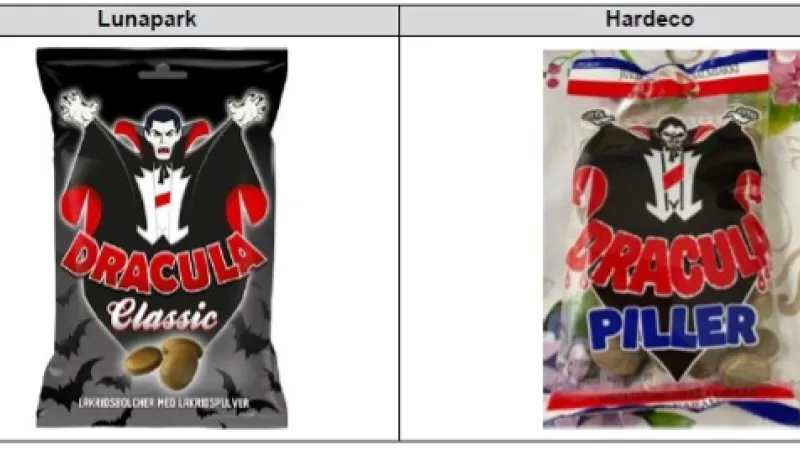
The CJEU's recent judgment in Lunapark (C-452/24) has sent shockwaves through EU trademark law by holding that national courts cannot limit trademark rights for reasons of tolerance beyond the concept of acquiescence provided in Articles 18(1) and 9(1)-(2) of Directive 2015/2436. The case involved a dispute where Lunapark held the registered "DRACULA" trademark whilst Hardeco's predecessor had used the sign for years without any exclusive rights. Despite Lunapark's significant delay in bringing proceedings, the Finnish court's application of a "reasonable time" requirement was challenged.
The CJEU held that Article 18(1) fully harmonises the conditions for limiting a trademark's exclusive rights due to holder inactivity, allowing for acquiescence of a subsequently registered trademark, but not an unregistered sign which confers no exclusive right. The judgment is grounded in textual interpretation: if Article 18(1) expressly mentions acquiescence to later registered trademarks, this excludes tolerance of unregistered signs. The CJEU correctly observed that neither Karkkimies nor Hardeco acquired exclusive rights over "Dracula" through registration or use, protecting the integrity of the trademark registration system. The CJEU prevented Member States from circumventing harmonised acquiescence rules through general principles of national law, ensuring uniform application across the EU.
Despite its doctrinal coherence, the judgment raises serious concerns. Most significantly, the CJEU fails to adequately distinguish between substantive limitations and procedural rules governing enforcement. The Finnish "reasonable time" rule arguably functioned as a procedural requirement, and the CJEU should have assessed it against the principles of equivalence and effectiveness rather than excluding its application outright.
In areas of full harmonisation, Member States retain procedural autonomy only to the extent that their rules do not undermine uniform application of EU law. The CJEU's own jurisprudence in Rewe-Zentralfinanz (C-33/76) and Comet (C-45/76) established that national limitation periods are compatible with EU law provided they satisfy the equivalence and effectiveness tests. A crucial distinction lies in available remedies: many Member States time-bar damage claims differently from injunctive relief, and clarifying that national time limits may bar damage claims but not injunctions would reduce conflict with EU law whilst maintaining uniform trademark protection.
The judgment gives insufficient weight to legitimate expectations of third parties who have used signs for extended periods without opposition, potentially producing inequitable results where a party using a sign for 20 years faces infringement proceedings despite the trademark owner's prolonged inaction. This tension between legal certainty and equitable outcomes lies at the heart of the Lunapark paradox. Moreover, the practical implications extend beyond individual disputes. Businesses operating across multiple Member States now face uncertainty regarding how long they might remain vulnerable to infringement claims. The elimination of national temporal limitations could encourage strategic delay by trademark proprietors, undermining the policy objectives of promoting diligent enforcement and protecting reliance interests.
On 3 November 2025, the Municipal Court in Prague referred three critical questions to the CJEU in MPM v ELTON (C-693/25), directly challenging the consequences of Lunapark. The first question asks whether the acquiescence period may be suspended during legal impossibility. The second asks whether the right to prohibit use can become time-barred under national law before the five-year EU period expires. This is a direct test of the harmonisation-autonomy balance. The third concerns prior use rights where a sign was used for over 50 years before the later trademark registration.
The central issue is whether full harmonisation of substantive rights precludes all national temporal limitations. Whilst national rules creating additional substantive grounds for limiting trademark rights are incompatible with Directive 2015/2436, procedural rules governing enforcement should remain within national competence subject to equivalence and effectiveness. The CJEU should clarify in MPM v ELTON that national procedural rules governing enforcement timing remain within national competence. The EU legislature should also consider amending Directive 2015/2436 to explicitly preserve Member States' procedural autonomy whilst addressing the relationship between acquiescence and limitation periods, suspension during legal impossibility, and substantive prior use rights. The fundamental question remains: should mere registration always triumph over decades of good-faith use? The answer may determine whether EU trademark law achieves its goal of balancing proprietor rights with legitimate expectations of third parties, or whether it creates a system where rights exist indefinitely without meaningful temporal boundaries on enforcement.
Comments (0)
Your email address will not be published.
Become a contributor!
Interested in contributing? Submit your proposal for a blog post now and become a part of our legal community!
Contact Editorial Guidelines


You may also like

April 1, 2026

March 5, 2026

February 10, 2026
February 9, 2026