


Sandoz v Novo Nordisk and Effective Protection for Patent Challengers
October 29, 2026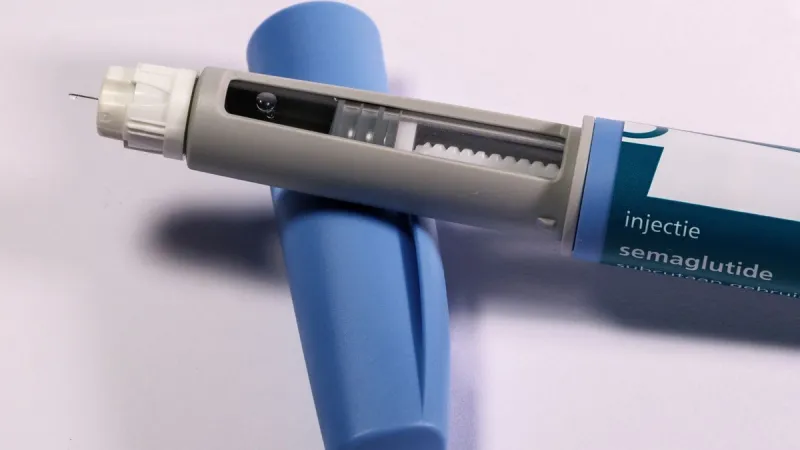
The USA truly is a land of innovation. One adult in eight there is currently taking a GLP-1 drug such as Ozempic or Wegovy.1 Within six months, their households spend 5.3% less on groceries and 8% less on fast food and coffee shops, and savory snacks drop by 10%.2 Yogurt is the only clear winner. Hollywood, of course, got there first: at the 2023 Oscars, Jimmy Kimmel asked whether Ozempic was right for him.3 The front row had clearly answered. The only ones still starving are patent litigators.
Sandoz4 has obtained an important ruling on the UPC’s ability to preserve the value of a patent challenge. In its order of 22 October 2026, the Milan Central Division accepted jurisdiction over two requests addressing a practical concern. A proprietor might abandon the patent in suit while materially equivalent subject matter remained available within its family. The challenger could then lose the opportunity to obtain a useful validity judgment despite having brought proceedings to resolve that uncertainty.
The Court decided a preliminary objection. It neither determined validity nor granted a declaration or an interim measure. It also found the evidence insufficient to establish misconduct by Novo Nordisk at this stage. Within those limits, Sandoz’s initiative has secured recognition of procedural protection that may matter considerably to businesses preparing market entry.
What Sandoz Secured
The dispute concerns Novo Nordisk’s unitary patent EP 3 689 365, relating to a semaglutide composition for treating or preventing type 2 diabetes. Alongside revocation, Sandoz sought three forms of additional relief.
Request 5 sought a declaration that the specified composition and dosing regimen were obvious at the relevant priority date. Request 6 tied the requested declaration to the patent family and to claims broad enough to cover the subject matter of claims 1 to 5 of EP 365. Request 7 sought to prevent Novo Nordisk from withdrawing approval of the patent text before the EPO under Article 113(2) EPC pending a final validity decision by the EPO Opposition Division, a Board of Appeal or the UPC.
The Court upheld Novo Nordisk’s jurisdictional objection to Request 5 as formulated. It dismissed the objection to Requests 6 and 7, reserving their admissibility or conditions for relief, scope and merits. Leave to appeal was granted.
Why Effective Review Matters
The strongest justification for the ruling lies in the relationship between patent protection and validity review. The UPCA’s preamble expressly links improved enforcement with the defence against unfounded claims and patents that should be revoked. Article 42(2) requires fair procedures and remedies that do not distort competition. The panel reads these provisions alongside the right to an effective remedy under Article 47 of the Charter.
A system offering centralised patent protection must provide an effective opportunity to challenge it. That opportunity can be impaired even where individual procedural steps are permitted by the EPC. The concern arises when those steps frustrate validity review while preserving substantially the same exclusionary effect.
Divisionals retain their legitimate role. The Court recognises that role and treats Novo Nordisk’s reservation of the right to pursue further subject matter as insufficient evidence, by itself, of abuse. This qualification strengthens the reasoning. Relief depends on established conduct and its effect on pending proceedings.
An Arrow Remedy Within the UPC Framework
The English authorities explain the commercial problem. In Arrow Generics v Merck5, Kitchin J allowed a declaratory claim to proceed where pending divisionals created uncertainty about the claimant’s product. In Fujifilm v AbbVie6, the Court of Appeal confirmed that a declaration that a product, process or use was old or obvious could be available in appropriate circumstances. Particular weight attached to the possibility that the ordinary revocation remedy was being frustrated by shielding subject matter from scrutiny.
Milan pursues a comparable purpose within the UPC’s jurisdiction. Request 5 failed because the Court regarded its formulation as insufficiently connected to an identified right or a defined Sandoz product or activity. It also raised concerns about third parties’ rights. That conclusion does not establish a categorical exclusion of every product declaration.
Request 6 identified the family and the relevant subject matter more precisely. Read with Sandoz’s explanation at the hearing, it sought to preserve the practical effect of the pending action against later assertion of materially equivalent claims. The Court confined its analysis to patents remaining in Novo Nordisk’s ownership and reserved safeguards for affected third parties. It did not declare all future claims invalid.
Keeping the Validity Dispute Alive
Rule 360 permits disposal where an action has become devoid of purpose and there is no longer a need to adjudicate, after the parties have been heard. Withdrawal or revocation of the patent does not automatically establish both conditions.
If substantially the same subject matter remains available through a divisional, a judgment may still give the challenger a concrete advantage. Where the evidence establishes a strategy liable to frustrate the pending action, the Milan panel reserves the power to continue proceedings and determine the validity of the protection previously claimed. Paragraph 33 places that power within the existing framework, particularly Article 47 UPCA and Rule 360.
The distinction from Neurocrine v Spruce7 is instructive. There, after definitive EPO revocation, Neurocrine sought to make disposal conditional on an undertaking against enforcing divisionals. The Court held that request outside Rule 360 and observed that Neurocrine had not argued that a validity decision still served a purpose. Sandoz’s approach addresses precisely that continuing purpose. The comparison identifies what a challenger must establish to keep its action alive.
The resulting judgment would have no automatic effect on a later patent. Paragraph 34 reserves assessment of the divisional’s granted claims to subsequent infringement or revocation proceedings. The later court must examine the correspondence between the claims and the subject matter already adjudicated. Earlier adverse findings may also be material when provisional measures are sought. The express disclosure duty in Rule 206(4) applies to an application made without hearing the defendant.
Preserving Proceedings Before Withdrawal
Request 7 addresses the risk earlier. The panel holds that the Central Division’s revocation competence includes the power, where necessary, to restrain withdrawal of approval of the patent text before the EPO. The order would operate against the proprietor and preserve proceedings already pending before the UPC.
The Court locates that power within Article 32(1)(b) and (d) UPCA. The infringement remedies harmonised by Directive 2004/48 do not supply its direct basis. Urgency, necessity, proportionality and the balance of interests remain to be established. Concrete facts and a reformulated request are required before relief can be considered here.
This is nevertheless a useful jurisdictional answer for Sandoz. A properly supported application can be examined by the division already hearing its revocation action. That possibility may be valuable where continuing adjudication under Rule 360 would provide insufficient protection against an imminent procedural step.
A Defined Basis for Relief
Article 32 remains a real limit. Effectiveness cannot justify unrestricted jurisdiction over patent disputes. The panel treats the powers in question as implicit in existing competence and rejects Article 24 as an independent source of jurisdiction.
Sidel v Omnia8 reinforces the need to separate competence from admissibility. The Court of Appeal held that whether a noninfringement action could be filed before grant concerned admissibility and fell outside Rule 19. It left that issue for subsequent proceedings. The decision provides no general approval of declarations concerning ungranted claims.
The persuasive defence of Milan therefore follows its narrower reasoning. An identified revocation action may need protection against losing its practical purpose. Any effect on a later divisional requires a further assessment of claims and circumstances.
For challengers, the practical task is to identify the relevant applications, compare their subject matter with the claims in suit and explain what commercial uncertainty would survive withdrawal. Any allegation of abuse requires evidence. Sandoz’s contribution is to have brought that continuing uncertainty squarely before the UPC. The order recognises that effective revocation proceedings must preserve the possibility of a result worth obtaining.
1 KFF Health Tracking Poll, 14 November 2025 (survey of 1,350 U.S. adults, 27 October–2 November 2025): link.
2 S. Hristakeva, J. Liaukonytė and L. Feler, “The No-Hunger Games: How GLP-1 Medication Adoption Is Changing Consumer Food Demand”, Journal of Marketing Research 63(3) (2026) 427–444: doi:10.1177/00222437251412834.
3 J. Kimmel, opening monologue, 95th Academy Awards, 12 March 2023, as reported by NPR: link.
4 Milan Central Division, 22 October 2026, UPC_CFI_2221/2026, Sandoz v Novo Nordisk.
5 High Court of England and Wales (Patents Court), [2007] EWHC 1900 (Pat), Arrow Generics v Merck.
6 Court of Appeal of England and Wales, [2017] EWCA Civ 1, Fujifilm v AbbVie.
7 Milan Central Division, 13 March 2026, UPC_CFI_722/2025, Neurocrine v Spruce.
8 Court of Appeal, 21 September 2026, UPC_CoA_90/2026, Sidel v Omnia.
Comments (0)
Your email address will not be published.
Become a contributor!
Interested in contributing? Submit your proposal for a blog post now and become a part of our legal community!
Contact Editorial Guidelines
Image

Book Ad List
Books
You may also like



October 22, 2026



October 19, 2026