Neurim reloaded? - A New SPC Referral to the CJEU
January 30, 2026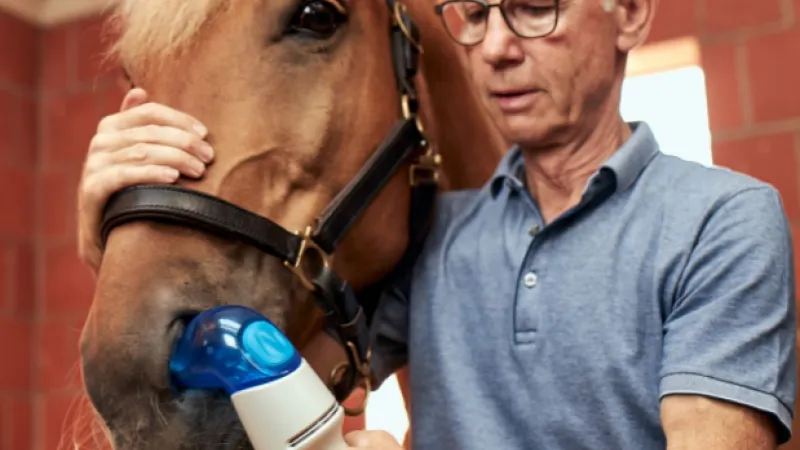
Matthieu Dhenne and Marco Stief recently published on this blog two articles on the subject of the 'first marketing authorization' under Article 3(d) of Regulation (EC) No 469/2009, aka the SPC Regulation (Part 1, Part 2). In particular, they discussed a decision of the court of The Hague, which confirmed the refusal of an application for a Supplementary Protection Certificate (SPC) for the active ingredient ciclesonide based on a veterinary marketing authorization (“MA”) in view of the existence of an earlier MA for a human medicinal product containing the same active ingredient. But as all good things come in threes, let us now take a look at the parallel German case (14 W (pat) 28/23).
The facts of the underlying case can be briefly summarized as follows. For the SPC applications across the EU the applicant Boehringer Ingelheim Vetmedica GmbH, Germany, relied upon EP 2 934 479 entitled "Ciclesonide for the treatment of respiratory diseases in horses" and a veterinary MA granted by the European Medicines Agency (EMA) in 2020 for the product Aservo® EquiHaler® in accordance with Directive 2001/82/EC. Since this was the first veterinary MA for the active ingredient "ciclesonide", the EMA classified "ciclesonide" as a new active substance within the meaning of Art. 3(2)(a) of Regulation (EC) No. 726/2004 during the approval process.
In 2023 the German SPC application was initially refused by the GPTO under Article 3(d) of the SPC Regulation, because another manufacturer had already obtained an MA relating to the active ingredient "ciclesonide" in 2005 for use in human medicine for the treatment of asthma. The applicant appealed this decision, and the case came before the Federal Patent Court.
By decision of December 12, 2025, the 14th Senate of the FPC has now plucked up its courage, suspended the proceedings and referred the following question of law on the interpretation of Article 3(d) to the CJEU:
Is Article 3(d) […] to be interpreted as meaning that the authorisation to place a product on the market as a veterinary medicinal product under Directive 2001/82/EC is the first authorisation to place this product on the market as a medicinal product, even if the same active ingredient has previously been the subject of a marketing authorisation as a human medicinal product in accordance with Directive 2001/83/EC?’
It will not have escaped our SPC-savvy readers that this case constellation closely resembles the Neurim case decided by the CJEU in 2012 (Judgment of July 19, 2012, Case C-130/11 ). The main difference is that in Neurim two earlier veterinary MAs had been cited against an SPC application based on a MA for a human medicinal product, i.e. the use of melatonin for the treatment of sleep disorders in humans, whereas in the present case the first MA is for a human medicinal product and the second for a veterinary medicinal product to be used in horses. However, both cases are similar in that the EMA had classified the (known and approved) active ingredient as “new active substance” and required full clinical studies. That said, the classification of melatonin as a new active substance in Neurim’s MA was not part of the reasoning, neither in the referral decision nor in the CJEU’s Neurim decision.
Like in Boehringer’s case at hand, Neurim Pharmaceuticals did not benefit in any way from the earlier (veterinary) MAs granted to a third party. These circumstances induced the CJEU to conclude in 2012 that the mere existence of an earlier marketing authorisation obtained for a veterinary medicinal product does not preclude the grant of a supplementary protection certificate for a different application of the same product (here use of melatonin in humans).
However, the CJEU’s reasoning in Neurim focused on whether the earlier MA is outside and the later MA is within the protective scope of the basic patent relied upon for the later SPC application. The CJEU held that only the MA of the first medicinal product, comprising the product and authorised for a therapeutic use corresponding to that protected by the patent relied upon for the purposes of the application for the SPC, may be considered to be the first MA of ‘that product’ as a medicinal product exploiting that new use within the meaning of Article 3(d) of the SPC Regulation (decision ground 26). Moreover, the Advocate General’s opinion seemed very much in favour of also allowing SPCs on the basis of MAs granted for further therapeutic uses of known and already approved active ingredients even if the constellation of the case was not a Neurim-type situation. In any case, following Neurim, it became an established practice of most IPOs in the EU (with the notable exception of the Dutch IPO) to grant SPCs for basic patents protecting a second medical use.
Yet SPC jurisprudence will probably never cease to go long and winding roads with occasional surprise turns.
Thus, the reasoning of Neurim relating to the scope of protection was expressly abandoned by the CJEU in Santen (Judgment of the Court of Justice of the European Union of July 9, 2020 in C-673/18). However, the CJEU did not clearly state in this judgment whether it also disagreed with the result, i.e. the grant of an SPC based on the very first MA for a human medicinal product containing the active ingredient concerned. It also did not (and did not have to) take position on the special situation where the product at stake is a known chemical substance per se, but has been designated as "new active substance" by the EMA, with the consequence that a full clinical dossier has to be presented.
Against this background, the referral now made by the FPC will give the CJEU an excellent opportunity to further develop its case law and place Neurim and Santen, which were based on quite different facts, in the right context.
According to the referral decision, the FPC tends to regard the first veterinary MA as the first authorization within the meaning of Article 3(d) of Regulation (EC) No. 469/2009, even if there already existed an MA for a human medicinal product containing the same active ingredient. The FPC is of the view that the meaning and the purpose of Regulation (EC) No. 469/2009 speak in favour of this interpretation.
Given that the clinical data and findings obtained in the course of the marketing authorization procedure for a product under Directive 2001/83/EC (human medicinal products / Humanarzneimittel) are generally not suitable for effectively shortening the marketing authorization procedure for the same product under Directive 2001/82/EC (veterinary medicinal products / Tierarzneimittel), the FPC opined that a relevant gap in protection could otherwise arise in corresponding cases. According to the FPC, a different interpretation could have the effect of discouraging the pharmaceutical industry from investing in research concerning certain active substances for the treatment of humans if the active ingredient has already received approval for placing it on the market as a veterinary medicinal product and vice versa.
Thus, the long and winding road seems to continue with this interesting referral decision, which the CJEU will process under the court file number C15-26. Stay tuned!
(Transparency notice: the co-authors K.S. and B.V. were involved in the proceedings leading to the referral decision. For more information, see JuVe's report here)
Comments (0)
Your email address will not be published.
Become a contributor!
Interested in contributing? Submit your proposal for a blog post now and become a part of our legal community!
Contact Editorial Guidelines



You may also like


March 10, 2026


February 23, 2026