KeeeXed Out: The UPC’s Long Arm Stops at the Line
March 31, 2026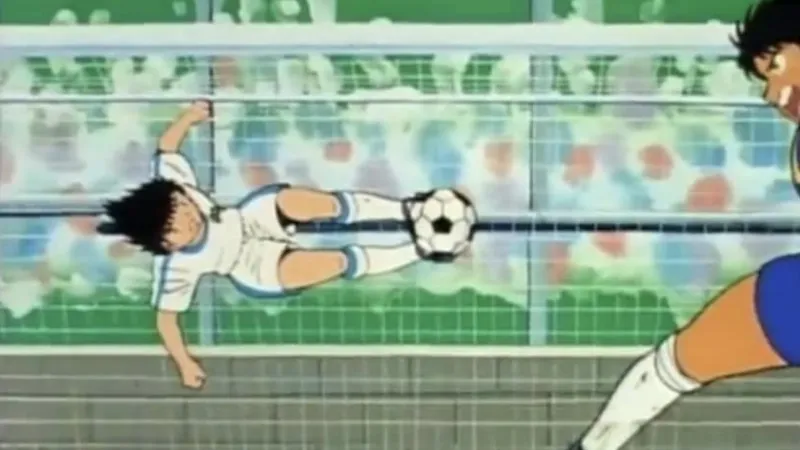
A ball may reach the line and still not cross it. Jurisdiction obeys the same logic.
The order delivered on 13 March 2026 by the Court of Appeal of the Unified Patent Court in Adobe Inc, OpenAI LP & Others v KeeeX SAS matters not because it enlarges the UPC, but because it disciplines it. It dispels a recurrent illusion: that a court created for a transnational market could, by force of that fact alone, adjudicate patent disputes as if borders had become a mere technical inconvenience.1
The dispute was brought by KeeeX SAS against Adobe and OpenAI entities, together with Truepic, the Coalition for Content Provenance and Authenticity (C2PA) and Joint Development Foundation Projects LLC. The patent in suit, EP 2 949 070, originally filed by Aix-Marseille Universite and CNRS, concerns a method for verifying the integrity and authenticity of digital data blocks by fingerprinting techniques.2 Its object is modest in formulation, but infrastructural in effect.
At first instance, the Paris Local Division accepted an ambitious view of jurisdiction. On 27 November 2025 it held that Article 7(2) of Brussels I bis could sustain not only the UPC-territory claims, but also alleged infringements affecting Switzerland, Spain, the United Kingdom, Ireland, Norway and Poland.3 The Court of Appeal reverses that move. It restores the grammar of jurisdiction.
An anchor, not a springboard
The decision is especially valuable because it separates three questions too often collapsed into one: internal competence, international jurisdiction, and the court’s duty to verify both on the material pleaded. On internal competence, the Court aligns Article 33(1)(a) UPCA with Article 7(2) Brussels I bis. In the digital setting, accessibility suffices. The alleged availability online of the relevant software from France was enough to establish the competence of the Paris Local Division; no separate targeting requirement was imposed.
That functional openness stops, however, at the level of international jurisdiction. Under Article 31 UPCA, the UPC sits inside the Brussels system; national fallback rules of private international law, including Article 14 of the French Civil Code, have no office there. The route chosen to found jurisdiction therefore matters decisively. Where jurisdiction rests on domicile under Article 4(1) Brussels I bis, BSH Hausgerate v Electrolux remains the controlling reference. It preserves the possibility of concentrating infringement claims before the court of the defendant’s domicile even when validity is raised as a defence, while leaving validity itself territorially segmented.4
Where jurisdiction is invoked under Article 7(2), the logic changes entirely. The connecting factor is localising. The Court of Appeal states it with welcome precision: jurisdiction founded on the place where the harmful event occurred or may occur is confined to damage within UPC territory. Article 7(2) cannot be converted into a general long-arm device for non-UPC states. It is not a springboard. It is an anchor. Authority follows connection, not consequence.
Breadth must be built
KeeeX tried to recover breadth through Article 71b(3). The Court did not definitively settle the full reach of that provision. It left the broader question open, but treated the argument as one that could not succeed without a fully pleaded factual basis from the outset: property of non-negligible value within a Member State party to the UPCA, and a sufficient connection between that property, the dispute and the forum, could not be supplied later by jurisdictional improvisation.
That is where the statement of claim failed. It did not clearly explain why the UPC should have international jurisdiction beyond UPC territory, nor did it substantiate the asset-based and connection-based elements presupposed by Article 71b(3). Rule 13.1(i) of the Rules of Procedure mattered here in the most concrete way. Jurisdiction was not a caption. It was part of the case theory. Later exhibits could not repair it ex post. In practice, the point was decisive: the two Irish defendants could not serve as anchors because Ireland was not a Contracting Member State of the UPCA.
A provenance case, not a SEP case
The order should not be read only as a private international law ruling. Its factual setting places it at the edge of a new class of disputes in which patent law meets provenance and authenticity infrastructures for digital media. That broader setting matters. June 2025 alone saw 31 infringement actions before the UPC, and technically dense disputes such as BF exaQC/ParTec v NVIDIA have already signalled that the Court is operating beyond the classic domains of patent litigation, such as mechanical engineering, chemicals, and pharmaceuticals, where disputes typically concern identifiable products rather than digital infrastructures.5
What makes KeeeX especially interesting is that the claim is aimed less at an isolated downstream product than at an infrastructural layer concerned with the provenance and authenticity of digital content. C2PA is therefore not an incidental acronym in the caption. It presents itself as an open technical standard for establishing the origin and edits of digital content, and its steering committee includes Adobe, OpenAI and Truepic.6
That does not mean the patent case is, strictly speaking, a FRAND or SEP dispute in disguise. It is not. C2PA’s patent policy proceeds via W3C royalty-free licensing commitments for essential claims, subject to the specification’s exclusion mechanism. That is not a FRAND undertaking, and it does not, without more, neutralise third-party or non-participant patent assertions.7
Method before reach
In that setting, exclusion resumes its central role within the proprietary structure of patent law, no longer mediated by coordination frameworks such as FRAND. Where the contested technology sits in a provenance stack designed to authenticate digital media, the remedial stakes can be systemic rather than merely bilateral. The UPC’s procedural tempo only heightens that pressure: its own case-management logic is built around bringing the final oral hearing at first instance, in the ordinary course, within roughly one year.
What emerges, taken together, is a double movement. The subject matter of litigation expands with the rise of digital infrastructures and AI-adjacent standards. At the same time, the Court reinforces the limits that govern its own authority. The scale of the technology does not determine the reach of the forum. The discipline of jurisdiction does.
The lesson is therefore methodological. The UPC is not a global court. Its authority is constructed through connection, legal basis and proof. Those who wish to use it as a platform for multi-territorial enforcement must choose the right jurisdictional route, plead it in full, and accept that even a long arm stops where its legal authority ends. The contrast with the emergence of global FRAND rate-setting only makes that limit more visible: where coordination frameworks operate, case law may structure multi-territorial access within a single forum; where they do not, it remains bound by territorial limits. It remains to be seen whether the UPC’s long arm will ever reach that global rate or whether it will, once again, be stopped at the line.
- 1Adobe Inc, OpenAI LP & Others v KeeeX SAS, UPC Court of Appeal, 13 March 2026, Appeal Nos UPC_CoA_922-925/2025.
- 2EP 2 949 070 B1, “Verification process of the integrity of numerical data bloc”, priority 22 January 2013, filed 15 January 2014; original applicants Aix-Marseille Université and CNRS.
- 3UPC_CFI_530/2025.
- 4Case C-339/22, BSH Hausgerate GmbH v Electrolux AB, Judgment of 25 February 2025, ECLI:EU:C:2025:108, paras 41 and 49-52. See our comment here.
- 5BF exaQC AG and ParTec AG v NVIDIA Corp, UPC_CFI_627/2024 (case filed 28 October 2024).
- 6C2PA, “Advancing digital content transparency and authenticity”; C2PA, “Membership” (listing Adobe, OpenAI and Truepic among the Steering Committee members).
- 7C2PA Technical Specification v2.3, sec 20, “Patent Policy”; W3C Patent Policy, 15 May 2025, Abstract and sec 2.
Comments (0)
Your email address will not be published.
Become a contributor!
Interested in contributing? Submit your proposal for a blog post now and become a part of our legal community!
Contact Editorial Guidelines




You may also like


March 24, 2026

March 23, 2026

March 19, 2026