


G1/25 hearing: turning point or status quo?
May 8, 2026
G 1/25 addresses a particularly controversial feature of EPO practice: the requirement to adapt the description. The long-anticipated hearing on G 1/25 took place on 8 May 2026, and unfolded in a manner rarely seen before the Enlarged Board of Appeal – the patent proprietor and the opponent presenting somewhat aligned positions, both opposing the preliminary opinion.
The proprietor provided detailed explanations why no provision of the EPC mandates adaptation of the description. The opponent presented a structured five-pillar approach, focusing on the implications of G1/24 and Article 84 EPC, and broader considerations of public policy and global harmonization – arguing that the EPO stands alone internationally in imposing the adaptation requirement.
As discussed upon issuance of the preliminary opinion of the EBA here, the parties have an uphill battle to dissuade the Enlarged Board from its provisional view that the EPO practice of requiring adaptation of the description, both in prosecution and opposition proceedings, should be upheld. In case you missed it, here is a brief (and non-exhaustive) summary of some of the main points raised in the hearing.
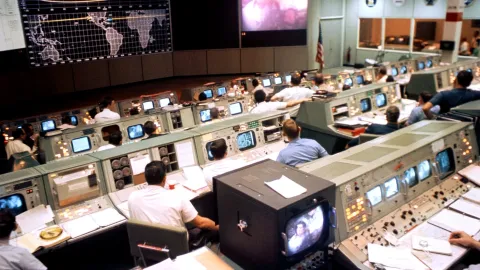
Image: KevM at the English-language Wikipedia, CC BY-SA 3.0 <http://creativecommons.org/licenses/by-sa/3.0/>, via Wikimedia Commons
Questions
The following questions were referred:
1. If the claims of a European patent are amended during opposition proceedings or opposition-appeal proceedings, and the amendment introduces an inconsistency between the amended claims and the description of the patent, is it necessary, to comply with the requirements of the EPC, to adapt the description to the amended claims so as to remove the inconsistency?
2. If the first question is answered in the affirmative, which requirement(s) of the EPC necessitate(s) such an adaptation?
3. Would the answer to questions 1 and 2 be different if the claims of a European patent application are amended during examination proceedings or examination-appeal proceedings, and the amendment introduces an inconsistency between the amended claims and the description of the patent application?
Patent proprietor
The proprietor’s arguments centered on the fact that there is no provision in the EPC rendering adaptation of the description in opposition or examination proceedings mandatory, hence the “First Line of Case Law” (discussed in the preliminary opinion of the EBA and in para 14.2 and 14.3.1 of the Referral Decision) is detached from the ordinary meaning of the language in Article 84 EPC, as well as the history and purpose of the provision.
The proprietor emphasised that Article 84 contains three distinct requirements; namely clarity, conciseness, and support, each having its own purpose, and that the EPO’s practice wrongly treats all three as serving a single goal of ensuring the public is not left in doubt concerning the scope of protection. That purpose, proprietor argued, is already fulfilled by the clarity requirement, hence the support requirement must serve a different function of ensuring that the claims are technically grounded in the description disclosure, rather than the description having to mirror the claims word‑for‑word. In proprietor’s view, one cannot make the jump between “supported by the description” and “identical scope of disclosure between the description and the claims”.
Proprietor elaborated that the EPO’s strict approach conflicts with multiple provisions of the EPC, including Article 69 EPC (which highlights the claims as the controlling factor for determination of the scope of protection) as well as Rules 42 (governing the content of the description) and 48 EPC (defining prohibited matter). According to the proprietor, the EPO’s interpretation produces unintended consequences by creating new grounds of revocation, risks added‑matter violations under Article 123(2) EPC, and imposes an undue burden on proprietors who might need to file dozens of adapted descriptions for multiple auxiliary requests (an argument which was rebutted by the members of the EBA).
Proprietor also argued that the EPO’s approach ignored that the addressee of the patent is the skilled person, who reads the patent with a mind willing to understand and can interpret the claims correctly without requiring the description to be amended.
Opponent
In their arguments which surprisingly align with those of the proprietor, the opponent stressed that Article 84 EPC was drafted on the basis of the PCT and the concept of fair basis, aimed at preventing applicants from claiming subject‑matter not grounded in the disclosure. The requirement that claims be supported by the description is therefore a limit on what may be claimed, not a restriction on what may appear in the description. They noted that the EPC had deliberately changed the wording in Article 84 EPC from “fully supported” to “supported”, signaling a relaxation rather than a tightening of the requirement. It was noted that Rules 42 and 48 EPC define what must or must not appear in the description, and nothing in these rules suggests that the description must be rewritten upon amendment to mirror the claims.
Regarding the topic of legal certainty, the opponent argued that this is already ensured because the public has access to the application as filed, the examination file, and the final claims. Courts are thus fully capable of dealing with inconsistencies and deciding whether they affect claim interpretation. Forcing amendments, they said, creates new risks, such as added‑matter problems, unintended narrowing of claim scope, and even paradoxical outcomes in infringement litigation.
The opponent also highlighted that no major patent system outside Europe requires adaptation of the description, and that the courts and the public in those jurisdictions manage perfectly well without this requirement. The majority of the industry submissions in the amicus briefs were described to oppose mandatory description amendments, and actually question the legal basis for such amendments. As such, while the opponent acknowledged that some situations may justify amendments, they appeared to argue that the EPO’s current practice is far more intrusive than what G 1/24 necessitates, and is out of step with global norms.
EPO President
The representatives for the President of the EPO urged the Enlarged Board to uphold the Office’s long‑standing practice of requiring adaptation of the description, arguing that inconsistencies which prejudice EPC compliance must always be removed, because they cast doubt on the subject‑matter for which protection is sought or render the claims unclear or unsupported under Article 84 EPC. However, they did ask that if the Enlarged Board were to follow their preliminary opinion, that they provide guidance as to what would constitute an “Inconsistency of the First Type” (not requiring amendment of the description) and an “Inconsistency of the Second type” (wherein amendment is necessary) as labelled in the preliminary opinion of the EBA.
It was further emphasised that the claims and description form a unitary legal title which assists national courts, the UPC, and third parties in determining boundaries of patent protection, and are supported by e.g. Article 84, Article 69, Rule 42 and Rule 48 EPC, and Article 97 EPC, all of which establish a circular link and a clear legal basis for requiring amendments. While acknowledging that other patent offices take different approaches, they maintained that this divergence is not decisive, as the EPC contains its own coherent framework. The representatives highlighted the key findings of T 56/21 and G 1/24 as inconsistent, reiterated that G 3/14 remains fully applicable, and stressed that both inconsistencies present on filing and those introduced by amendment, including claim‑like clauses, must be corrected to safeguard legal certainty for third parties.
A curious development came when the representative asserted that the patent and the claims themselves are not only addressed to the skilled person with the intention to understand, but to the public at large, who must be able to understand and determine the scope of protection.
Enlarged Board of Appeal
The Enlarged Board did not give much away, and merely concluded that they will continue their deliberations and now turn to the “lion’s share” of their work in reaching their decision.
Concluding remarks
The authors are not fans of the status quo (or for that matter the music or dancing of the English rock band Status Quo), and find it remarkable that the positions of both the proprietor and opponent in this case were that adaptation is generally not necessary. This view seems to be shared by the vast majority of the EPO users, as can be taken by the large share of amicus curiae briefs in favour of abandoning the current practice.
It is hoped that the Enlarged Board takes a critical look at the position adopted in the preliminary opinion, and accept that this long-standing practice has simply no basis in the EPC.
Become a contributor!
Interested in contributing? Submit your proposal for a blog post now and become a part of our legal community!
Contact Editorial Guidelines





You may also like

October 1, 2026



September 22, 2026

DXThomas
It is the hope of a lot of people that adaptation of the description should be abandoned. T 56/21 has nurtured this hope. The proprietor might have emphasised that “Article 84 contains three distinct requirements; namely clarity, conciseness, and support, each having its own purpose”, he forgot to mention the most important: claims define matter for which protection is sought. The proprietor insisted on the fact that there is no provision in the EPC requiring that the scope of the claims must be the same as the scope of the disclosure, which is the consequence of requiring adaptation of the description. I am not convinced that this is the case. Art 84 is not about the scope of the claim. The presentation of the opponent was of a better quality than that of the proprietor, but did as well failed to convince me. The opponent indeed explained that not all offices in the contracting states require adaptation of the description, i.e. some of them are even not examining applications. For the opponent, harmonisation should be reached by not requiring adaptation. That when it comes to litigation the whole file is gone through with a fine toothed comb has however nothing to do whether the description ought to be adapted or not. The representatives of the president of the EPO confirmed their agreement with the provisional opinion, This should not come as a surprise, as already in the comments for G 1/24, the president wanted the EBA to decide on adaptation of the description. It is correct that an early comment of one of the president’s representative was surprising and justified the intervention of the EBA. I do not think that this would bring the EBA to decide against adaptation. The speech of this representative was a bit out of place as it was more political than legal. In all fairness it has to be added that the statements of both proprietor and opponent have been interrupted by very pointed questions from an external member of the EBA. Although the EBA did not give much away, which is normal, I am not convinced that the EBA will throw over board the necessity of adapting the description. Even first instance divisions of the UPC are of this opinion…..
Max Drei
Does anybody here have an example of an inconsistency of the second type: one which offends Art 84 EPC. Here's mine: The description includes an explicit definition of "gathered" namely, in this specification, gathered means pleated. Claim 1 recites "gathered, not being pleated". I'm against obsessive "adaptation", for all the reasons given by the parties. But then again, I suspect that there is a class oF "inconsistency" so egregious that the EPO has a public duty to raise against it an objection under Art 84 EPC. When mulling over my hypo, please keep in mind that the B publication includes the claims in three languages but the description in only one. Think of those who read the claims in translation.
Pedros
What is unique to the EPO system is that translation(s) will be needed at the validation stage, and therefore keeping the requirement to adapt the description allows the applicant/proprietor to delete text from the specification, taking into account the lowering of costs versus risk of deleting something important. The present system recognises this in an unsaid way. Taking away the requirement to adapt the description then divides the applicant community into those that did delete text (for cost reasons) and those that did not (because they had more money). This is inherently unfair, and I believe the Enlarged Board recognises this, and therefore will not change the status quo.
Jo
very good summary, thank you so much; according to my understanding, there is no provision in the EPC that bars an applicant to disclose more than what is finally claimed; my opinion as a practioner is that it is also simply impossible to mirror the claims in the description since this would require, strictly spoken, to indicate each piece of disclosure which is not covered by the claims, resulting in canceling in one way or another the excess disclosure compared with the subject-matter included in the claims; any additional classification like “Inconsistency of the First/Second/Third/Fourth/... Type” will not help.
Lars
The patent proprietor also brought an argument along the following lines: Any amendments to claims must have been unambiguously derivable from the application as filed (Art. 123(2) EPC). This implies that amending the description to such amended claims cannot be necessary, since the amended claims are already unambiguously derivable from the application as filed. So, in other words, suggesting that there is such a requirement to amend the description to amended claims contradicts Art. 123(2) EPC.