For a Real European Patent Law — A Contribution to the Debate on the Redistribution of UPC Cases
March 26, 2026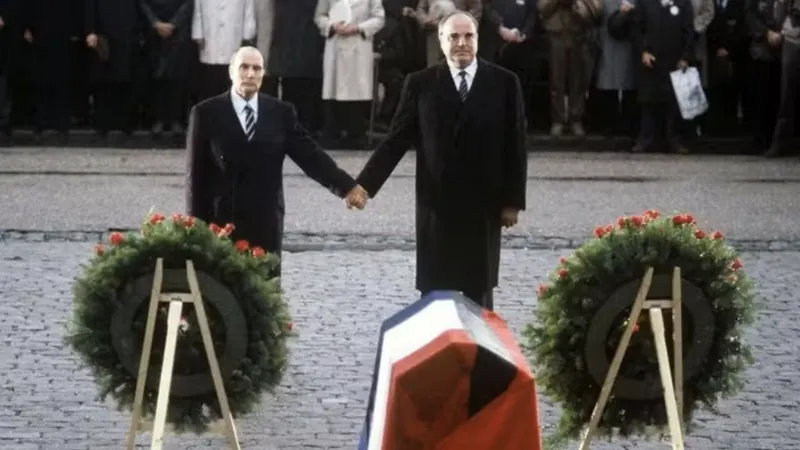
“Europe will not be made all at once, or according to a single plan. It will be built through concrete achievements.” — Schuman Declaration, 9 May 1950
The Unified Patent Court was not created to place national patent habits under a common roof. It was created to transform the scale at which patent adjudication in Europe is organized, perceived, and ultimately legitimized. For that reason, the current debate over the distribution of cases cannot be reduced to a secondary discussion about caseload management. What is at stake is more fundamental: the institutional conditions under which a genuinely European patent law may emerge. The debate is often framed in the neutral vocabulary of “caseload management” and “party autonomy.” This framing is misleading. It suggests that the present distribution of cases merely reflects the free choices of litigants operating within an open procedural market. That assumption deserves closer scrutiny.
Freedom, in law, is not reducible to the mere aggregation of individual preferences exercised within a pre-structured environment. A choice that is predictably channelled by concentration effects, professional habits, and procedural expectations is not neutral simply because it is formally available. It is oriented. One might recall that European legal thought has long resisted reducing freedom to the mere capacity to select among given options. As Emmanuel Levinas suggested in a different context, freedom cannot be detached from the conditions that make responsibility—and therefore genuine plurality—possible. Where a system progressively directs choices toward the same institutional nodes, freedom does not disappear; it converges. Therefore, invoking party autonomy as a sufficient justification risks confusing freedom with its procedural appearance. The issue is not whether parties remain formally free to choose. It is whether the system within which they choose preserves the conditions of meaningful choice. To describe the current concentration of litigation as the spontaneous outcome of liberty is to overlook the extent to which that liberty is already structured (and progressively narrowed) by the architecture of the Court itself.
In its early operation, one structural feature has become increasingly difficult to ignore. A dominant share of infringement litigation has become concentrated in a limited number of local divisions, primarily those that already occupied a central position in European patent litigation before the UPC came into existence. This does not appear to be a transient imbalance. It is the reactivation, within a formally unified system, of accumulated judicial capital: experience, procedural speed, professional density, and the gravitational pull of established litigation environments.
Article 33 UPCA explains part of this dynamic. By granting broad competence over infringement actions to local and regional divisions, the Agreement preserves proximity and enables procedural choice. Such decentralization is not, in itself, objectionable. It may foster expertise, encourage institutional emulation, and contribute to the attractiveness of a new court. A degree of forum selection is therefore inherent in the architecture of the UPC—and, within limits, desirable. But that proposition has a structural threshold. Choice remains institutionally productive only so long as the field of choice remains genuinely plural. Where litigation concentrates in a small number of divisions, forum selection ceases to operate as a neutral allocation mechanism. It becomes a vector of path dependence. Parties do not simply choose; they are guided, progressively and predictably, toward the same procedural centres of gravity.
At that point, the issue is no longer merely empirical. The UPC is not merely a platform for efficient patent enforcement. It is a court bound by Union law. Article 20 UPCA subjects it to the primacy of that law. Article 21 integrates it into the preliminary reference mechanism of Article 267 TFEU. Article 47 of the Charter situates adjudication within a constitutional framework of independence, impartiality, and effective judicial protection. Those guarantees concern not only the status of individual judges, but also the institutional conditions under which a common court generates authority. The UPC is therefore not merely unified by treaty; it is inserted into the judicial architecture of the Union. And it is precisely here that the tension emerges. The Court is European in law, yet risks becoming asymmetrical in operation. A court that is asymmetrical in operation cannot remain neutral in the way it shapes its jurisprudence.
European patent law was historically built on a functional compromise: centralized grant under the European Patent Convention, decentralized enforcement before national courts. The UPC was intended to move beyond that compromise by creating a common forum for both infringement and validity. But a common forum does not suffice to create a common judicial space. If the disputes most capable of structuring jurisprudence continue to gravitate toward divisions embedded in a single dominant litigation environment, the former geography of European patent litigation is not overcome. It is internalized. This point must be stated clearly. The problem is not Germany. The problem arises when Europe mistakes the success of a national litigation culture for the equilibrium of a common court. There is no argument here against German divisions. Their prominence is intelligible and, in many respects, justified. Expertise, efficiency, and procedural discipline are judicial virtues. But a common court cannot allow the attractiveness of certain divisions to become, by accumulation, the implicit standard of the whole. Otherwise, what appears as European unity may progressively assume the form of institutional asymmetry.
This is not a merely symbolic concern. It bears directly on the production of law. A court does not simply resolve disputes; it generates expectations, stabilizes interpretive frameworks, and structures the future of legal reasoning. Where the same divisions repeatedly adjudicate the cases that shape the market, where the same professional environments frame the decisive arguments, and where the same procedural reflexes dominate litigation, the resulting jurisprudence cannot be purely European by virtue of its label alone. Europe will speak, but through a reduced procedural language. For that reason, the debate on redistribution must be reframed. The question is not whether parties should retain strategic choice; they should. Nor is it whether successful divisions should be penalized; they should not. The real question is whether a common court can allow inherited centres of gravity to determine the concrete conditions under which common jurisprudence is formed. Seen in that light, redistribution is not an attack on efficiency. It is not a reaction against experience. It is a requirement of institutional balance. A court that claims to be European must ensure that its European character is not merely formal, but operational.
A genuinely European patent law cannot emerge from procedural concentration alone. Europe is not only a market; it is a legal order grounded in values, as reflected in the Charter of Fundamental Rights. Law is not the by-product of economic dominance, but the expression of a shared normative horizon. If the UPC is to participate in that project, it must resist the silent transformation of efficiency into structural dominance. Otherwise, Europe will have constructed a common court without fully escaping the logic it was meant to transcend.
Comments (0)
Your email address will not be published.
Become a contributor!
Interested in contributing? Submit your proposal for a blog post now and become a part of our legal community!
Contact Editorial Guidelines





You may also like

March 24, 2026
March 23, 2026

March 19, 2026