Winning the jurisdiction argument in a long-arm case is not the same as having a claim. On 2 June 2026 the UPC Court of Appeal confirmed that the Mannheim Local Division had been right to hear…
On May 18, 2026, a Division Bench comprising Justices C. Hari Shankar and Om Prakash Shukla of the Delhi High Court pronounced their verdict in K.K. Bansal v Koninklijke Philips Electronics NV,…
On 19 March 2026, the WTO Dispute Settlement Body established a panel in DS632, China – Worldwide Licensing Terms for Standard Essential Patents, the EU’s second SEP dispute with China. In the first…
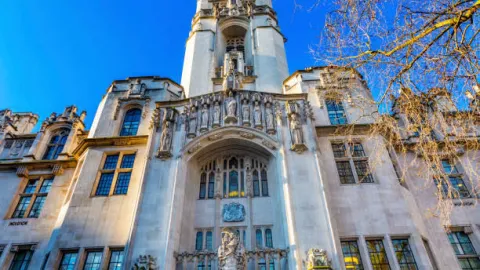
The UK Supreme Court has considered the fundamental principles of (F)RAND, this time in the context of a jurisdiction challenge in Tesla v InterDigital and Avanci. In what could prove to be a…
My forthcoming book, A Contractual Theory of FRAND: From Private Normativity to Legal Obligation in Technical Standardization, starts from a question that remains insufficiently examined in standard…
Abstract:FRAND licensing asks implementers to pay today for a benchmark that courts may only define tomorrow – often in disputes to which they were not a party. When later decisions show that agreed…
In contemporary SEP litigation, debates about FRAND almost always open with the same questions. What is the correct royalty rate? Which licences should count as comparables? Should the rate be global…
"The readiness is all." - HamletSometimes a judgment does not change the melody of FRAND law. It changes the instrument through which that melody may be played. Not every player reads the same score,…
The Tokyo District Court recently released its "Guidelines for Proceedings in Patent Infringement Lawsuits involving Standard Essential Patents" (the "Guidelines"). This is the first time a Japanese…