


The CJEU SACD case: Admissibility of a copyright action that does not include all the co-authors
March 2, 2026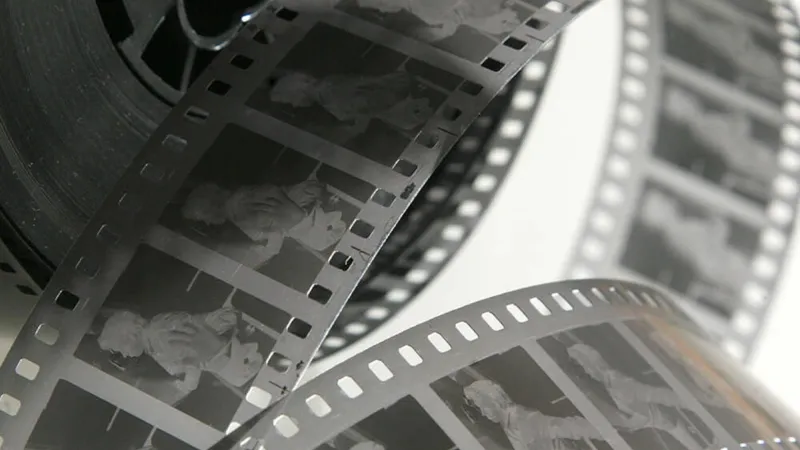
In 2019 the heirs of the famous French film director, author of many Nouvelle Vague (New Wave) films, Claude Chabrol who died in 2010, brought a case against the assignees of 14 films he made between 1967 and 1974. The successors in title of Chabrol, and those of Paul Gégauff (a dialogue writer of 5 of the films, who died in 1983), essentially criticised the insufficient exploitation of the films, claiming damages for the harm suffered because of these contractual breaches.
Under French law, all co-authors of a work must be called into the procedure brought by one of the authors. It was impossible to locate all the rightholders despite the endeavours of the claimants, an order of the judge to the defendants to provide information, and the participation in the proceedings of two collecting societies. This situation paralysed the proceedings.
The Paris Court of First Instance (tribunal judiciaire) decided to call for the help of the Court of Justice of the European Union, with a request for a preliminary ruling. The question boils down to this unsolvable problem:
- To protect the co-authors, case-law of the French Supreme Court (see below) has established that the claims of the author(s) taking action are admissible only if all co-authors are called into the proceedings.
- Under French law many participants, alongside the director, can be considered the co-authors of an audiovisual work. In practice, when audiovisual works are several decades old it is practically impossible for the claimant to locate all the rightholders.
In its judgment of 18 December 2025, the CJEU reformulated the questions of the Paris Court, considering that, in essence, it asked ‘whether Article 8 of Directive 2001/29, Article 3 of Directive 2004/48 and Article 1 of Directive 2006/116, read in conjunction with Articles 17 and 47 of the Charter, must be interpreted as precluding national legislation under which the admissibility of an action for infringement of the copyright in a collective work is conditional on all the joint holders of that copyright being called on to participate in the proceedings.’ (§46).
Spoiler alert: the CJEU did not give the French court a ready-to-use formula. However, it did – wisely – rule that EU law does not preclude the French admissibility rules, but that they should be interpreted in a supple way so as to allow the action of rightholders who, despite all appropriate endeavours, cannot locate the other co-owners of the copyright.
Why does French copyright law make it difficult for the rightholders of audiovisual works to take action?
Under Article L.113-3 paragraphs 1 and 2 IPC, a ‘work of collaboration’ (called ‘collective work’ in the CJEU judgment) is the joint property of its authors, who must exercise their rights by common consent.
The French Supreme Court – Cour de cassation – has ruled that if one of the authors of a work of collaboration decides to bring a case concerning the work to court, in particular an infringement case, that author has to include the other authors in the case (Court of Cassation, 4 October 1988, No. 86-19272; and 10 May 1995, No. 93-10945). This allows the other authors to decide whether they wish to make claims, but it also ensures that the decision rendered will be binding on them, even if they make no claims.
Article L.113-7 of the French Intellectual Property Code (‘IPC’) states that an audiovisual work (a film, a TV series, a documentary) is necessarily a ‘work of collaboration’ and provides a long list of authors that are deemed to be co-authors of an audiovisual work: ‘1° The author of the script; 2° The author of the adaptation; 3° The author of the dialogue; 4° The author of the musical compositions, with or without words, specially composed for the work; 5° The director.’ Thus, potentially many natural persons will be considered as the co-authors of an audiovisual work. And this is where procedural difficulties arise.
The rules set out by the French Supreme Court are logical, and quite easy to follow in the case of a song written by two authors. But if you are an author or heir of an author of an old film, with several authors deceased, finding all these fine people and their heirs is going to be a real kerfuffle.
It should be noted that EU law only requires the principal director of a cinematographic or audiovisual work to be considered as an author and thus the initial rightholder (C-277/10, Martin Luksan v. Petrus van der Let (2012)) while the ‘Member States may provide for others to be considered as its co-authors’ (Article 1(5) of Directive 93/83). This procedural problem could therefore be specific to French copyright law (but let us know in the comments if you know of other such systems in the EU).
In this regard EU law is very different to US federal law, where the copyright in an audiovisual work will often vest directly in the producer; indeed, under Sections 101 and 201 of the US Copyright Act, when the work is a ‘work made for hire’, the producer (whether a legal entity or a natural person) will be considered the author and initial owner ‘of the rights comprised in the copyright.’
The CJEU ruling
The Court explains that even though the Member States, according to the principle of procedural autonomy, must lay down the procedural rules governing copyright remedies (§58), these rules must not ‘render impossible in practice or excessively difficult the exercise of rights conferred by EU law (the principle of effectiveness)’ (§59).
In addition, the Court recalls that the Charter enshrines:
- the right to property in Article 17, which protects the co-owners who must be informed of any case likely to have legal consequences on their rights, so that they can decide whether or not to participate in the proceedings (§68 to §71);
- the right to effective remedy in Article 47, which means that the copyright holders whose rights have been infringed must be entitled to an effective remedy (§72 and §73).
The Court therefore ruled, with a very nuanced position, that Articles 8 of Directive 2001/29, 3 of Directive 2004/48 and 1 of Directive 2006/116, read in conjunction with Articles 17 and 47 of the Charter ‘must be interpreted as not precluding national legislation under which the admissibility of an action for infringement of the copyright in a collective work is conditional on all the joint holders of that copyright being called on to participate in the proceedings, provided that the interpretation and application of that legislation do not render the procedure provided for unnecessarily complicated or costly, and that that procedure does not render it impossible or excessively difficult for that action to be brought by only one or some of the co-authors. The national court must, in any event, guarantee respect for the right to effective judicial protection enshrined in Article 47 of the Charter’.
What now?
The CJEU gives a hint to the referring court: ‘If the referring court were to find that it is not possible to interpret its national law in conformity with EU law, it would be required to ensure, within its jurisdiction, the judicial protection for individuals flowing from Article 47 of the Charter, and to ensure the full effectiveness of that article by disapplying, if need be, the national provisions concerned’ (§77). In other words, if everything has been done to locate the co-authors and their successors in title, the national court should ensure that the claimants are entitled to an effective remedy, i.e. their claims must be considered admissible.
The French courts are still going to have to decide on the type of research the claimants will need to carry out before it can be considered that the action is admissible, despite the fact that not all the rightholders have been found. This question is important not only for this case, but also for many other cases to come, because the French IPC provides that most participants to an audiovisual work are to be considered co-authors.
The naked truth is that many rightholders do not even know they are rightholders, and in any event, it is often simply impossible to find them. So even if the French courts find a way to protect the claimants who have done the necessary research, the case-law rule will not be entirely satisfactory. In similar situations, the prior publication of the summons is required by French real estate law for certain actions that may affect the legal status of a real estate property, notably to protect the rights of third parties and ensure the security of real estate transactions; this publication of the initiating summons is made with the land registry office. The same type of rule could be adopted by the French legislator for audiovisual works (or even for all types of works), where the claimant who cannot find the other rightholders may publish its summons with a registry held by a collecting society, or the public registry currently held by the CNC (‘Centre national du cinéma et de l'image animée’), a public administrative organisation, where contracts on production and distribution of audiovisual works are already published.
Image by AlexBelozertsev from Pixabay
Tags:
audiovisual,
co-authorship
Comments (0)
Your email address will not be published.


You may also like



February 18, 2026