Artificial intelligence (AI) is reshaping the copyright landscape, but the debate is no longer limited to legislation and emerging case law. Generative AI (GenAI) is exposing an infrastructure gap in…
For several years, creators asking AI developers to obtain authorization before using protected works for training have faced a familiar objection: permission raises the cost of training and can slow…
The debate over AI and copyright policy, and how to ensure remuneration for right holders, is gaining momentum around the world. There have been calls to review EU copyright law, India has proposed…
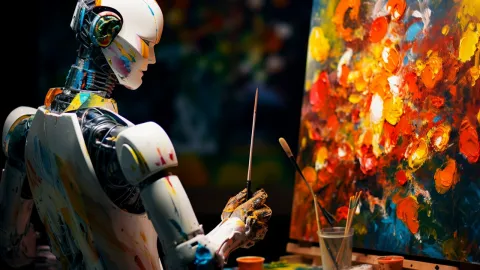
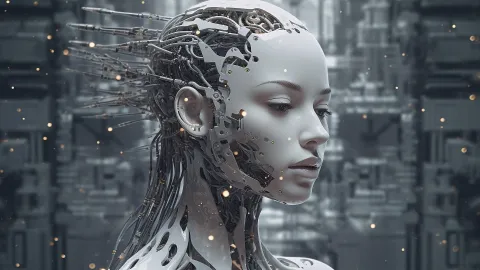
Generative tools like DALL·E, Midjourney and Stable Diffusion can now produce an image "in the style of" almost any artist in seconds. That capability sits uneasily with EU copyright law, which has…
The recent judgment of the Court of Justice in Gandul Media (C‑598/24) tackles two crucial EU copyright law issues: (i) the notion of a copyright work; and (ii) the Member State implementation…
The Deepfake ProblematicThe phenomenon of deepfakes challenges existing image and voice protection. Unlike before, AI systems can now generate audio and video content that mimics a real person to the…
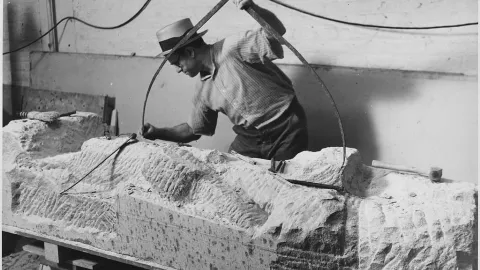
Copyright exhaustion has an environmental problem. In the EU, transforming a lawfully purchased physical copy can move the act beyond the exhausted distribution right and trigger the copyright holder…
The idea of scientific research as an activity that deserves specific treatment under EU Law has been around for over 30 years. In the 1992 Rental and Lending Directive (Article 10(d)), it was…
In France, the press publishers’ right of Article 15 of the CDSM Directive was implemented in articles L.218‐1 et seq. of the intellectual property code (‘IPC’) (here for our presentation…
Who “owns” content generated with a person’s personal AI twin? In this post, we briefly explain the technology underlying personal AI twins and offer three possible answers to this question. We…