New WIPO Guide Casts Doubt on Open General Exceptions
March 30, 2026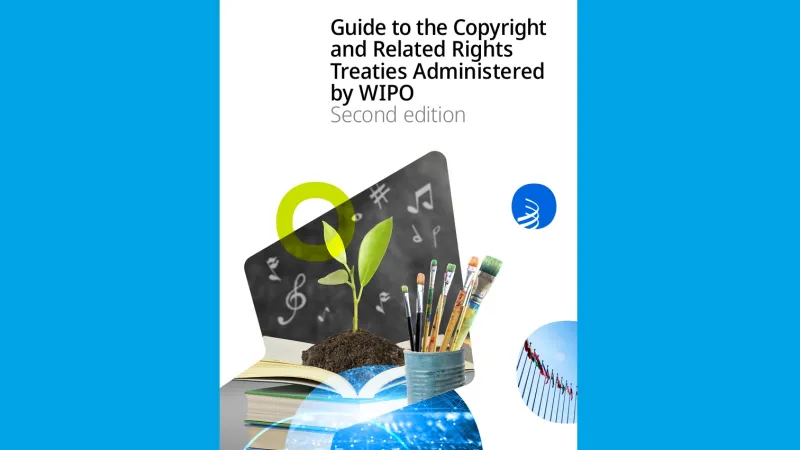
WIPO’s new Guide to the Copyright and Related Rights Treaties Administered by WIPO (2nd ed.) contains some complicated messages on the use of open general exceptions, like fair use and fair dealing.
Open General Exceptions in Copyright
Others and I have described open general (OG) exceptions as open in the sense of applying to potentially any use of any work by any user for any purpose, subject to a proportionality test (such as “fair practice,” “dealing” or “use”) that balances the interests of the rights holder with those of the user and the public (see User Rights Database). The U.S. fair use provision is frequently cited as the primary model of an open general exception. But many “fair dealing” exceptions are also open (e.g., Malaysia), as are many specific exceptions such as for “research” that exist in many civil law countries and can be applied quite flexibly.
OG Exceptions and the Three-Step Test
There is a long-running debate in international copyright law and policy about whether fair use and other open general exceptions violate the so-called three-step test in the Berne Convention, and replicated in subtly different forms in other copyright treaties. The Berne version of the three-step test provides:
It shall be a matter for legislation in the countries of the Union to permit the reproduction of such works in certain special cases, provided that such reproduction does not conflict with a normal exploitation of the work and does not unreasonably prejudice the legitimate interests of the author.
The US Copyright Act provides an exception for “the fair use of a copyrighted work … for purposes such as criticism, comment, news reporting, teaching (including multiple copies for classroom use), scholarship, or research,” provided the use is “fair” considering the purpose and character of the use, the nature of the copyrighted work, the amount and substantiality of use, and the effect of the use upon the potential market for or value of the copyrighted work.
The debate about whether fair use complies with the three-step test revolves around the inclusion of the opening term “such as” before the listed permissive purposes for a use. The legal question in the three-step analysis is whether that opening clause renders the exception applicable to uses beyond “certain special cases.”
The New Guide’s Approach
The new WIPO Guide begins with a refutation of the old idea, perhaps first published in a WIPO document by a report authored by Sam Ricketson early in the SCCR’s work on limitations and exceptions, that the US fair use exception is in violation of the Berne three-step test because its application to purposes “such as” the listed purposes is not adequately confined to “certain special cases.” Ricketson (2003, p.67) had concluded that “it is unlikely that the indeterminate ‘other purposes’ that are covered by Section 107 meet the requirements of the first step of the three-step test”. The report concludes differently, explaining:
BC-9.25. With this interpretation of the adjective “certain”, it is easier to reject the assertion that the US “fair use” doctrine and practice may not be in accordance with the three-step test. The basis of this assertion is that the U.S. Copyright Act does not fulfill the condition of “certainty”, since it does not contain a sufficiently clear definition as required by the above-mentioned interpretation of the WTO panel. Such doubts about the US law, however, are not justified even on the basis of the interpretation adopted by the WTO copyright panel, because they would be based on an overemphasis of an isolated element of the panel’s finding: the requirement of “certainty”. As quoted above, even the panel has clarified that “there is no need to identify explicitly each and every possible situation to which the exception could apply
But the report then goes on to suggest that US law only became sufficiently “certain” at some point during its development in case law:
BC-9.65. It is to be recognized, however, that these open forms of limitations or exceptions rather than specific targeted provisions in the statutory law may only be an appropriate option if they are based on well-established court practice. For example, in the United States, the “fair use” system is the result of two centuries of development of case law. Simply copying the statutory codification of the voluminous case law on fair use in section 107 of the U.S. Copyright Act into the legislation of another country where such a system has not existed before and trying to settle the questions of limitations and exceptions on that basis might lead to conflicts with the Berne Convention.
The idea that open general exceptions may violate the three-step test has been rigorously contested by international copyright scholars. For example, Geiger et al (2013, pp.1-2) conclude, in a rich historical and doctrinal examination, “that the three-step test in international copyright law does not preclude flexible national legislation allowing the courts to identify individual use privileges case-by-case and that the three-step test can serve as a source of inspiration for national law makers seeking to institute flexible exceptions and limitations at the domestic level.”
The compliance of general exceptions with the three-step test was strongly supported by the Marrakesh Treaty’s Article 10(3), which permits countries to implement it “through limitations or exceptions specifically for the benefit of beneficiary persons, other limitations or exceptions, or a combination thereof,” which “may include judicial, administrative or regulatory determinations for the benefit of beneficiary persons as to fair practices, dealings or uses”. But the Report concludes that such general exceptions “might only be an appropriate option if there is well-established court practice based on adequately developed criteria.”
For example, in the United States, the fair use system is the result of two centuries’ development of case law. A simple copying of the statutory codification of that voluminous and still developing case law of fair use in section 107 of the U.S. Copyright Act – and then trying to settle the questions of limitations and exceptions on that basis in a country without similar legal traditions and without a body of law that has thus emerged as a solid basis – may hardly produce the same satisfactory result.
It is odd to state that the US fair use exception is grounded in “two centuries” of case law when it was adopted only in 1976. The Report finds “two centuries” of case law only by including pre-statutory case law that interpreted the prior Copyright Act, developing and applying general principles of copyright law dating to early British law. But these cases are merely persuasive as applied to new statutory text — as persuasive as the same cases could be to a foreign court interpreting a newly adopted fair use exception.
Studies of fair use cases in the US have shown that there is a high degree of consistency in fair use outcomes. Additionally, until there is a body of fair use decisions in any country adopting a new general exception, courts could look to fair use decisions in other jurisdictions, which can easily be found online (see here for the U.S. Copyright Office’s Fair Use Index).
Other countries that choose to adopt an open general exception will also have their own pre-amendment case law. For example, in South Africa, multinational entertainment and publishing industries made the argument adopted by the WIPO Guide that South Africa’s adoption of a fair use exception modeled on US law violates the three-step test because “South Africa lacks the foundation of the long history of fair use jurisprudence in U.S. law.” But South Africa is a commonwealth country with the same legal history. It can look to old English cases for guidance as well as any US court can. And it has case law defining its prior “fair dealing” exception which has the same historical lineage and key terms as its revised “fair use” exception. Would the Report agree with multinational industries that South Africa lacks the necessary legal environment to render a detailed fair use exception in compliance with the three-step test?
The Report’s language would seem to cast doubt on a large number of recently adopted fair use exceptions that could be argued to lack the two centuries of case law it claims ground the US fair use exception. These would include, for example:
| Country | Adoption Year | Legal Framework / Act | Previous System |
| United States | 1976 | Copyright Act of 1976 (Section 107) | Common Law |
| Taiwan | 1992 | Copyright Act (Article 65) | Specific Exemptions |
| Philippines | 1997 | Intellectual Property Code (Section 185) | Specific Exemptions |
| Sri Lanka | 2003 | Intellectual Property Act (Section 11) | Specific Exemptions |
| Israel | 2007 | Copyright Act of 2007 (Section 19) | Fair Dealing |
| South Korea | 2011 | Copyright Act (Article 35-3) | Specific Exemptions |
| Malaysia | 2012 | Copyright (Amendment) Act 2012 | Fair Dealing
|
| Singapore | 2025 | Copyright Amendment Act of 2025 | Fair Dealing |
A better approach may be to recognize that all countries have access to the case law developed under fair use in the US, which should give adequate guidance to rightsholders and users as to what local courts may decide. Of course, local courts can decide specific matters differently. But that is true with respect to the application of specific exceptions as well.
Ultimately, the report may fuel the call of many countries for an instrument on limitations and exceptions that can provide clearer boundaries and permissions than the report provides. For example, the recent proposal by the African Group for an Instrument on Limitations and Exceptions for Libraries, Archives, Museums, Education and Research Institutions and People with Disabilities contains a variety of specific but openly framed exceptions (in the sense of applying to all uses of all works by all users) that should be considered permissible under international copyright. And with respect to the three-step test, it proposes:
nothing prevents Contracting Parties interpreting the three-step test in a manner that respects the legitimate interests, including of third parties, deriving from educational and research needs, and other human rights and fundamental freedoms; and other public interests, such as the need to achieve scientific progress and cultural, educational, social, or economic development, and the protection of competition and secondary markets.
The Report also embraces the conclusion that the Berne three-step factors must be applied in a “cumulative” analysis, such that failure of any one factor renders the exception invalid. The Report bases this conclusion on a panel report issued by the WTO 25 years ago. But panel decisions have no precedential value, even within the WTO’s dispute resolution system (which itself is no longer functioning). The cumulative approach has not been adopted by courts in countries that have domesticated three-step terms into their law. An alternative interpretation of the test, embraced by many scholars, and supported by equally persuasive authority as the single WTO panel report used by the Report, is that “the test should be understood as an open, elastic framework that allows national policymakers to strike a proper balance.”
At bottom, the new WIPO Guide unfortunately embraces some consequential and controversial interpretations of the three-step test without acknowledging the disputes surrounding those conclusions. It needs to be read carefully and with reference to the broader scholarly literature.
Tags:
WIPO,
open exceptions
Comments (0)
Your email address will not be published.

You may also like
March 25, 2026