New Italian Law on AI: a general framework
December 3, 2025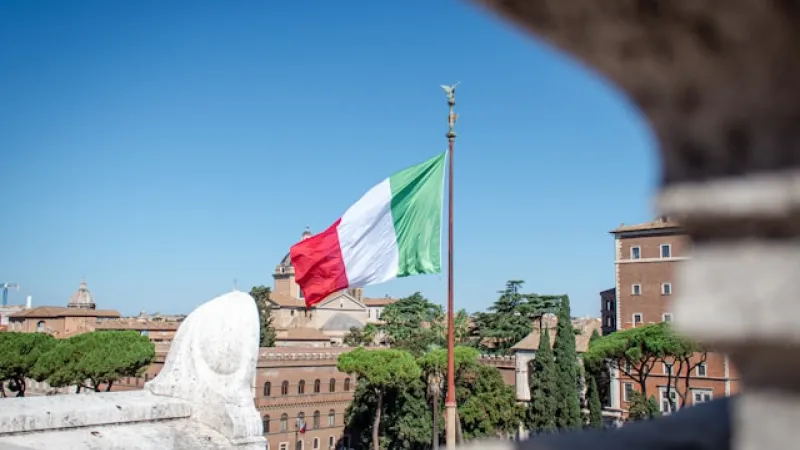
Italy has officially entered the age of artificial intelligence regulation. After more than a year of adjustments, the long-awaited Italian law on AI has finally been approved - marking a turning point in the country’s digital governance landscape.
The legislative journey of this law has been anything but linear. The story began on 23 April 2024, when the Council of Ministers approved the first draft - even before the EU Council gave its final green light to the AI Act. That early move led to several misalignments between the Italian draft and the EU framework. Allegedly, the European Commission itself pointed out these inconsistencies, pushing the government to reconsider its approach.
In 2025, the law took shape through a series of key parliamentary steps: first approved by the Senate in March, then amended by the Chamber of Deputies, and finally adopted in its definitive form by the Senate on 17 September, incorporating the Chamber’s modifications.
The result, Law No.132, was published in the official Gazette on 23 September and entered into force on 10 October 2025.
The aim of the Italian Legislator seems clear: trying to align the text with the EU AI Act while also carving out Italy’s position in the broader European regulatory debate. But will the Italian Law on AI really move in this direction? Actually, adopting a national law that mirrors standards already set by a directly applicable EU Regulation appears more political than legally necessary. The Legislator’s intent seems to be to affirm national specificities without meaningfully diverging from European standards - an option that would risk non-compliance and potential infringement procedures.
Substantially, the Italian Law on AI, which counts 28 articles divided into 6 sections, can be broadly divided into 3 main aspects concerning the new digital framework posed by AI: national security, healthcare and copyright law. However, the following analysis will focus only on Section IV, and specifically Art. 25, of the text, which concerns the relationship between AI and Italian Copyright Law.
The amendments to the Italian Copyright Law under Art. 25
Section IV of the Italian Artificial Intelligence Law only includes Art. 25, which provides for two significant amendments to Law No. 633 of 1941 - Italy’s longstanding Copyright Act (commonly referred to as the “LDA”) - aimed at addressing the growing challenges posed by AI in the realm of copyright. The first amendment under Art. 25 revises Art. 1, paragraph 1 of the LDA as follow:
“Works of “human” intellectual creation of a creative nature are protected under this law, including those belonging to literature, music, figurative arts, architecture, theatre, and cinematography, regardless of the mode or form of expression“, even when created with the aid of artificial intelligence tools, provided they are the result of the author's intellectual effort” (new wording in bold); (author’s translator).
From a substantive standpoint, the revision is remarkably straightforward as it underscores the principle of human authorship: authorship is inherently linked to human intellect and personality. Consequently, a work created with AI tools, provided it is still the result of a creative and original human intellectual effort, would be protected under Italian Copyright Law.
Through this approach, the Italian Legislator aligns itself with the longstanding anthropocentric tradition of copyright law as interpreted through the lens of the Berne Convention and in the light of the EU copyright law and EU copyright jurisprudential framework.
Indeed, while the former does not contain an explicit reference to the requirement that the author must be human (see, for example, the InfoSoc Directive framework, Art. 2(1) of the Software Directive and similarly Art. 4(1) of the Database Directive); the latter has always tended in that direction with several CJEU rulings with its essential connection between human authorship, originality, intellectual effort and copyrightable creation (see Infopaq, Painer and Cofemel case law). In particular, in the Painer case the Court also examines the relationship between the author and the technological tools used in the creation of the work, reaching the conclusion that copyright protection applies only to those creations in which the author’s personality is present and expressed, while excluding cases where the work is solely the result of a technical process. Thus, why not extend this reasoning to works created through AI tools, namely to AI-assisted outputs?
To a certain extent, this appears to be the objective of the Italian Legislator, clearly stated in black and white in the new Art. 1 of the Italian Copyright Law.
However, such an amendment is not without regulatory shortcomings. As a matter of fact, it fails to define - either legally or technically - the threshold of human contribution required for an AI-assisted work to qualify for protection under copyright law. What is the minimum and necessary level of human involvement that makes an AI-produced work “human enough” to be protected? And conversely, what is the acceptable degree of artificial involvement? These questions are open to debate.
The Italian Law on AI, under the same Art. 25, has also proposed a second modification to the Italian Copyright Act - namely the introduction of Art. 70-septies,, which states as follow:
“1. Without prejudice to the provisions of the Berne Convention for the Protection of Literary and Artistic Works, ratified and implemented pursuant to Law No. 399 of June 20, 1978, reproductions and extractions from works or other materials available online or in databases to which one has lawful access, for the purpose of text and data mining through artificial intelligence models and systems, including generative AI, are permitted in accordance with the provisions of Articles 70-ter and 70-quater” (Author’s translation).
However, is the Italian Parliament, with the above consented AI-based TDM activities, really so virtuously innovative? Actually, this provision is starting to generate quite strong debates for two main reasons.
First, Art. 70-septies does not introduce any truly substantive legal breakthroughs. Rather, it merely permits a new operational method - the use of AI - for reproducing and extracting content from works for text and data mining (TDM) purposes. That said, the legal boundaries within which such activities are allowed remain unchanged: AI-based TDM activities will be permitted only for scientific and research purposes in compliance with the LDA’s Art. 70-ter (that transposes Art. 3 of EU Copyright Directive), and/or for non-commercial objectives carried out by all parties, including commercial entities, unless rightsholders explicitly reserve their rights in compliance with the LDA’s Art. 70-quater (that transposes Art. 4 of EU Copyright Directive).
Second, not only does the Italian Legislator maintain AI-based TDM within the current EU copyright exceptions regime, but the Parliament delimits this new circumstance also from an international standpoint requiring these new activities to be carried out without prejudice to Berne Convention. This means that these new AI-based TDM activities, although permitted, should be carried out in compliance with the international principle of reciprocity among Berne’s contracting jurisdictions, thereby ensuring consistency between domestic and international copyright commitments.
However, such reference is generating initial debates, as it does not add anything of substantive legal value to the new article. It is merely superficial, redundant and anachronistic, as Italy is already bound by all international treaties it has ratified. Furthermore, it does not engage with the complexities of international legal harmonization.
To better understand this viewpoint, let us recall two main interrelated pillars of the Berne Convention: the “national treatment principle” (Art. 5) and the so-called “three-step test” (Art. 9(2)). The national treatment principle requires that each contracting state grants authors from other Berne’s contracting jurisdictions the same protection it affords to its own nationals. The three-step test, on the other hand, limits the scope of permissible exceptions to copyright by requiring that any such exception be confined to certain special cases, does not conflict with the normal exploitation of the work, and does not unreasonably prejudice the legitimate interests of the author.
However, while the Berne Convention formally mandates equal national treatment, it does not impose uniformity in how exceptions and limitations to copyright are defined across contracting states’ jurisdictions. Thus, each country is free to shape its own exceptions, provided they comply with the three-step test criteria.
Here is where tension between different jurisdictions becomes real.
Imagine an Italian copyright work that is made available online, but the authors, as guaranteed by EU and Italian copyright exception regimes, decide to legitimately opt out of AI-based TDM. In this case, the work could not be legally used in Italy for training AI systems but what if that same work could be accessed or processed, for example, in the United States where the fair use exception regime is much less restrictive than the EU and Italian copyright exceptions? This would consequently create a legal asymmetry, due to the fact that, while cross-border protection among Berne’s contracting states is formally guaranteed, its operation varies widely, especially when it comes to exceptions regimes.
Given the above, while the new Art. 70-septies could be seen as a potential catalyst for future EU-wide legislative initiatives among Member States - aimed at allowing AI-driven TDM activities within clearly defined boundaries and for specific purposes - its current wording remains inherently self-limiting. In particular, it lacks substantive alignment with broader international standards, especially in light of the Berne Convention, which in turn does not establish a harmonized framework for exceptions regimes to copyright law.
Conclusion
While the new Art. 1 of the Italian Copyright Law may primarily require more precise technical drafting, Art. 70-septies aims to strike a balance by expanding the legal framework for innovation through AI-driven TDM, while still respecting international law and authors’ rights. Nevertheless, in the absence of greater substantive harmonization of national exceptions among Berne’s contracting states - or a more robust international enforcement mechanism - the asymmetries in the exceptions regimes will continue to affect the actual worldwide protection of a work in today’s AI training age, ending up producing adverse legal and economic effects within the copyright market.
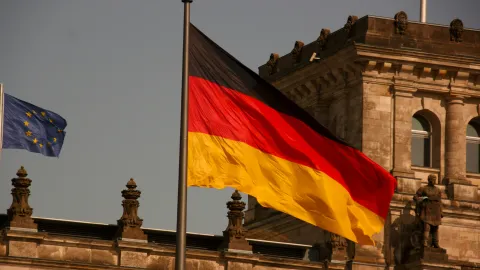
Photo by Frederic Christian on Unsplash
Comments (0)
Your email address will not be published.


You may also like

March 30, 2026
March 25, 2026