The Price of Silence or the Reward for Courage? Financial Rewards for Cartel Whistleblowers in Competition Law
July 21, 2026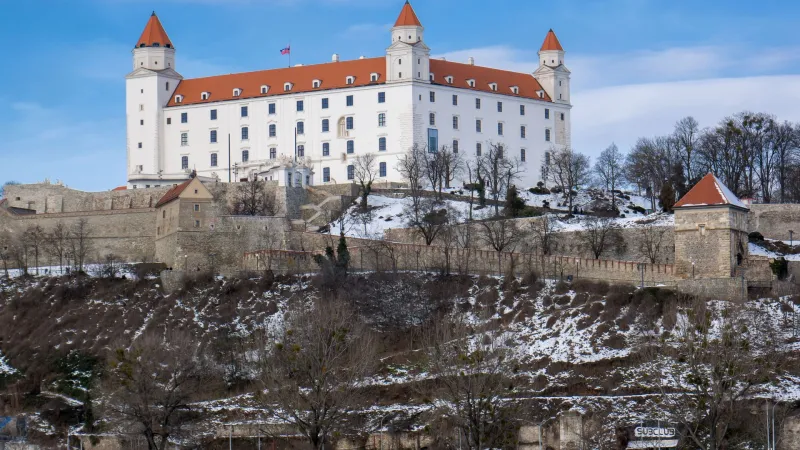
Imagine a situation in which an individual, in the course of their employment, gains access to documents or communications indicating the existence of a cartel agreement between competing undertakings. Such a person may be a secretary responsible for arranging meetings, an employee coordinating the business travel of one of the cartel participants, an employee of a business association, an external consultant, or any other individual possessing direct or indirect evidence of coordinated conduct among competitors. Such evidence may relate, for example, to bid-rigging in public procurement procedures, the coordination of pricing strategies, or other forms of prohibited agreements.
The inherently secretive nature of cartels makes their detection exceptionally challenging. Competition authorities therefore rely on specialised enforcement instruments designed to increase the likelihood of obtaining insider information concerning anticompetitive conduct. In addition to leniency programmes targeting undertakings involved in cartel conduct, several jurisdictions have introduced financial reward models for individual whistleblowers.
This article focuses primarily on the financial reward schemes for cartel whistleblowers that have been introduced in selected European States, examining their legal frameworks, practical application, and the different approaches adopted by national competition authorities.
The Slovak Experience with Whistleblowers
Slovakia is one of the few jurisdictions that, since 2014, have provided for financial rewards to individuals who supply substantial information leading either to the detection of a cartel or to the conduct of an inspection resulting in the discovery of decisive evidence of horizontal agreements.
The practical significance of this legislative framework became apparent in 2021, when a whistleblower approached the Antimonopoly Office of the Slovak Republic with information suggesting the existence of a cartel in public procurement procedures concerning pharmaceuticals used for the treatment of serious diseases. The suspected infringement involved the coordination of the conduct of undertakings participating in procurement procedures organised by the country's largest state-owned health insurance provider.
The whistleblower requested recognition as a protected whistleblower and preservation of anonymity. At the same time, the whistleblower submitted documentary evidence and provided oral explanations, which subsequently formed the basis for further investigative measures undertaken by the Office.
In its decision issued in January 2026, the Antimonopoly Office was required, for the first time, to address several practical issues that had not previously arisen in Slovak competition law enforcement practice. In particular, it had to determine the scope of the whistleblower's anonymity protection and assess the evidential value of the information provided.
It was primarily on the basis of the materials submitted by the whistleblower—including communications exchanged between the undertakings concerned and other documentary evidence—that the Antimonopoly Office of the Slovak Republic issued its first decision finding PHOENIX and TRANSMEDIC liable for an infringement of the Slovak Competition Act.. As TRANSMEDIC lodged an appeal against the first-instance decision, the case is currently pending before the Council of the Antimonopoly Office of the Slovak Republic.
The case also highlighted the statutory conditions governing entitlement to a financial reward. A whistleblower becomes eligible for a reward only if they expressly request it and if the information or evidence provided proves decisive either for establishing the infringement or for initiating an inspection through which such decisive evidence is subsequently obtained. In addition, the Office's decision must become final and enforceable, and the fine imposed must be paid.
The reward is calculated as 1% of the aggregate fines imposed on all participants in the cartel, subject to a statutory maximum of EUR 100,000. Where the legality of the Office's decision is subject to judicial review, entitlement to the reward arises only after the administrative action has been finally dismissed or, where the court reduces the fine, after the reduced fine has been paid.
The legislation also addresses situations in which the fine is not paid within a reasonable period. If payment has not been made within 100 days of the date on which the Office's decision became enforceable, or, where judicial review has taken place, within 100 days of the final judicial decision—whichever occurs later—the whistleblower is entitled to 50% of the reward that would otherwise be payable, subject to a maximum of EUR 10,000.
The January 2026 decision therefore represents an important milestone in Slovak competition law enforcement. It constitutes not only the first practical application of Slovakia's financial reward mechanism for cartel whistleblowers, but also provides valuable guidance on several previously unresolved issues, including the protection of whistleblower anonymity and the practical operation of this enforcement instrument.
Hungary
Hungary is also among the European jurisdictions that have introduced financial rewards for cartel whistleblowers.1 Individuals who provide indispensable information concerning a cartel may receive a reward amounting to 1% of the final fine imposed, subject to a maximum of HUF 50 million (approximately EUR 140,550).
A particularly noteworthy feature of the Hungarian framework is that, once paid, the reward is not subject to repayment even if the competition authority's decision is subsequently annulled or the fine is reduced during judicial review. The only exception applies where the evidence submitted by the whistleblower is found to have been obtained or provided unlawfully.
This approach significantly enhances legal certainty for potential whistleblowers.
Lithuania
Lithuania has developed one of the most sophisticated whistleblower reward models within the European Union. A one-time monetary reward may amount to up to 10% of the total fines imposed in the case, subject to a statutory minimum of EUR 1,000 and a maximum of EUR 100,000.2
When determining the amount of the reward, the Competition Council of the Republic of Lithuania takes into account, in particular:
· the evidentiary value of the information provided;
· the gravity and duration of the infringement;
· the impact of the infringement on consumers;
· the degree of the whistleblower's cooperation;
· the level of risk to which the whistleblower was exposed; and
· any other relevant circumstances of the case.3
The Lithuanian model therefore combines economic incentives with an individualised assessment of the circumstances of each case.
United Kingdom
The United Kingdom has adopted a different model. In 2023, the Competition and Markets Authority (CMA) increased the maximum reward available to whistleblowers from GBP 100,000 (approximately EUR 115,840) to GBP 250,000 (approximately EUR 289,600).
Unlike the Slovak, Hungarian and Lithuanian models, the UK model is not linked to the amount of the fine imposed. Instead, it is based on a fixed maximum reward intended to encourage whistleblowers to come forward without creating a direct economic connection between the level of the sanction and the amount of the reward.
Other European Approaches
Although most Member States of the European Union allow individuals to report suspected infringements of competition law, the vast majority do not provide financial rewards for whistleblowers. Instead, the primary focus has been on establishing secure and trustworthy reporting mechanisms.
Some Member States, such as Sweden, permit anonymous reporting, while others rely on dedicated electronic platforms designed to ensure secure communication with whistleblowers. Such mechanisms have been introduced, for example, in Latvia4, Germany5, Denmark6, Spain7 and the Czech Republic8. Portugal has additionally established a dedicated telephone hotline for reporting anticompetitive conduct.
The common objective of these mechanisms is to remove barriers that may discourage individuals from reporting competition law infringements. Financial incentives are generally absent, with emphasis instead placed on protecting the identity of whistleblowers and ensuring the confidentiality of communications.
A distinct legal framework is provided by Directive (EU) 2019/1937 of the European Parliament and of the Council on the protection of persons who report breaches of Union law. Under this Directive, whistleblowers are protected against retaliation by their employers—such as dismissal, salary reduction or other adverse employment measures—that may follow the reporting of unlawful conduct, including anticompetitive practices. While the Directive provides comprehensive protection against retaliatory measures, it does not establish any entitlement to financial rewards, unlike the competition law regimes currently in force in Slovakia, Hungary and Lithuania.
What Lies Ahead?
Supporters of financial reward models for whistleblowers argue that cartels are among the most difficult forms of anticompetitive conduct to detect and that financial incentives may significantly increase the number of credible reports, thereby enhancing the effectiveness of cartel enforcement. Critics, on the other hand, point to the risk of abuse, including the submission of opportunistic or speculative reports, and argue that a whistleblower's direct financial interest in the outcome of the proceedings may undermine the credibility of the information provided.
The relationship between whistleblower reward models and leniency programmes has also become the subject of increasing debate. Whereas leniency programmes seek to encourage cartel participants themselves to cooperate with the competition authority in exchange for immunity from, or a reduction of, fines, whistleblower reward models broaden the range of potential sources of information by extending incentives to individuals who are not parties to the cartel agreement. Although both mechanisms pursue the same objective—the detection of secret cartel arrangements—they do so through fundamentally different incentive structures.
The approaches adopted by the Member States of the European Union therefore remain highly diverse. Most jurisdictions favour protecting whistleblower anonymity and establishing secure reporting channels without providing financial incentives. Only a limited number of jurisdictions, including Slovakia, Hungary and Lithuania, have opted to introduce financial reward models for cartel whistleblowers.
Slovakia's experience following the 2026 decision suggests that such a mechanism may constitute an important complement to the traditional tools used to detect cartels. At the same time, it has highlighted several practical issues, particularly regarding the protection of whistleblower identity, the assessment of the evidentiary value of the information provided, and the conditions governing entitlement to financial rewards.
Only future enforcement practice will demonstrate whether financial rewards for whistleblowers will evolve into an effective and more frequently used instrument of competition law enforcement or whether they will remain an exceptional mechanism reserved for particularly significant cases in uncovering secret cartel arrangements.
- 1https://gvh.hu/en/for-consumers/informant-fee/frequently-asked-questions-faqs-on-the-cartel-informant-reward?utm.
- 2https://www.infolex.lt/teise/DocumentSinglePart.aspx?AktoId=37214&StrNr=38-1&utm_source=chatgpt.com#.
- 3https://www.infolex.lt/teise/DocumentSinglePart.aspx?AktoId=37214&StrNr=38-1&utm_source=chatgpt.com#.
- 4https://www.kp.gov.lv/lv/zinot-par-parkapumu.
- 5https://www.bundeskartellamt.de/DE/Kartellverbot/Anonyme_Hinweise/anonymehinweise_node.html.
- 6https://www.epant.gr/en/information/press-releases/item/1344-press-release-anonymous-reporting-of-information-whistleblowing.html.
- 7https://edi.cnmc.es/buzones-anonimos/sica.
- 8https://uohs.integrityline.com/.
Comments (0)
Your email address will not be published.
Become a contributor!
Interested in contributing? Submit your proposal for a blog post now and become a part of our legal community!
Contact Editorial Guidelines