Main Developments in Competition Law and Policy 2025 - Luxembourg
March 27, 2026
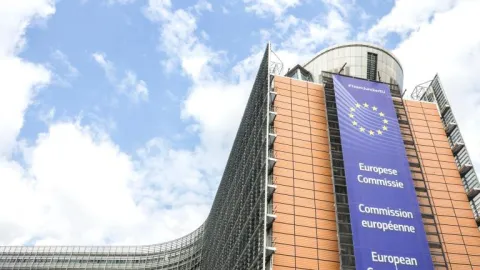
The most prominent developments in recent years have taken place in the merger control field. Besides and pending the long-overdue introduction of a domestic merger control regime, the Luxembourg Competition Authority (“LCA”) has for the first time, on its own initiative, relied on Article 22 of the EU Merger Regulation (“EUMR”) to refer a potentially problematic merger to the European Commission (“Commission”) for review.
For the remainder, as discussed in more detail below, enforcement activity in the competition law field has been rather timid in the years since the 2022 legal reform and in the year 2025.
Luxembourg’s competition law enforcement framework was indeed significantly strengthened by the Law of 30 November 2022 on Competition, as amended (“Competition Law”) through which the EU ECN+ Directive (2019/1) was transposed. It transformed the Luxembourg Competition Authority (“LCA”), formerly known as the Competition Council, into a fully independent body with its own legal personality, budget, and staff.
Under the Competition Law, the LCA enjoys far-reaching investigative and enforcement powers, including the conduct of dawn raids (subject to judicial authorisation), seizing documents and electronic records, and compelling information from companies and their employees. The LCA can also impose administrative fines and other remedies on companies that violate the Competition Law. It may act on its own initiative or in response to complaints to investigate cartels and abuses of dominance, and it can launch sector inquiries into industries where competition problems are suspected. Aligning the Luxembourg framework with the EU, the Competition Law gives the LCA the tools and autonomy needed to effectively enforce both EU and national competition law.
It is true that the LCA has also seen an extension of its competencies. In particular, next to being the designated authority to support EU enforcement in the context of the Digital Markets Act and the Foreign Subsidies Regulation, it is notably its role as Digital Services Coordinator responsible for the implementation of the Digital Services Act in Luxembourg which has brought a significant addition to its action field and focus. The LCA also has investigative and sanctioning powers with respect to unfair trade practices in the agricultural and food supply chain following transposition of Directive (EU) 2019/633. The Competition Law further provides that the LCA may issue opinions, on its own initiative or at the request of a Minister, on any matter relating to competition, which it regularly does as follows from publications on its website. However, these developments cannot do away with the fact that the enforcement of competition law remains its prime responsibility.
Also worth mentioning is the Law of 20 November 2025 transposing Directive (EU) 2020/1828 and introducing a new collective redress regime in Luxembourg. It empowers the LCA to seek injunctions and collective compensation for unlawful practices within its remit. However, regarding competition redress via the civil courts, although the law of 5 December 2016 on certain rules governing actions for damages for breaches of competition law transposed the EU damages directive into Luxembourg law, it must be said that there is no noteworthy Luxembourg court activity reported in the private damages field, which is of course not unrelated to the limited local administrative enforcement activity.
Limited enforcement activity
The LCA’s enforcement output was very limited in recent years, even if a slight increase in its investigative activity may be noted over the last two years.
The LCA did not issue any infringement decisions or fines during the year 2025. The last infringement decision, relating to vertical price-fixing in the coffee distribution sector, dates back to July 2023.
The LCA did conduct a few dawn raids in mid-2024 and in 2025, targeting the pharmaceutical and para-pharmaceutical sector and the insurance sector. However, by the close of 2025, no further information had become available about the status of these investigations.
A noteworthy procedure concerns the 2024 closure of an investigation into pricing practices of the national Architects and Engineers Association with respect to public procurement procedures through the acceptance of commitments since a public consultation on the proposed commitments had not led to any objections being raised.
Finally, in September 2025, following an ongoing sector inquiry into brewery distribution agreements, the LCA issued a statement of objections to two of Luxembourg’s largest brewers alleging potential foreclosure of competition in the on-trade beer market segment though the use of extensive exclusive purchasing agreements with bars and restaurants.
Even when considering advocacy as a necessary component of any competition authority’s role, complementing enforcement, as well as the specific Luxembourg situation as a small and open market, the dearth of completed cases nevertheless raises the question about the LCA’s effectiveness and resources, even with the expanded staff since 2022.
Merger Control: Quo Vadis?
Legislative developments: Bill N° 8296 stalls?
Luxembourg is currently unique in the EU for not having a domestic merger notification system. Hence, potential intervention regarding local concentrations is limited to post-merger investigations on the basis of the abuse of dominance provisions (Continental Can-doctrine) or reliance on the EU merger control referral mechanism.
Bill N° 8296, tabled in August 2023, sought to change this by establishing mandatory pre-merger notification to the LCA for transactions exceeding certain turnover thresholds whereas the LCA would also be empowered to “call in” smaller mergers that could affect competition (so-called “killer” acquisitions). The LCA would obtain authority to review and block or condition mergers that threaten competition in Luxembourg markets.
However, in 2025 the (already slow) legislative progress hit a major roadblock when the Council of State (Conseil d’État) issued an opinion formally opposing its adoption in its current form. The Council of State found that the draft had significant structural and legal flaws and raised numerous concerns, including the absence of clearly stated objectives for the new merger regime, the lack of any mechanism to review or penalise mergers that should have been notified but were not, provisions on interim measures and investigations that were overly broad or insufficiently defined, and potentially excessive jurisdictional reach of the law’s thresholds. It also flagged certain clauses undermining the LCA’s independence, in particular through evocation rights for the government or financial regulator to override or bypass the LCA in certain situations. Therefore, significant amendments to Bill N° 8296 are anticipated.
Although probably overly critical on some points, the Council of State’s opinion will have to be taken on board. In a response to a parliamentary question (QP N° 3435), the Minister of the Economy confirmed that a thoroughly revised merger control bill would be submitted to Parliament in 2026, reflecting both the original goals of Bill N° 8296 and the Council of State’s recommendations. The Minister reiterated the importance of ending Luxembourg’s exceptional situation as the only EU Member State without a merger control regime. In the interim, he noted that the LCA indicated at a conference of the Luxembourg Competition Law Association in November 2025 that it planned a public consultation in 2026 to inform businesses about the Article 22 EUMR referral mechanism, aiming to mitigate uncertainty as long as no national merger review process is in place.
Article 22 EUMR referral: the Brasserie Nationale/Munhowen case
In the absence of a local merger control law, Article 22 of the EUMR, the so-called “Dutch clause”, allows national authorities to request the Commission to review mergers that do not meet EU notification thresholds but could affect competition in their country. In early 2024, the LCA made use of Article 22 EUMR for the first time in the Brasserie Nationale/Munhowen case in the Luxembourg beer sector. Brasserie Nationale, the owner of the market-leading brewery, sought to acquire the largest independent beer and beverage distributor, Boissons Heintz, via its subsidiary Munhowen S.A., itself also active at the beer and beverage distribution level. Absent a local merger filing requirement and remaining (far) below the EU turnover thresholds, the deal could have closed without any review. However, concerned about the potential elimination of a key competitor in the beer distribution market, the LCA triggered the Article 22 EUMR review mechanism.
The Commission accepted the referral and investigated the merger’s impact on competition in Luxembourg (Case No COMP/M.11485). On 17 July 2025, the Commission approved the Munhowen/Boissons Heintz deal subject to remedies: the companies had to divest a substantial part of the acquired distribution business (including certain brands, customer contracts, and logistics assets) to an independent third party, in order to maintain competition for supply of beverages to the HoReCa (hotel, restaurant, café) market segment in Luxembourg.
On 2 July 2025, the EU’s General Court (Case T-289/24) had upheld the legality of the Commission’s decision to examine this merger via Article 22 EUMR, rejecting a challenge by Brasserie Nationale and Munhowen. The General Court affirmed that the referral was made in time and met the required conditions, effectively endorsing the use of Article 22 EUMR for below-threshold deals at a national authority’s request when there is no local merger control regime. The merging parties have appealed that judgment on the technical question of the timeliness of the referral request rather than putting the use of the mechanism in question as such (Case C-572/25 P).
With the appeal pending as of early 2026, the outcome for the market nevertheless stands: the problematic aspects of the Munhowen/Boissons Heintz merger were remedied and competition in Luxembourg’s beer market was preserved through EU-imposed conditions and the approval of a third-party market entrant in December 2025.
The case illustrates both the possibilities and limitations of the LCA’s current position. On the one hand, the Article 22 EUMR referral mechanism can help to protect national markets by triggering an EU review of a local merger, even without a national merger law and also puts the LCA in the position of being a potential candidate authority for triggering an EU review of below-threshold mergers of a larger geographical scope provided there is sufficient local impact. On the other hand, the case highlights the uncertainty for businesses: a merger that is not notifiable in Luxembourg can still be subjected to an extensive EU review process. All in all, the need for a well-defined local merger control framework became even more apparent in light of the case, the Commission and the European taxpayer not having to carry the cost of a (misguided) political deadlock in Luxembourg on the matter.
2026 outlook
At the close of 2025, Luxembourg’s competition law regime had made advances but still lacked a crucial component. The Competition Law empowered the LCA with greater independence and stronger enforcement tools but meaningful enforcement outcomes remain few with only a handful of (published) decisions in recent years. This measured pace has led to questions about whether the LCA has sufficient manpower and resources to actively police all instances of anti-competitive conduct, relevant in a small but dynamic economy.
The introduction of a national merger control regime is seen as the next essential step. A domestic merger control law will enable the LCA to vet and condition or prohibit deals before they impact the Luxembourg market, aligning the country with every other EU jurisdiction.
Successfully adopting a well-crafted merger control law, together with bolstering the LCA’s capacities, will be pivotal for Luxembourg to fully assume its role within the European competition network and ensure a level playing field in its domestic markets.
At this stage, one can question whether the LCA will have enough skilled resources and personnel to handle timely, impactful decisions in the merger control field. As to its existing competencies, publishing guidance on topical competition law issues and the communication of yearly objectives and priorities, an approach adopted by competition authorities in other Member States, would be a recommended course of action to bolster its advocacy role. It would further increase awareness in Luxembourg of competition law as a necessary component of a competitive economy while allowing enhanced accountability on the implementation of this core internal market component.
Comments (0)
Your email address will not be published.
Become a contributor!
Interested in contributing? Submit your proposal for a blog post now and become a part of our legal community!
Contact Editorial Guidelines




You may also like

March 31, 2026


March 25, 2026