What’s Next for Investment in Venezuela? Navigating the Not-So-Simple Sanctions Landscape and What it Means for Arbitration
September 4, 2026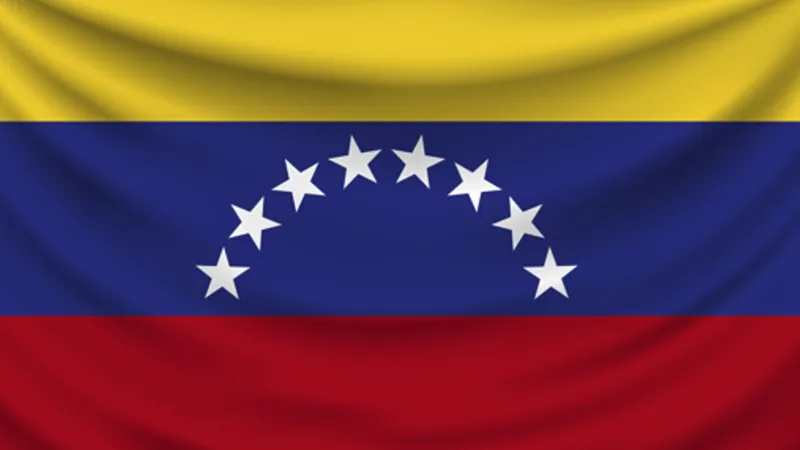
When U.S. forces captured former Venezuelan president Nicolás Maduro in January 2026, the public’s initial expectations drew on a familiar template, assuming Venezuela could be the next Syria—sanctions would be lifted and investors would seek to return. Following Syria’s regime change in 2025, the U.S. Treasury Department made a dramatic change to applicable sanctions, revoking the Syria sanctions program, issuing General License (GL) 25, which framed the change as enabling “new investment and private sector activity,” and kicking off investor interest and exploration. Against that backdrop, many observers anticipated a comparable change for Venezuela.
Since January, the reality for Venezuela has been far more complicated. The Trump Administration’s early-2026 Venezuela measures, coupled with new GLs and guidance, reflect genuine optimism about restarting private-sector return. Recent developments have sparked hope for creditors holding arbitral claims against Venezuela; however, the legal framework for certain investment in, and recovery against, Venezuela remains both challenging and in flux. As a result, the sanctions and regulatory landscape continues to evolve rapidly; opportunities related to Venezuela should be continually assessed.
The Legal and Political Reality for Venezuela Is Complex
The complexity of the situation in Venezuela is driven by several factors, including that the status of the Maduro regime remains unclear, and U.S. sanctions targeting Venezuela remain largely intact. Although Maduro was removed, power remains concentrated among key figures from Maduro’s government. U.S. sanctions continue to target the Venezuelan government broadly, including state-owned entities, numerous officials, vessels, aircraft, and hundreds of Venezuela-linked persons on the Office of Foreign Assets Control’s (OFAC) list of Specially Designated Nationals and Blocked Persons. An arms embargo and strict export controls also remain in force.
Instead of eliminating the applicable sanctions program, the United States has implemented a limited but evolving expansion of trade with Venezuela through narrow GLs, Treasury-managed payment channels, and a January 9, 2026 Executive Order (EO 14373) that protects a class of Venezuelan oil-related proceeds from judicial process in the U.S. This creates a more complicated picture for new entrants, legacy investors, and major firms wary of making immediate large-scale commitments.
First, OFAC has emphasized that the new licenses remain tied to U.S. foreign-policy and national-security priorities and are subject to significant conditions. Second, EO 14373 shields certain Venezuelan oil proceeds from private creditor attachment, all while creditor overhang continues to weigh on Venezuelan assets. Third, uncertainty is compounded by Venezuela’s still-fragile political trajectory, with serious security, governance, and commercial risks posed by recently designated Foreign Terrorist Organizations and instability on the ground, including from the recent earthquake. The result is a market shaped by continuing change, unresolved legacy liabilities, uncertain political durability, and plausible reversibility risk.
The United States Is Encouraging Investment in Venezuela . . . On Its Own Terms
The totality of new Venezuela-focused general licenses reflects an affirmative effort by the U.S. government to enable commerce, but also an effort to tightly control such commerce. Licenses issued in the months since Maduro’s removal now authorize a broad spectrum of activities: from structural transactions, such as the formation of joint ventures and negotiation of contingent contracts for certain oil or gas investments (GL 49A), to certain activities involving oil and gas (GL 48C) and Venezuelan-origin minerals (GL 51C; GL 54B; GL 55), and commercial-related negotiations of contingent contracts with the Government of Venezuela (GL 56). OFAC has also provided guidance on authorizations through accompanying FAQs. Each of OFAC’s authorizations, as many of the FAQs underscore, contains significant conditions and parameters.
OFAC signaled a potential turn in policy in mid-April, though, when it issued a new authorization with fewer strings attached. GL 57 restores key financial infrastructure by authorizing banking and payment services involving certain Venezuelan banks and government-affiliated individuals, providing critical support for activity authorized under other recent licenses.
At the same time, the resulting framework channels investment through a centralized process under the U.S. Executive Branch. GL 50C, for instance, requires that contracts with the Government of Venezuela, PDVSA, or PDVSA entities include U.S.-, UK-, France-, or Singapore-based dispute resolution provisions. It further requires that funds owed to blocked persons be paid into Treasury-designated Foreign Government Deposit Funds rather than directly to Venezuelan counterparties. Additionally, for contingent contracts authorized by recent GLs, OFAC has stated that U.S. authorization necessary to enter into definitive agreements will be assessed case by case against U.S. priorities. Similarly, OFAC has recently clarified that non-U.S. persons may generally transact with PDVSA and deal in Venezuelan-origin oil, petrochemicals, and minerals without facing sanctions risk if they satisfy several U.S.-imposed conditions (FAQ 1247). In other words, prospective investors are invited to Venezuela on terms that promote U.S. policy objectives and, in some cases, subject to the discretion of the U.S. government.
What This Means for Arbitration and Enforcement: Legal and Structural Constraints
As creditors and investors with claims and awards against Venezuela know well, sanctions have long presented a variety of challenges in the arbitration context, from procedural complications to enforcement and recovery barriers. Today, with an estimated USD 150–170 billion in arbitral and creditor claims outstanding, such parties have an interest in U.S. policy development on Venezuela and in Venezuela’s economic recovery. The events of early 2026 therefore opened the door to renewed hope for financial recovery—and to the possibility that new investors could face a less restrictive regulatory landscape, including an easier road to recovery in the event of future disputes.
Although the U.S. government is taking steps to encourage new investment in Venezuela, existing investors’ avenues for pursuing recovery have, in some critical respects, grown more restrictive. For example, EO 14373 removes a significant category of oil-related proceeds from attachment. It states that attachment against the Foreign Government Deposit Funds, which will hold funds on behalf of the Government of Venezuela and its agencies or instrumentalities, is prohibited and “null and void” unless separately licensed. It further provides that placement of funds in Treasury custody does not constitute a waiver of sovereign immunity, and directs Treasury and the Department of Justice to assert that immunity in any proceedings, shielding revenue from creditors enforcing against those assets in U.S. courts.
GL 56’s express exclusion of settlement agreements and enforcement of arbitral awards, judgments, or decrees affecting blocked property shuts off another potential enforcement pathway for creditors. Separately, ongoing limits on dealing in PDVSA debt persist, as described in OFAC FAQ 595. For prospective new investors, this means that—at least for the time being—sanctions considerations remain critical not only to initiating commercial activities in Venezuela, but also to long-term strategy and to managing dispute resolution risk.
Notably, the scope of EO 14373 is limited to the United States and persons subject to U.S. jurisdiction. While U.S. persons are constrained from executing against covered assets, non-U.S. persons seeking to recover may look to jurisdictions not bound by the Order. The result may be a fragmented enforcement landscape—a consideration for award holders who are already managing a challenging regulatory environment, and for potential new investors considering next steps.
The Potential for Further Regulatory Turbulence
Venezuela sanctions policy is driven almost entirely by the Executive Branch, and each administration retains broad discretion to recalibrate it as leadership changes and policy priorities evolve. For prospective investors, long-term capital commitments remain vulnerable to material changes in U.S. sanctions licensing conditions, enforcement priorities, and underlying authorizations as the policy may shift under the current administration or future administrations.
Conclusion
The partial easing of U.S. sanctions on Venezuela has altered the commercial landscape, inviting some foreign investment and previewing a potentially more significant shift.
In light of the U.S. government’s focus on drawing investment into Venezuela, investors remain interested but cautious: the new licensing framework is focused on certain sectors and sets out numerous conditions, while many former investors hoping to recover against Venezuela remain in limbo.
The practical effect of the latest developments is an environment in which revenue resulting from sanctions relief largely flows through channels that are, by design, shielded from attachment. Recovery is not impossible, but requires careful consideration from a sanctions and strategic perspective.
Prospective investors, for their part, must price into any long-term commitment not only creditor overhang and conditions imposed by OFAC’s licensing regime, but also the possibility that the regulatory landscape may change significantly in the coming years.
Until the framework offers reasonable assurance of continuity, whether through legislative codification or durable political transition in Venezuela, prospective and former investors alike are operating in an environment where variables remain a defining feature and an understanding of the impact of U.S. sanctions is key. Moreover, given the pace at which the regulatory landscape continues to shift, parties should treat ongoing monitoring and agile compliance planning as essential to participation in the Venezuelan market.
Tags:
Venezuela,
Venezuela sanctions,
OFAC Investment in Venezuela,
Arbitration awards,
Enforcement Executive Order,
14373 US sanctions,
Arbitration,
PDVSA sanctions,
oil and gas,
Minerals,
Nicolás Maduro,
Specially Designated National,
SDN,
Foreign Government Deposit Funds,
US Department of the Treasury
Comments (0)
Your email address will not be published.