


The New Baku Arbitration Centre: Forward-Thinking Significance
December 18, 2025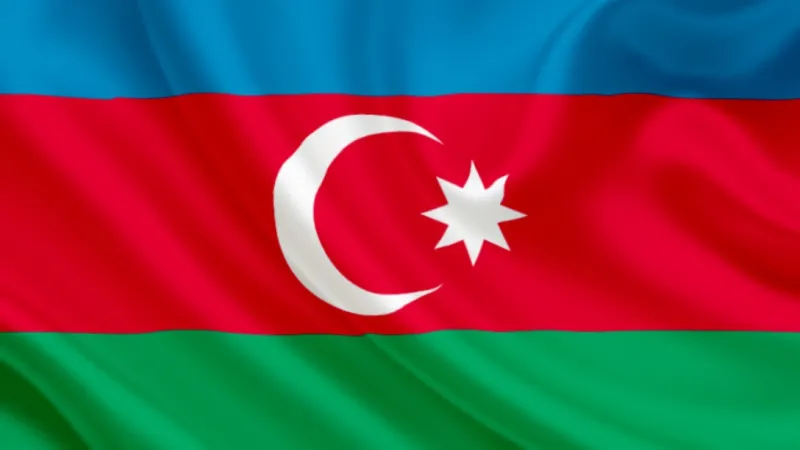
On 24 October 2025, the Baku Arbitration Centre (“BAC”) was officially inaugurated during the two-day international conference, Azerbaijan Arbitration Days 2025 (“AzAD”). This event was a breakthrough long-awaited by the business community and a significant milestone in the legal and institutional landscape of Azerbaijan.
The opening of the arbitral institution also signals and manifests Azerbaijan’s aspiration to position itself on the world’s arbitration map as a neutral, suitable, efficient and trustworthy dispute resolution hub, in line with the ongoing economic and geopolitical reorientation.
This article sets forth a detailed account of the inauguration, as well as the legal framework for the operation and forward-looking significance of the BAC within Azerbaijan’s and the region’s arbitration ecosystem.
Inauguration of the BAC
The AzAD 2025, co-organized by the Azerbaijan Arbitration Association and the BAC, was held on 24 to 25 October with the support of numerous firms and organizations worldwide. The conference brought together over 500 participants, including a number of recognized legal experts and officials from Azerbaijan and abroad.
The keynote addresses were made by Prof. Charles Michel, President of the European Council from 2019 to 2024, who reflected upon arbitration in the midst of the crisis of multilateralism, as well as by Prof. Dr. Maria Chiara Malaguti, President of UNIDROIT from 2020 to September 2025, whose keynote address focused on the importance of BAC for the emerging Middle Corridor disputes.
In his inauguration speech, Prof. Rolf Knieper described Azerbaijan as a “land of great geographical, cultural, and economic diversity and contrast”. He noted that settlement of disputes in mutual respect based on the rule of law and due process, and neutral, objective and independent procedures and institutions are the essential ingredients of arbitration. He expressed confidence in the BAC’s success because those ingredients resonate with Azerbaijan’s traditions and values. Senior domestic judicial figures—Dr. Inam Karimov, Chairman of the Supreme Court, Dr. Farid Ahmadov, Minister of Justice, Dr. Anar Baghirov, Chairman of the Bar Association, also delivered inaugural speeches. These names affirmed Azerbaijan’s and international community’s readiness to lend legitimacy and high-level support to the newly established institution.
The program of the conference also featured panels on the Middle Corridor trade route, investment arbitration, infrastructure and construction disputes, oil and gas arbitration, green and renewable energy, as well as the impact of institutionalization of arbitration on advancing the rule of law and economic growth in Azerbaijan.
Legal Framework, Mandate, and Arbitration Rules of the BAC
The establishment of the BAC is a foundational component of Azerbaijan’s policy to modernize its alternative dispute resolution system along the legal regime for investments, and echoes the decades-long views channeled by the business community.
Effective January 2024, Azerbaijan adopted a new Law on Arbitration (“the Law”) that is largely based on UNCITRAL Model Law on International Commercial Arbitration. The Law applies to both domestic and international arbitration and has triggered certain amendments to the Civil Procedure Code. It differs from its predecessor that governed only international arbitration and lacked the supporting legal framework, thus being ineffective. 1
The Law also fulfils an educational function, given the current stage of development of arbitration in the country. It elucidates the role of arbitral institutions once they are established and delineates the relationship between the prospective institution’s arbitration rules and the provisions of the Law.
While the Law sets forth the comprehensive legal framework for both domestic and international arbitration, the launch of the BAC’s operational phase introduces a contemporary framework for institutionalized domestic arbitration to Azerbaijan’s business community.
In accordance with the Law and the decree applying the latter, the BAC is an independent arbitral institution formed as a non-governmental and a non-commercial organization. It is governed by the Board of Directors under the leadership of its President, Prof. Dr. Kamalia Mehtiyeva, who is also the founder of the Azerbaijan Arbitration Association and the driving force behind the institutional initiative.
The BAC operates in accordance with its own Rules of Arbitration, inspired by the UNCITRAL Arbitration Rules, as well as with internationally recognized best practices. These Rules, originally drafted in English and translated to Azerbaijani, Turkish, Russian, Italian and Farsi, came into force on 18 October 2025, and also contain provisions on emergency and expedited arbitration.
One of the distinctive features of the Rules is that, in addition to the merits of the dispute and the proceedings, they include a clause on the rules applicable to the arbitration agreement (Article 28 of the Rules). This clause aligns with the institution’s arbitration-friendly policy and serves a pedagogical function: the Rules are intended for use by the business and legal community, which may not be familiar with arbitration as a dispute resolution method. The BAC’s website also offers the parties to “streamline contracts” with its model arbitration clause. To avoid unnecessary disputes over so-called pathological arbitration clause, the Rules emphasize that they apply including when the name of the institution is abbreviated as BAC or BIAC (“Baku International Arbitration Centre”) or even referred to as “Azerbaijan Arbitration Centre”: the variation of the title of the Centre will have no impact on the validity of the arbitration clause.
Moreover, the Rules strive to promote diversity by encouraging co-arbitrators, parties and the appointing authority to take into account diversity when designating arbitrators under the Rules.
Strategic Context and Implications
Azerbaijan’s evolving role in regional trade and transport corridors follows the recent geopolitical shifts and succeeds decades of groundwork aimed at economic development, capacity building and hosting billions in foreign investments. The Middle Corridor linking China and Europe through the Turkic states in Central Asia and the Caspian region places Azerbaijan at the crossroads of major commercial flows, much like the ancient Silk Road. The increasing volume of cross-border trade, logistics and infrastructure contracts, many of which incorporate clauses on alternative dispute resolution including arbitration, requires a widely recognized arbitration institution which the country and even the region has still lacked.
The BAC, established against this backdrop, addresses the gap by offering parties operating in the region a fine mix – the option of a local yet internationally credible venue, with deep knowledge of the region’s economic and cultural profile and contemporary arbitration standards. BAC’s convenient location and affordable fees add to its overall appeal. At the inauguration event, the Istanbul Arbitration Centre ("ISTAC") expressed its willingness to cooperate and to involve Azerbaijani arbitrators in its work, signaling potential institutional synergies.
If the BAC capitalizes on these initial advantages and successfully develops a track record of well-drafted and enforced awards, credibility, neutrality and independence, Baku may also become an influential seat of arbitration in the Caspian and neighbouring states, thereby contributing to the diversification of global arbitration venues.
Forward-Looking Considerations and Challenges
As with many newly established arbitral institutions, the BAC will need to focus on several forward-looking issues in order to build reputation as a reliable arbitration institution:
Maintaining a high quality of administered proceedings, a high rate of award enforcement and transparent case management coupled with effective interplay with courts, eventually building credibility. In a highly competitive environment, the BAC stands out as the only arbitration institution operating in all the major languages of the region—Azerbaijani, Turkish, Farsi, and Russian, in addition to English, French, German, and Italian. This is, of course, in line with Baku’s geographical position, but also, as Professor Knieper noted in his welcoming remarks, with the cultural richness and openness of Azerbaijan.
Behind this multicultural and multilinguistic approach to arbitration at all stages of the process—from the early administrative phases and communication between the BAC and all of participants in the arbitral process through the conclusion of the arbitration—lies an ambition to develop a centre that evolves in line with geopolitical realities and with the infrastructure and investment projects being undertaken in the region.
Monitoring the judicial practice on annulment review and enforcement of its awards.
Maintaining a pool of independent, arbitrators with experience in the relevant fields and with a deep knowledge and understanding of the culture in the region, and conducting proceedings in major arbitration-friendly languages in the region so as to attract international parties. The ability to accommodate multi-lingual hearings naturally flowing from Azerbaijan’s cultural background has been emphasized during the conference.
Ensuring independence of the BAC’s governance and fee transparency. These are the elements appreciated by users seeking apolitical and fair arbitration.
Promoting inter-institutional cooperation (by signing memoranda of understanding with other arbitral institutions, integrating their best practices in the BAC’s Rules of Arbitration, etc.) with a view to facilitating capacity building and enhancing the BAC’s competitive position.
Establishing and promoting the BAC’s niche to strengthen its regional relevance. Potential areas of focus are, for example, Caspian-Caucasus disputes, energy and infrastructure arbitrations, and Middle Corridor–related contracts. The conference themes, too, generally reflected this focus.
Conclusion
The inauguration of the BAC is a notable advancement in Azerbaijan’s dispute resolution architecture. Located at a strategic geographic crossroads, Azerbaijan aims to develop a world-class contemporary dispute-resolution platform in addition to hosting multi-billion investments in important infrastructure. As reaffirmed at the inauguration, the BAC’s long-term success will rest on its ability to uphold institutional integrity, deliver enforceable awards that respect the rule of law, maintain genuine neutrality, cooperate with other institutions, and integrate best arbitration practices into Azerbaijan.
The BAC, therefore, is poised to become an important regional hub and to emerge as a credible alternative to established centres, broadening the global arbitration landscape while advancing the region’s legal and economic growth.
- 1Kamalia Mehtiyeva, « Azerbaijan. New Arbitration Law: Can the spring rise higher than the source », ICC Dispute Resolution Bulletin 2024-1, p. 16.
Comments (0)
Your email address will not be published.



You may also like

February 26, 2026

February 23, 2026
February 21, 2026