


Paraguay Reforms Its Arbitration Law: An Overview of the New Legal Framework
March 16, 2026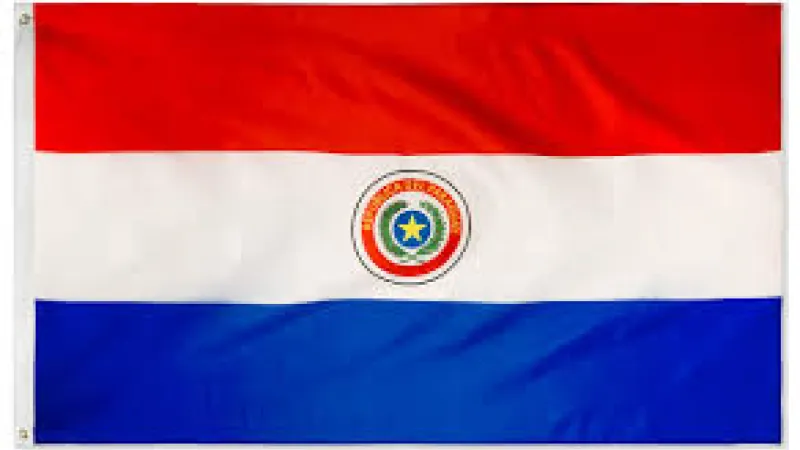
After more than two decades under Law No. 1879/2002, Paraguay has enacted Law No. 7561/2025 to reform its arbitration regime. The updated framework remains closely aligned with the United Nations Commission on International Trade Law (UNCITRAL) Model Law.
The legislative intent behind the reform, as outlined in the Explanatory Memorandum, was to address interpretative and practical difficulties encountered under the previous law, particularly regarding judicial intervention, the allocation of competence between courts and arbitral tribunals, and the enforceability of arbitral awards. Some of these challenges arose from deviations from the UNCITRAL Model Law’s principles, resulting in unnecessary uncertainty and broader judicial intervention than originally intended.
The reform seeks to realign Paraguayan arbitration law with the 2006 version of the UNCITRAL Model Law and comparative developments in Latin America and Europe. A key legislative goal is to provide a clearer, pro-arbitration framework that fosters coordination between the judiciary and arbitral tribunals.
Scope and Structure of the Reform
Law No. 7561/2025 amends over forty articles related to arbitration, retaining the general structure of the previous law but introducing significant updates. As a result, Law No. 1879/2002 now governs only mediation, while arbitration is subject to the new framework—save for transitional provisions applicable to ongoing cases, unless the parties agree otherwise.
The amendments address arbitrability, arbitration agreements, tribunal constitution, interim measures, procedural rules, annulment, and enforcement. Throughout the statute, the principle of limited judicial intervention is reinforced.
Key Features of the New Regime
Arbitrability and the Pro-Arbitration Principle
Although the previous statute broadly permitted arbitration of patrimonial and freely disposable matters, the new law significantly expands arbitrability. It introduces new categories such as succession disputes with heirs’ consent and disputes involving professional athletes, and expressly permits State entities to arbitrate, except in purely public law matters. By enumerating these categories expressly, the law reduces interpretative uncertainty and is likely to curtail arbitrability-based challenges that might otherwise arise under a more general formulation.
Constitution of the Tribunal and Procedural Continuity
Law No. 7561/2025 also provides detailed rules on tribunal appointments, challenges, replacements, and the continuation of arbitral proceedings during such processes.
For example, with respect to Article 19 on the challenge procedure, the new law reinstates a final paragraph that had been omitted from Law No. 1879/2002. In line with the UNCITRAL Model Law, it expressly provides that “while the challenge is pending, the arbitral tribunal, including the challenged arbitrator, may continue the arbitral proceedings and make an award.” This alignment reinforces procedural continuity and prevents dilatory tactics during challenge proceedings.
Another positive development appears in Article 20, which adopts the UNCITRAL Model Law wording to clarify that an arbitrator’s resignation or a party’s agreement to terminate the mandate does not constitute acceptance of the alleged grounds for challenge. Previously omitted from Law No. 1879/2002, this provision preserves the integrity of the challenge mechanism and prevents unintended procedural consequences.
Determination of the Applicable Law
A particularly significant departure from the previous regime concerns the determination of the applicable law in the absence of a choice by the parties. Under the previous regime, the arbitral tribunal was required to apply the law designated by the conflict-of-laws rules it considered applicable, in line with Article 28(2) of the UNCITRAL Model Law. By contrast, Article 41 of Law No. 7561/2025 adopts a more flexible approach, expressly authorizing arbitral tribunals to directly apply the law they deem appropriate. This formulation departs from the traditional conflict-of-laws methodology and aligns Paraguay with modern arbitration statutes that grant tribunals greater discretion to determine the most appropriate substantive rules.
Judicial Intervention and Interim Measures
Judicial intervention is strictly limited to specified cases for assistance, control, and enforcement. Courts may intervene to assist in the taking of evidence (Article 40), to adopt or enforce interim measures (Articles 25 and 26), to decide annulment actions against awards (Article 52), to recognize and enforce foreign awards (Articles 60–63), and to enforce domestic awards (Article 58). Outside these expressly enumerated cases, judicial intervention is prohibited.
Article 9 further provides that courts may not suspend arbitral proceedings—whether through precautionary measures, constitutional remedies such as an “amparo,” or any other judicial mechanism. Any attempt to interfere with the tribunal’s jurisdiction or to review interlocutory decisions prior to the award may constitute judicial misconduct.
Law No. 7561/2025 significantly reinforces the autonomy and authority of arbitral tribunals. It expressly grants them full competence to conduct the proceedings, rule on their own jurisdiction, render the final award, and order any interim measures necessary to preserve assets, maintain the status quo, protect evidence, or secure enforcement of a future award.
A central innovation concerns the effectiveness and enforcement of such measures. Under former Law No. 1879/2002, interim relief typically depended on judicial enforcement, and the scope of court review was unclear. Law No. 7561/2025 adopts a different approach: it affirms the tribunal’s authority not only to order but also to directly enforce its interim measures, limiting court involvement to instances where judicial assistance is required for coercive implementation. In such cases, courts act in a strictly auxiliary role, enforcing the measure without revisiting its merits or allowing opposition or appeal. This framework enhances efficiency, strengthens tribunal authority, and reduces dilatory tactics.
The statute further regulates interim measures granted by State courts prior to the constitution of the tribunal (ante causam measures). In such circumstances, arbitration must be commenced within ten days and the tribunal constituted within ninety days; failing this, the measure lapses automatically unless the delay is attributable to the opposing party. This mechanism prevents the strategic misuse of pre-arbitral judicial relief while preserving access to urgent protection.
Annulment Regime
The sole remedy against an award is annulment. Article 52 largely follows Article 34 of the UNCITRAL Model Law, covering invalidity of the arbitration agreement, due process violations, excess of jurisdiction, improper composition of the tribunal, non-arbitrability, and public policy. The Paraguayan law adds the late issuance of the award as a ground for annulment where the parties have so agreed.
The law distinguishes timeframes and procedures for bringing an annulment action in both domestic and international arbitrations, establishing shorter time limits for domestic cases (15 days) and longer ones for international cases (25 days). Where no party is Paraguayan or domiciled in Paraguay, parties may also waive or limit annulment grounds by agreement.
In addition, decisions on jurisdiction rendered as preliminary awards are immediately subject to annulment proceedings, although such proceedings do not suspend the arbitration.
Law No. 7561/2025 introduces detailed provisions governing the consequences of setting aside an arbitral award. The statute establishes specific solutions depending on the nature of the defect. For instance, where annulment results from procedural irregularities or violations of due process, the arbitral proceedings may resume from the affected stage, either before the same tribunal or a newly constituted one. In other cases, such as where there is invalidity of the arbitration agreement, the dispute may be submitted to national courts unless the parties agree otherwise.
Arbitrators’ Fees and Enforcement
New provisions regulate arbitrators’ fee reimbursement in scenarios such as resignation, removal, refusal to sign, or annulment. In certain cases of annulment, arbitrators must return all or part of their fees, and the judicial decision annulling the award may serve as an enforceable title for purposes of restitution. Such decisions may be directly enforceable, though their practical operation remains to be seen.
The enforcement regimes are further clarified in Law No. 7561/2025. Domestic awards require no prior recognition and are directly enforceable before first-instance civil courts. Foreign awards remain subject to recognition proceedings before the Civil and Commercial Courts of Appeal in the Capital, in accordance with the treaties ratified by Paraguay on the recognition and enforcement of arbitral awards. Once recognized, foreign awards are executed under the same procedural framework applicable to domestic awards.
In addition, the law introduces an innovative migration regime granting temporary residence and visa waivers for foreign arbitrators in Paraguayan-seated arbitrations.
Conclusion
Law No. 7561/2025 represents a significant step forward for arbitration in Paraguay, aligning its legal regime with international best practices and responding to long-standing sectoral needs. While certain issues remain to be addressed -such as the delineation of arbitrators’ and arbitral institutions’ liability, the reform consolidates Paraguay’s position as a competitive seat for cross-border arbitration. Structurally, the new law closely mirrors the 2006 UNCITRAL Model Law while expressly regulating matters the Model Law leaves to party autonomy or arbitral practice. The true measure of its success will lie not only in its legislative design but in its judicial interpretation and practical application in the years ahead.
Comments (0)
Your email address will not be published.




You may also like





March 6, 2026