Interviews with Our Editors: Celebrating the Inauguration of the Patent Mediation and Arbitration Centre with its Director — Aleš Zalar
June 2, 2026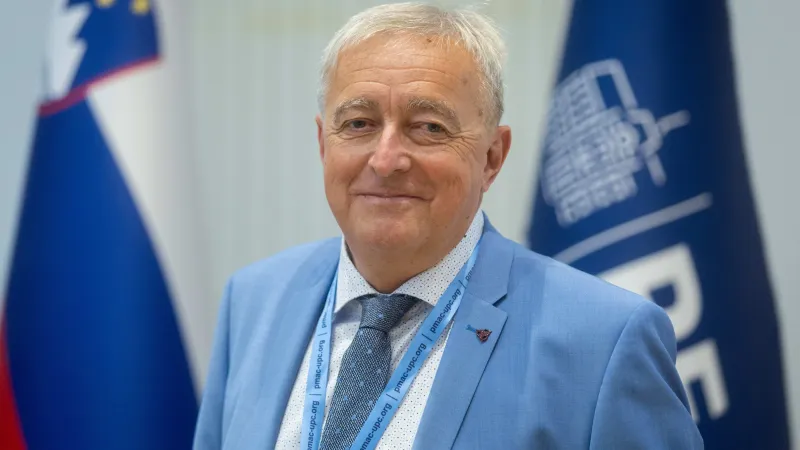
The Patent Mediation and Arbitration Centre (“PMAC”) is set to become the new hub for mediating and arbitrating patent disputes in Europe. Positioned alongside the Unified Patent Court (“UPC”), it offers parties the full suite of dispute resolution mechanisms.
The PMAC and its draft rules have already been covered on the Kluwer Arbitration Blog. After the release of the finalised rules in May, the PMAC celebrates its inauguration today, 2 June 2026, in Ljubljana, Slovenia. On this occasion, we have invited Aleš Zalar, the Director of the PMAC, for an interview.
Among other things, Mr Zalar is a former judge and president of the District Court of Ljubljana, former Slovenian Minister of Justice, and longstanding president of the European Centre for Dispute Resolution (“ECDR”), working as a mediator and arbitrator.
Mr Zalar, welcome to the Kluwer Arbitration Blog and thank you for joining us in our interview series!
1. Mr Zalar, you served as a judge and as part of Slovenia’s government. How did you become involved in resolving disputes, patent disputes in particular?
Justice has always been close to my heart, while the design of dispute resolution systems has been a passion of mine. During my tenure as Slovenia’s Minister of Justice from 2008 to 2012, the UPC was already on the agenda of the EU Member States. This was the first time I became deeply interested and actively involved in patent disputes. I took a keen interest in the initiative and worked diligently to secure a seat for the PMAC in Ljubljana, which has now become a reality.
2. As a new entrant competing against established arbitral institutions, how does the PMAC plan to build credibility and attract its first cases?
Ensuring public trust and confidence in a brand-new dispute resolution provider is always a challenging task. Not only does it require carefully planned outreach and awareness-raising activities, but also a modern regulatory framework, transparent selection and accreditation of a large pool of skilled neutrals, standing expert and advisory committees, sufficient funding, professional leadership, appropriate infrastructure and efficient digital case management. At the PMAC, all these preconditions have now been met. We have already been able to launch mediation services and free online ADR information sessions. The preparations have also been largely completed for the arbitration service and for expert determination, and these services will follow later this year, once the case management system is fully operational.
A key selling point is that PMAC’s services are fully embedded in the UPC framework. UPC judges have a duty, at all stages of the proceedings, to encourage litigants to explore the possibility of settlement. What is new is that the appropriate dispute resolution possibilities can include mediation and arbitration at the PMAC, with the assistance of expert mediators and arbitrators who are fully at home in the world of patents and patent dispute resolution. And aside from the obvious advantages of being able to settle potentially long-running disputes effectively, there are also financial incentives for litigants. For example, 65% of court fees are reimbursed if a case is settled at the PMAC before the end of the interim procedure, and a 50% discount on registration and administrative fees applies for SMEs and for parties who opt for online proceedings.
The geographical scope of the PMAC is also significant, and indeed, because of the possibility of including "related disputes", considerably wider than that of the UPC itself. The first cases before the PMAC may include pending litigation before the UPC or the courts of EU Member States, or cases before national IP offices, including non-European IP offices, or disputes referred to the PMAC based on dispute resolution clauses or submission agreements. To assist users in getting their disputes into the system, we have published model clauses on our website. PMAC’s neutrals during ADR information sessions and case managers within their assistance powers can help align these clauses to the users’ needs.
3. The PMAC finalised its rules in May 2026 following a public consultation. What was the aim of seeking public input, and how would you summarise the reactions?
We conducted the public consultation for three reasons. First, transparency and the inclusion of stakeholders with sometimes competing interests were guiding principles for us in drafting the regulatory framework. Second, we expected expert input from individuals, institutions and associations to sharpen the rules and align policy choices with the users’ needs. Third, the consultation itself raised awareness of the PMAC among future users — critical for any new ADR provider.
The consultation produced almost 1,000 comments. Many were incorporated through amendments and reflect a wide spectrum of interests and concerns of key players in the IP industry. We sincerely appreciate the stakeholders’ participation, which has contributed to a modern and user-friendly set of rules.
4. The PMAC’s rules contain several distinctive features tailored to patent disputes. Which do you consider most important, and how will they shape the way parties approach arbitration at the PMAC?
First of all, PMAC’s competence extends even beyond the UPC’s long-arm jurisdiction, because there are no territorial limitations such as the defendant’s domicile or the place where the damage caused by the patent infringement occurred. As I just suggested, proceedings at the PMAC may also address “related disputes”. These disputes may concern any intellectual property rights or commercial matters, provided they have a factual, legal or commercial nexus with a European or unitary patent dispute within the UPC’s competence. The scope is very wide.
Of course, there are other differences between the litigation before the UPC and, for example, arbitration under the PMAC rules. At the PMAC, a finding in arbitration that, for example, a patent is invalid or non-enforceable will have only an inter partes effect, whereas at the UPC a finding of invalidity will have an effect that is erga omnes. It may very well be that the risk of central revocation makes dispute resolution at the PMAC an attractive option for patentees. And alleged infringers may also prefer a system in which the patent survives intact, whereas they can continue their activities behind the shield of a confidential arbitral award in their favour. There will also no doubt be instances in which litigants will wish to resolve validity issues with (just) inter partes effect outside the UPC’s jurisdiction — for example in commercially important non-UPC Member States, such as China, Korea, Japan, the USA, India and Brazil. The PMAC is equipped to deal with such cases.
Another important aspect of arbitration or mediation before the PMAC is that parties are free to structure the proceedings as they see fit, something which is not possible under normal litigation rules. For example, in arbitration concerning standard essential patents (“SEPs”), parties may well agree to front-load proceedings with a determination of what the FRAND terms might be, while reserving their positions on questions of essentiality, validity and infringement for determination by the tribunal in a later stage, if necessary. Or they may wish to try to mediate to try to agree FRAND terms.
In fact, once appropriate commercial terms have been decided or agreed in such cases, the other issues are likely to disappear. This kind of procedural flexibility is generally not possible in "normal" litigation proceedings, where invalidity, essentiality and infringement must be determined first, before getting into a debate about quantum. This may turn out to be an important advantage. Presently a lot of resources are spent on litigation in this area: about 27% of the UPC caseload concerns FRAND disputes.
For time-sensitive matters, users may make use of expedited arbitration in which a sole arbitrator conducts the proceedings, only a single hearing may be held, and the final award is due within six months of the arbitrator receiving the file. In urgent cases, an emergency arbitrator can be appointed within two working days before the tribunal is constituted to decide on urgent interim measures.
Finally, the Rules offer several confidentiality solutions: neutral confidentiality advisers, special confidentiality regimes (restricting information to a limited number of individuals) and NDAs. At the same time, the PMAC may publish arbitral awards in anonymised form unless a party objects in writing within 60 days of notification. Hopefully, this will provide a degree of transparency, in terms at least of the methodology applied by tribunals in FRAND cases.
5. Parties can have a settlement or consent award confirmed as a UPC judgment or rely on the New York Convention for enforcement. Why will this dual pathway appeal to parties, and what factors should guide their choice?
Consent awards at the PMAC can be enforced either under the New York Convention or converted into a UPC decision. Parties may prefer the direct UPC regime when targeting assets within the EU; the New York Convention will be more appealing outside the EU, given the lack of bilateral or multilateral agreements on the recognition and enforcement of judgments. With 57% of European patent applications filed at the European Patent Office in 2025 originating from non-European Patent Convention countries, European disputants should consider how to enforce favourable awards outside Europe.
A significant factor in this regard is the seat of arbitration. Parties at the PMAC may choose both the seat and the venue of hearings anywhere in the world. The seat determines the jurisdiction of the national courts exercising assistance and supervisory powers over the arbitration and affects the grounds on which enforcement may be refused. For this reason, parties will be well advised to choose an arbitration-friendly seat when drafting an arbitration agreement.
Another advantage to have in mind is hybrid Mediation-Arbitration (“med-arb”) proceedings at the PMAC, which may allow, in appropriate cases, mediated settlements to be enforced as consent awards. This matters in countries that have not yet ratified the Singapore Convention on Mediation. Because the EU has unfortunately still not signed the Convention, non-EU disputants may be keen to use PMAC’s dual enforcement regime when targeting EU assets. Conversely, European disputants should note that, because the Singapore Convention does not apply the principle of reciprocity, it applies in every country that has ratified it — regardless of whether the disputant’s home state is also a party.
6. The PMAC works in tandem with the UPC and offers mediation and expert determination alongside arbitration. How do you see all these processes interacting?
PMAC’s dual nature, as both an independent ADR provider and a complement to the UPC, is unique in IP dispute resolution. As a result, PMAC proceedings can interact closely with UPC litigation. The two distinct case management systems allow combined procedural interactions — either an ADR window (when litigation is temporarily stayed) or ADR shadow proceedings (when litigation continues in parallel).
PMAC proceedings may also interact with other procedures offered by the PMAC. As at the UPC, a PMAC tribunal may stay arbitration proceedings on a joint request of the parties to refer their dispute, wholly or in part, to other ADR proceedings at the PMAC. The tribunal can also invite the parties to consider mediation, med-arb or expert determination when the circumstances suggest a specific, discrete issue is more suited to such proceedings than to determination by a court. For example, when patent essentiality needs to be addressed, the parties may request a binding or non-binding expert determination at the PMAC. Even within regular arbitration, parties may opt for modalities such as baseball or last-offer arbitration, for example when the dispute concerns damages for patent infringement or when the parties cannot agree on a royalty rate in FRAND cases.
Taken together, the PMAC and the UPC should be seen as a one-stop shop — a multi-door courthouse.
7. Many observers have pointed to FRAND disputes as a particularly promising area for the PMAC. Why do you think the PMAC is well positioned to handle these disputes?
Recent developments in FRAND disputes show that numerous court proceedings may run in parallel worldwide, which inevitably causes wider valuation divergence with different global rates. FRAND is therefore becoming a forum-driven pricing mechanism. Referring a FRAND dispute to PMAC arbitration would address the core issue — the licence terms — directly, without complex and expensive preliminary litigation over infringement, essentiality and validity. Following the CJEU framework in Huawei v. ZTE, disputants may wish to show good-faith willingness to negotiate licensing terms and consent to selected proceedings at the PMAC. Courts are already applying that logic: in Samsung v. ZTE, the UPC Local Division in Mannheim recently invited the parties to consider mediation at the PMAC.
The PMAC framework is particularly equipped to handle FRAND disputes. The PMAC Rules contain FRAND-specific provisions that are descriptive rather than prescriptive — a non-exhaustive list of options that aim to balance the interests of SEP holders and implementers. They let parties request an essentiality assessment or an assessment of FRAND terms, including the royalty rate, and opt for a confidentiality regime that supports disclosure of comparable licences for setting the rate while preserving commercially sensitive information.
In addition, PMAC’s list of neutrals currently includes 152 individuals with FRAND experience across several industries — a multinational (not just European) pool that brings specialist expertise and carries credibility with both patentees and implementers.
Because FRAND dispute resolution is constantly evolving, the PMAC will adopt non-binding FRAND guidelines, recommending dispute resolution approaches based on best-practice examples across industries. An expert working group consisting of PMAC neutrals, Expert Committee members and other stakeholders will soon start its work to balance the competing interests of SEP holders and implementers. Selected issues will be discussed at the PMAC Arbitration Day in Lisbon on 25 November 2026.
8. Which industries or types of disputes do you expect to see at the PMAC first, and what would you recommend companies do now to prepare?
Since we launched the mediation service first, mediation requests will likely lead at the outset. Disputants have little to lose — mediation is by definition a voluntary process, and they can withdraw at any time without ill effect — and much to gain if they settle.
In almost all UPC disputes, including cases on provisional measures, litigants will be invited early in the written stage to consider mediation and attend a free online ADR information session at the PMAC. The UPC is signalling clearly to users and their representatives that judges take mediation seriously and expect the same from litigants.
All the experts I have spoken to agree that the PMAC could be particularly attractive for SEP and FRAND disputes, whether referred from the UPC or brought directly by the parties for determination of FRAND terms and rates. Tech and biopharma companies with multi-jurisdictional European patent disputes are likely to test the PMAC first, although I would not exclude any other industry. Contractual issues — licensing terms, royalty structures, milestone payments, or broader commercial disputes including supplier obligations, indemnity and termination — could also trigger PMAC’s services.
Arbitration is presently normally triggered by clauses on future disputes — in licence, R&D, technology transfer, distribution or supply agreements. But parties are of course free to submit their disputes to arbitration in other cases in which there is no existing arbitration agreement. This they can do either before litigation has kicked off, or where court proceedings are ongoing.
Arbitration can be an especially attractive one-stop option in the case of wider disputes, where otherwise significant multi-jurisdictional litigation would be required. But it can also be used to mop up any remaining issues following classical litigation. Arbitration before the PMAC allows parties to determine the scope of their dispute, to tailor the procedure to best suit their needs, and to select arbitrators with the right expertise.
And rather than firing off litigation rockets in all directions at the start of a dispute, it also makes good business sense for both sides to regard ADR as a first resort, and litigation as the last resort.
Last but not least, law firms, as gatekeepers of ADR in IP disputes, should screen cases for ADR suitability automatically and obtain informed client consent when selecting proceedings. The PMAC should be on their radar.
Mr Zalar, thank you for your time and insights!
This interview is part of Kluwer Arbitration Blog’s “Interviews with Our Editors” series. Past interviews are available here.
Photo: Voranc Vogel / PMAC
Comments (0)
Your email address will not be published.