Honduras Returns to ICSID: Echoes of Renewed Legitimacy in the ISDS System
September 16, 2026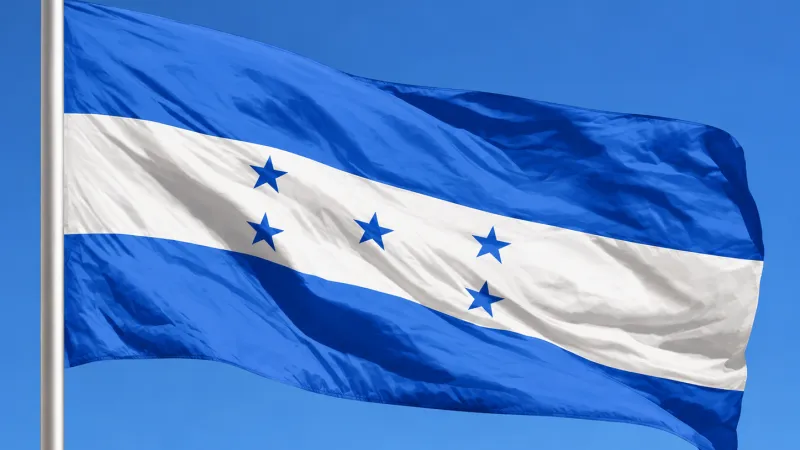
On 6 March 2026, the Republic of Honduras (“Honduras”) re-signed the Convention on the Settlement of Investment Disputes between States and Nationals of Other States (the “ICSID Convention”) once again (see here). That re-engagement has since been completed: on 17 July 2026, Honduras deposited its instrument of ratification with the World Bank, becoming the 159th Contracting State to the Convention, which entered into force for Honduras on 16 August 2026 (see here). The development is significant because it comes after a particularly turbulent period in Honduras’s relationship with investor-State dispute settlement (“ISDS”). After denouncing the ICSID Convention in 2024, Honduras has now formally returned to the institutional framework it had so recently rejected.
This development invites reflection at two levels. Domestically, Honduras’s return to the ICSID Convention raises questions about the legal and political drivers behind its denunciation and subsequent re-signature. Internationally, the development raises questions about the continuing legitimacy of investment arbitration in an increasingly fragmented landscape, particularly at a time when recent disputes have drawn criticism and heightened scrutiny of ISDS’s reach and purpose.
This blog examines Honduras’s relationship with ICSID and attempts to situate its recent return within the wider debate on the resilience of ISDS.
Honduras and the ICSID Convention: A Long Institutional History
Honduras is not a newcomer to ICSID. Its links to the Convention predate its formal signature and may be traced back to the Convention’s formative period. The travaux préparatoires show Honduras, through its representative Mr. Roberto Ramirez, participated in the discussions that shaped the Convention’s underlying rationale:
“[...] the long period of Latin American disintegration was drawing to a close [...]. However, juridical institutions had not caught up with the changing economic conditions of the world today, and it was therefore highly significant that jurists should be meeting to discuss an instrument designed to resolve conflicts that might arise in connection with the investments that countries needed for their economic development.
One of the basic requirements for the development of a country was the protection of investments. The legal processes of arbitration and conciliation embodied in the draft Convention might furnish the required procedural guarantees, but those processes would require greater refinement because they touched on new economic and legal questions. Naturally, the mechanism designed for the purpose must be entirely independent and not linked with any interests which might have a determining influence on its decisions.”
Originally, Honduras formally signed the ICSID Convention on 28 May 1986. It subsequently completed its internal ratification process, and the Convention entered into force for Honduras on 16 March 1989. According to Article 16 of the Constitution of the Republic of Honduras, this required legislative approval (which was granted through Decree No. 41-88) followed by executive ratification.
Over time, Honduras treaty practice expanded through bilateral investment treaties and free trade agreements containing investment chapters, many of which contemplated recourse to ICSID arbitration. Internally, Honduras also adopted an investment framework: the Law for the Promotion of National and Foreign Private Investment of 1990, the Investment Law of 1992 and the currently applicable Law for the Promotion and Protection of Investments of 2011, with its amendments. Honduras’s subsequent denunciation of the ICSID Convention therefore marked a rupture with a legal framework in which it had long been and substantially engaged.
The 2024 Denunciation: Legal Argument and Political Context
Honduras denounced the ICSID Convention on 24 February 2024, with denunciation taking effect six months later, on 25 August 2024. That decision was taken during the administration of President Xiomara Castro and occurred against the background of a marked increase in investment claims brought against the State. It also unfolded amid a broader political discourse that questioned the legitimacy of investor-State arbitration and framed international adjudication as being in tension with sovereignty and domestic constitutional order.
Honduras publicly justified the denunciation by arguing that the ICSID system failed to comply with a condition in Decree No. 41-88 requiring investors to exhaust local administrative and judicial remedies before initiating proceedings under the Convention. (see Annex 1 here). That argument is significant because Article 26 of the ICSID Convention expressly allows a Contracting State to require exhaustion of local remedies as a condition of its consent. At the same time, Article 26 is framed as an exception to the Convention’s default position, under which consent to ICSID arbitration implies a waiver of other remedies unless otherwise stated.
The critical issue, therefore, was not whether such a requirement could exist, but whether Honduras had validly and clearly incorporated it into its consent. While not addressing the issue conclusively, the tribunal in ICSID Case No. ARB/23/2 rejected Honduras' argument and also referred to other proceedings in which the State had advanced similar objections. In ICSID Case No. ARB/23/10 and ICSID Case No. ARB/23/3, tribunals likewise dismissed the objection at the preliminary stage for failing to meet the “manifest lack of legal merit” threshold under Rule 41(5), while deferring or bifurcating further consideration of the exhaustion argument. Honduras has reportedly raised the same objection in other pending arbitrations, including ICSID Cases No. ARB/23/42, ARB/23/40, and ARB/23/43, suggesting an emerging (though unsettled) procedural strategy centered on the revival of the exhaustion of local remedies requirement (see Section 2 here).
From a doctrinal standpoint, Honduras's position raises genuine questions about the relationship between domestic treaty-approval acts and consent on the international plane, and about the clarity required to invoke Article 26's exception. Yet, whatever its conceptual force, the argument has so far encountered practical difficulty before arbitral tribunals.
Caseload Pressure as an Explanatory Factor
The denunciation should be weighed against Honduras's recent exposure to a concentrated wave of investor-State disputes. Multiple concurrent proceedings impose substantial demands on a State's legal apparatus, straining ministries, outside counsel, budgets, and evidentiary teams, thereby creating significant institutional and political pressure that increased the government’s need to legitimize its actions domestically.
One may argue, denunciation is a reaction to administrative, procedural, and strategic strain. A State confronted with a cluster of high-value claims may seek to contest jurisdiction, preserve constitutional arguments, delay merits adjudication, and more importantly reframe the domestic narrative surrounding the disputes.
Honduras’s recent arbitral exposure also resonates with the reform discussions taking place in UNCITRAL Working Group III in relation to the proposed advisory centre on international investment dispute resolution. Those discussions argue for a recognition that structural disparities in expertise and resources may affect the ability of States, particularly developing States like Honduras, to respond effectively to investment claims. Honduras' recent caseload provides a concrete illustration of the type of capacity concerns that underlie the cited advisory-centre project (see here). This suggests the denunciation formed part of a broader State response to an increasingly complex arbitral environment, rather than a definitive repudiation of the system.
The 2026 Ratification and Return to Contracting State Status
Honduras's move from re-signature to ratification assumes particular significance. Having deposited its instrument of ratification on 17 July 2026, Honduras completed the process for re-accession, and, upon the Convention’s entry into force on 16 August 2026, Honduras once again has become a Contracting State. Notably, Honduras did not use the occasion to enact new legislation removing the exhaustion-of-local-remedies condition in Decree No. 41-88; it simply reinstated the same decree, leaving intact the very provision that triggered its 2024 denunciation.
This rapid U-turn demonstrates that Honduras’s withdrawal from the ICSID framework ultimately proved temporary and reflects a recalibration of how the State weighs the costs and benefits of participation. As a Contracting State once again, Honduras also resumes its role in ICSID's governance through the Administrative Council, including the right to designate arbitrators and conciliators to the ICSID Panels.
Ratification and Legitimacy
Honduras’s return raises important questions and reveals striking juxtapositions in an increasingly fragmented investment arbitration landscape, in which concerns over legitimacy continue to pile up. It does not, on its own, resolve the broader legitimacy debate surrounding ISDS. Critiques relating to regulatory autonomy, asymmetry, cost, and consistency remain very much alive, and one State’s return does not displace the broader trend toward treaty redesign. Even so, Honduras's case remains instructive: despite sustained criticism, the ICSID framework retains enough legitimacy and utility for a State to reverse a prior withdrawal and carry it through to entry into force.
Concluding Remarks
Honduras's relationship with the ICSID Convention has been far from linear, and that trajectory encapsulates both the tensions and the resilience of the contemporary investment regime.
The ratification does not resolve the broader critiques of ISDS, nor does it suggest that legitimacy concerns have disappeared. But it does indicate that, even in a fragmented and contested investment arbitration landscape, ICSID continues to retain a degree of institutional credibility and practical appeal for States.
Honduras's return should therefore be understood less as an endorsement of ISDS than as evidence of its continuing relevance. It is proof that withdrawal and re-engagement can coexist within a single State's investment policy, reflecting both dissatisfaction with the system and recognition of its continuing strategic value for the country’s attraction of foreign investment.
Comments (0)
Your email address will not be published.