Dutch Arbitration Day 2026 – The Future of European Arbitration: Challenges and Opportunities
June 15, 2026
The Dutch Arbitration Association will hold its annual conference, the Dutch Arbitration Day (“DAD”), on 18 June 2026. The DAD will take place in the H’ART Museum in Amsterdam and bring together approximately 300 arbitration practitioners, arbitrators, academics, experts, and in-house counsel from the Netherlands and abroad.
Themed “the Future of European Arbitration”, the DAD will explore the evolving interaction between EU law and arbitration, the related challenges and opportunities, key initiatives to strengthen and harmonise the framework for arbitration across the EU, as well as the critical role Member States' courts play in effectively supporting and facilitating arbitral proceedings. The discussion wouldn’t be complete without also addressing the increasingly significant impact of sanctions and the practical and legal consequences they have for both the conduct of arbitrations as well as the recognition and enforcement of arbitral awards across the EU.
Morning Programme: EU Law and Arbitration
The official start of the DAD 2026 will be marked by a keynote speech from Mathias Audit (Audit Duprey Fekl). Against the backdrop of the ever-evolving relationship between EU law and arbitration, Audit will explore topics such as the (un)desirability and implications of full harmonisation of the arbitration laws of Member States and the potential of an instrument to ease the mutual recognition of domestic judgements related to arbitration matters between Member States.
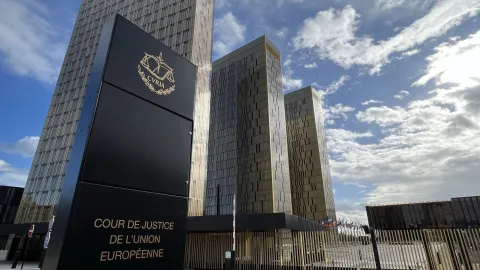
Building on this keynote, the morning programme features a roundtable discussion where Hilde van der Baan (A&O Shearman), Steven Noë (European Commission), and Faidon Varesis (University of Cambridge), under the moderation of Elena-Mihaela Gheorghe (De Brauw Blackstone Westbroek), will expand upon the keynote address and discuss the relationship between EU law and commercial arbitration more generally. The Court of Justice of the European Union (“CJEU”)’s ruling in London Steam-Ship has, if anything, added to the “it’s complicated” status of that relationship by reinforcing the risk that parallel court proceedings within the EU may undermine the effectiveness of arbitration. The anticipated revision of the Brussels I Regulation (the “Regulation”) and the report from the European Commission from last summer on the workings of the Regulation make this a particularly timely moment to discuss the exclusion of arbitration from the Regulation.
The morning programme concludes with a panel on the application of EU law by arbitral tribunals. The panel will revisit some of the field’s most persistent (fault) lines. Recent developments, including the CJEU’s ruling in Royal Football Club Seraing, underscore that arbitral awards must remain subject to effective judicial scrutiny to ensure compliance with EU public policy. This puts particular weight on the role of national courts, even more so considering the general impossibility for arbitral tribunals to make preliminary references to the CJEU. Moving beyond doctrine, the panel will also feature a practical component on how parties may navigate these issues when they arise in arbitration proceedings. The panel consists of Paul Glazener (Court of Appeal Judge in The Hague and the Netherlands Commercial Court), Pietro Ortolani (Radboud University), Paschalis Paschalidis (Gaillard Banifatemi Shelbaya Disputes), and Marina Weiss (Bredin Prat), and will be moderated by Charli Janssen (STAUNCH).
As per tradition, the lunch will be consumed on boats cruising through the beautiful Amsterdam canals and will include the traditional Dutch kroketten!
Group Lectures on Arbitrability, Anti-Suit Injunctions, Enforcement and Sanctions
After lunch, the participants can join one of the four Group Lectures:
- Arbitrability: Trends and Tensions across Jurisdictions – during this panel, recent developments and diverging approaches to arbitrability across jurisdictions will be discussed, with a focus on the arbitrability of corporate disputes. The panel includes Christian Borris (Borris Hennecke Kneisel), Alain François (Eubilius), Iuliana Iancu (Hanotiau Tossens Goldman), Niek Peters (Legaltree), and Eva Slabbers (Pels Rijcken), who will moderate the discussion.
- Anti-Suit and Anti-Arbitration Injunctions in Europe – anti-suit and anti-arbitration injunctions are once again at the center of attention in Europe. Taking place just one week after the Dutch Supreme Court hears oral arguments in the widely reported Republic of Poland v. LC Corp case, this session will offer a timely deep dive into the past, present, and future of these powerful procedural tools. We are honored to be joined by Bart Fleuren (Linklaters), Miriam Schmelzer (3VB), and Raquel Ballesteros (Independent Arbitrator and Member of the Board of the Spanish Court of Arbitration).
- From Award to Recovery: Enforcing Arbitral Awards in Europe – Sheena Buddhdev (Eversheds Sutherland), Marlena Harutyunyan (Archipel), Dienke Herman de Groot (Omni Bridgeway), Sebastian Neave (Veleda), and Sjoerd Koster (Loyens & Loeff) as moderator will discuss the practical challenges of enforcing arbitral awards across Europe. The panel takes a practical approach and will focus on the question: how can one translate legal rights into actual effective remedies?
- The Role of Sanctions in Arbitration: A European and Global Perspective – in view of the growing impact of sanctions regimes on international arbitration proceedings and the central role of the EU and the CJEU in this respect, this panel will explore how arbitrations are affected by such sanctions regimes, as well as what the consequences are in relation to enforcement, while exploring parties’ strategic considerations from both a European and a global perspective. The panel addresses these issues inter alia by reference to the Advocate General’s recent Opinion in NV Reibel v. JSC VO Stankoimport (Case C-802/24) and EU Council Regulations 2025/1494 and 2026/506. The panel will be moderated by Yulia Levashova (Nyenrode Business University) and will include Niuscha Bassiri (ArbBoutique), Rostislav Kats (Kluwer Arbitration), and Matthias Kuscher (De Brauw Blackstone Westbroek) as speakers, who will share their perspectives as arbitrator and counsel, respectively.
Wrapping Up Together: Questions and Takeaways on the Future of European Arbitration
The final panel will bring the day together by reflecting on the key themes and insights that emerged throughout the programme, inviting the audience to actively engage in this reflection, while also looking ahead to future developments in the field. Keynote speaker Mathias Audit will return for this closing panel and is joined by George Bermann (Columbia Law School), Marieke van Hooijdonk (Independent Arbitrator), and Gerard Meijer (Linklaters) as moderator.
The day will conclude with a dinner in, if the Dutch weather allows, the beautiful garden of the H’ART Museum, providing a perfect setting to continue discussions and enjoy the summer evening in Amsterdam.
The Full DAD Experience: Side Events
The night before the DAD, there is a Young Practitioners Event for arbitration practitioners under and around the age of 40. For the first time this year, the event is also open for people not attending the DAD itself (although we highly recommend you do!).
On the morning of the DAD, Sahra Arif (Danish Institute of Arbitration), Erin Cronjé (Pogust Goodhead), Jacomijn van Haersolte-van Hof (Leiden University and Fountain Court Chambers), and Melanie van Leeuwen (Vanguard International Dispute Resolution) will share insights on the international character of the Dutch arbitration community. The panel will address inter alia the following questions: What makes the Netherlands attractive for arbitration (practitioners)? How does an international perspective shape the way arbitration is practiced and approached? In what ways can the Dutch arbitration community strengthen its role and visibility internationally? The Breakfast Event is co-organised with Young ArbitralWomen Practitioners and moderated by steering committee member Özge Yazar (Roschier).
Finally, on the morning after, there will be a 5k run at a conversational pace for the sporty fellows among us. The run will be at a conversational pace, providing the perfect opportunity to network, debrief, and reflect on the DAD while enjoying the scenery of the beautiful Vondelpark. The Morning Run is organised together with the recently launched Dutch chapter of Arbitration Runners, a growing global initiative for anyone involved in arbitration who likes to get a run in.
Tags:
Amsterdam,
The Netherlands
Comments (0)
Your email address will not be published.