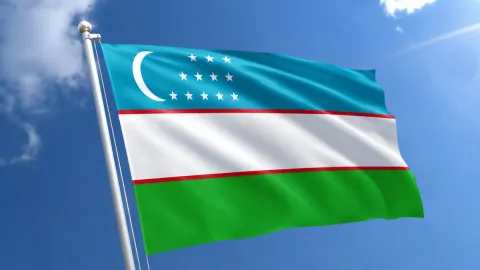
On 13 July 2026, Uzbekistan adopted a new Constitutional Law establishing the Tashkent International Financial Center as a special jurisdiction with its own legal regime (“Constitutional Law”). The…
Can a treaty waive something it never mentions? Stripped to its essentials, that was the question posed before the High Court of Australia and the English Court of Appeal, namely, whether a State’s…
Few people can pride themselves with a career as rich and impactful as that of the Honorable L. Yves Fortier, PC CC, OQ, KC, Ad. E., LLD and no summary will do it justice. Counsel, negotiator,…
An arbitrator’s authority to rely on a law that was not pleaded by the parties has been the subject of extensive discussions in the literature. Anecdotal evidence suggests that civil law…
As set out in our last blog post on evidentiary issues in international arbitrations, the treatment of evidence within the field of international arbitration is oftentimes inconsistent and even…
Generally, the choice of substantive law applicable to a particular contract will affect the outcome of a case. It is common, however, for the evidentiary and interpretive rules to also have…
Much has been written about the UK Supreme Court’s decision in Enka v Chubb [2020] UKSC 38 (“Enka”) including on the blog. Those familiar with the judgment will know the Supreme Court decision was…
Three recent decisions of the Courts of Appeal in Singapore and England (BNA v BNB and another [2019] SGCA 84 (“BNA v BNB”); Kabab-JI S.A.L v Kout Food Group [2020] EWCA Civ 6 (“Kabab v Kout”); and…
It is often said that flexibility is a cornerstone of international arbitration and that the tribunal (typically in consultation with the parties) is the master of how the proceedings are to be…